Hercules Beetleヘラクレスオオカブト
Dynastes herculesNE— Not Evaluated
The Hercules beetle is one of the largest beetles in the world, famous for the male's enormous curved horn used to battle rivals for mates. Native to the humid forests of Central and South America, it spends most of its roughly two-year life cycle as a wood-eating larva before a brief adult stage.
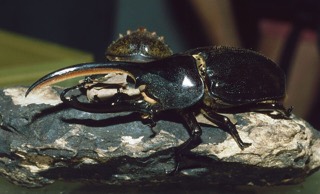 Hercules Beetle (reference photo)

Species Data
- Classification
- Coleoptera / Scarabaeidae Source
- Size
- Body length including the horn reaches a maximum of 172.7 mm in wild individuals (from Guadeloupe, 1932) and 184.3 mm in captivity, among the longest of all beetles
- Lifespan
- Adult lifespan varies by source, from several months to about a year and a half
- Diet
- Herbivore Adults wound the bark and fruit of broadleaf trees themselves to feed on sap and juice; larvae grow by eating decaying wood
- Distribution
- Ranges from southern Mexico through Central and South America to Bolivia, including the Lesser Antilles, Trinidad, and Tobago, inhabiting humid forests from lowlands up to elevations of 1,000-2,000 m. Source
- Sources
- ja.wikipedia.org en.wikipedia.org
Did You Know?
- Its elytra have a porous structure that darkens to black when humidity is high and turns olive-yellow in drier conditions. Source
- Occasionally, individuals with bluish-gray elytra known as "blue Hercules" appear and are highly prized by collectors in Japan. Source
- Males fight rivals by using their long horns to pin and pry opponents off tree trunks or the ground. Source
Where to See This Species
Operating facilities registered on this site: Japan 1
Conservation Story
Conservation Status
Not Evaluated (NE)
Sources
Support Conservation
A visit is a small, positive way to support the daily lives of the animals you care about.
- Visit
- A visit itself helps support the facility.
- Animal Supporter Programs & Giving
- Find ways to support the facility through its official website.
- Furusato Nozei
- Municipally run facilities may share official guidance for this Japanese hometown-tax program.
FAQ
- How big can a Hercules beetle get?
- Including its horn, the largest wild specimen on record measured 172.7 mm, and a captive-bred individual reached 184.3 mm, among the longest beetles known. Source
- What do Hercules beetle larvae eat?
- Larvae feed on rotting wood inside decaying logs for about two years before pupating into adults. Source
- Why do Hercules beetles change color?
- Their porous elytra absorb moisture, turning black in humid conditions and olive-yellow when dry, a trait unusual among beetles. Source
- How many operating facilities are registered here?
- Operating facilities registered on this site: Japan 1 Source
Books & gear
Source: ja.wikipedia.org en.wikipedia.org