Japanese Common Toadニホンヒキガエル
Bufo japonicusLC— Least Concern
The Japanese common toad is a large, warty toad native to western Honshu, Shikoku, Kyushu, and Yakushima, with introduced populations on Hokkaido and Sado Island. Nocturnal and toxic-skinned, it deters most predators, though the tiger keelback snake appears resistant to its toxins and preys on it regularly. Breeding is explosive and highly competitive, with females laying enormous clutches of 6,000 to 14,000 eggs in long gelatinous strings in ponds and rice paddies each spring.
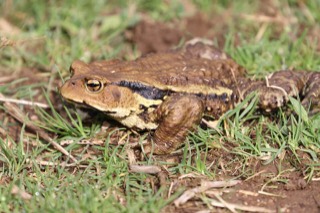 Japanese Common Toad (reference photo)

Species Data
- Classification
- Anura / Bufonidae Source
- Size
- Body length 7–17.6 cm; females are larger, and individuals tend to grow larger in warmer environments
- Diet
- Carnivore Carnivorous, eating insects and earthworms as well as small animals other predators avoid, such as ants and beetles
- Activity
- Nocturnal; rests under rocks and fallen logs by day, and hibernates underground when temperatures fall below about 6°C
- Distribution
- Native to Honshu (west of the Suzuka Mountains), Shikoku, Kyushu, and Yakushima; introduced populations exist on Hokkaido and Sado Island. Source
- Sources
- ja.wikipedia.org en.wikipedia.org
Did You Know?
- The old Japanese nickname "shiroku no gama" ("four-six toad") is often mistaken as a reference to its four front toes and six hind toes, but actually describes the nuptial pads that develop on breeding males' forelimbs. Source
- Females lay eggs in long gelatinous strings in ponds, puddles, and rice paddies, producing an enormous clutch of 6,000 to 14,000 eggs at once. Source
- Its skin toxins deter most predators, but the tiger keelback snake appears resistant to them and is one of the few predators known to actively prey on this toad. Source
Where to See This Species
Operating facilities registered on this site: Japan 1
Kyoto City ZooKyotoOpened in 1903
Conservation Story
Conservation Status
Least Concern (LC)
Sources
Support Conservation
A visit is a small, positive way to support the daily lives of the animals you care about.
- Visit
- A visit itself helps support the facility.
- Animal Supporter Programs & Giving
- Find ways to support the facility through its official website.
- Furusato Nozei
- Municipally run facilities may share official guidance for this Japanese hometown-tax program.
FAQ
- How many eggs does a Japanese common toad lay?
- Females lay eggs in long gelatinous strings in ponds, puddles, and paddies, producing between 6,000 and 14,000 eggs in a single clutch. Source
- What does the nickname "shiroku no gama" mean?
- It is often misread as referring to four front toes and six hind toes, but the name actually describes the swollen nuptial pads that appear on breeding males' forelimbs. Source
- Does anything actually eat the Japanese common toad despite its toxins?
- The tiger keelback snake is one of its few significant predators, apparently having evolved resistance to the toad's skin toxins, which it then repurposes for its own defense. Source
- How many operating facilities are registered here?
- Operating facilities registered on this site: Japan 1 Source
Books & gear
Source: ja.wikipedia.org en.wikipedia.org