Japanese Eelニホンウナギ
Anguilla japonicaEN— Endangered
The Japanese eel (Anguilla japonica) is a catadromous fish native to East Asia, spawning far offshore near the Mariana Ridge before its larvae drift on ocean currents to freshwater rivers in Japan, Korea, Taiwan, and China, where they grow to about a meter in length. Long prized as a food fish, wild populations have declined sharply since the late 20th century due to falling glass-eel recruitment, poaching, and habitat loss, and the species is classified Endangered by the IUCN.
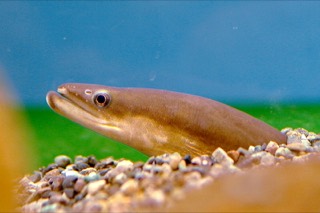 Japanese Eel (reference photo)

Species Data
- Classification
- Anguilliformes / Anguillidae Source
- Size
- Total length about 1 m, reaching a maximum of about 1.3 m
- Diet
- Carnivore Nocturnal, preying on small animals such as crustaceans, aquatic insects, frogs, small fish, earthworms, and pond snails
- Activity
- Nocturnal
- Distribution
- Found across Japan (southwest Hokkaido and south), Korea, Taiwan, China, and Vietnam, growing in freshwater rivers and lakes before migrating to the ocean to spawn. Source
- Sources
- ja.wikipedia.org en.wikipedia.org
Did You Know?
Where to See This Species
Operating facilities registered on this site: Japan 1
Aquamarine FukushimaFukushimaOpened in 2000
Source links to official sites, official YouTube channels, and news aggregators such as Zoo Ring. Visit the publisher for the full item.
Conservation Story
Conservation Status
Endangered (EN)
Sources
Support Conservation
A visit is a small, positive way to support the daily lives of the animals you care about.
- Visit
- A visit itself helps support the facility.
- Animal Supporter Programs & Giving
- Find ways to support the facility through its official website.
- Furusato Nozei
- Municipally run facilities may share official guidance for this Japanese hometown-tax program.
FAQ
- Where do Japanese eels spawn?
- Near the Suruga Seamount on the Mariana Ridge, west of the Mariana Islands in the western Pacific, a location identified by researchers in 2006. Source
- Why is the Japanese eel endangered?
- Wild glass-eel numbers have declined since the late 20th century, worsened by poaching and smuggling, leading the IUCN to list it as Endangered in 2014. Source
- Can Japanese eels breathe out of water?
- Yes, they can respire through their skin as well as their gills, so they can survive on land for a while as long as they stay moist. Source
- How many operating facilities are registered here?
- Operating facilities registered on this site: Japan 1 Source
Books & gear
Source: ja.wikipedia.org en.wikipedia.org