Japanese Squirrelニホンリス
Sciurus lisLC— Least Concern
The Japanese squirrel (Sciurus lis) is a small tree squirrel endemic to Japan, found on Honshu, Shikoku, and Awaji Island, with its Kyushu population believed extinct. It feeds mainly on walnuts and conifer seeds, using a specialized technique to crack open tough walnut shells, and has even been observed eating toxic fly agaric mushrooms without apparent harm. Hunting has been illegal since 1994, and it is classified as Least Concern.
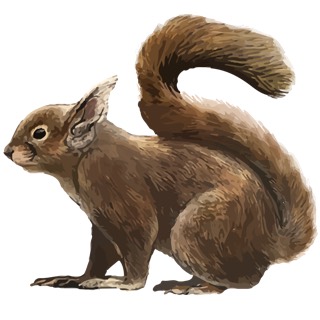 Japanese Squirrel (reference photo)

Species Data
- Classification
- Rodentia / Sciuridae Source
- Size
- 16–22 cm (tail 13–17 cm)
- Weight
- 250–310 g
- Lifespan
- Wild: about 5 years
- Diet
- Omnivore Feeds mainly on seeds such as Japanese walnuts and the seeds of red pine, larch, and Japanese white pine, and also eats buds, flowers, fruit, mushrooms, and insects
- Activity
- Diurnal and active year-round
- Distribution
- Endemic to Japan, found on Honshu, Shikoku, and Awaji Island; the Kyushu population is believed to be already extinct. Source
- Sources
- ja.wikipedia.org en.wikipedia.org
Did You Know?
Where to See This Species
Operating facilities registered on this site: Japan 5
Kyoto City ZooKyotoOpened in 1903
Noichi Zoological Park of Kochi PrefectureKochiA 20-minute walk or 13-minute rental-bicycle ride from Noichi Station on the Tosa Kuroshio Railway Gomen-Nahari Line.
Saitamakenkodomodoubutsu Shizen KouenSaitamaOpened in 1980
Higashiyama Zoo and Botanical GardensAichiOpened in 1937
Source links to official sites, official YouTube channels, and news aggregators such as Zoo Ring. Visit the publisher for the full item.
Conservation Story
Conservation Status
Least Concern (LC)
Sources
Support Conservation
A visit is a small, positive way to support the daily lives of the animals you care about.
- Visit
- A visit itself helps support the facility.
- Animal Supporter Programs & Giving
- Find ways to support the facility through its official website.
- Furusato Nozei
- Municipally run facilities may share official guidance for this Japanese hometown-tax program.
FAQ
- Where does the Japanese squirrel live?
- It is endemic to Japan, found on Honshu, Shikoku, and Awaji Island; it is thought to have already gone extinct on Kyushu. Source
- What is unusual about its diet?
- It has been observed regularly eating the toxic fly agaric mushroom (Amanita muscaria) without apparent ill effects, though scientists don't yet understand how it avoids poisoning. Source
- How many operating facilities are registered here?
- Operating facilities registered on this site: Japan 5 Source
Books & gear
Source: ja.wikipedia.org en.wikipedia.org