King Vultureトキイロコンドル

Sarcoramphus papaLC— Least Concern

The king vulture is a large New World vulture of the tropical lowland forests of Central and South America, from southern Mexico to the north of Argentina, and the only living member of its genus. Mostly white with dark flight feathers and ruff, it has a bare head and neck coloured red, purple, orange and yellow, topped by an orange caruncle on the bill. Its strong bill opens fresh carcasses for smaller vultures, and it is listed as Least Concern by the IUCN.

Operating facilities registered on this site: Japan 1 (Hirakawa Zoo). These facilities are confirmed by resident animal records or the facility’s official information.
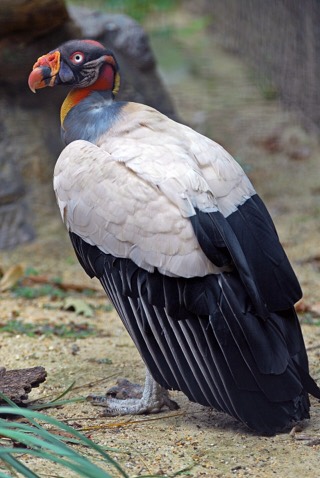
King Vulture (reference photo)
Photo: Eric Kilby / CC BY-SA 2.0 / Source / cropped

Species Data

Classification
Accipitriformes / Cathartidae Source
Size
Total length 67–81 cm, wingspan 1.2–2 m
Weight
2.7–4.5 kg
Lifespan
Captive: over 30 years (one male is over 47); wild lifespan unknown
Diet
Carnivore A scavenger feeding mainly on carcasses found in the forest; has been recorded eating fallen palm fruit when carrion is scarce
Distribution
Lives mainly in the tropical lowland forests of southern Mexico, Central America and South America as far as northern Argentina, venturing onto nearby savannas to find food; it does not migrate. Source

Did You Know?

  • The species name papa is Latin for "bishop", a nod to plumage that resembles a bishop's robes. Source
  • Lacking a voice box, it can only make low croaks and wheezes during courtship and snap its bill when threatened. Source
  • Vivian, a female at Cameron Park Zoo in Texas, turned an estimated 70 in 2022, making her the oldest king vulture on record at an AZA-accredited facility. Source

Where to See This Species

Operating facilities registered on this site: Japan 1

Hirakawa ZooKagoshimaAbout a 20-minute walk from Goino Station on the JR Ibusuki-Makurazaki Line, or take a bus bound for Taniyama / Dobutsuen from Fukuhira Nokyo-mae to the last stop.

Source

Conservation Story

Conservation Status

Least Concern (LC)

Sources

en.wikipedia.org

Support Conservation

A visit is a small, positive way to support the daily lives of the animals you care about.

Visit
A visit itself helps support the facility.
Animal Supporter Programs & Giving
Find ways to support the facility through its official website.
Furusato Nozei
Municipally run facilities may share official guidance for this Japanese hometown-tax program.

Individuals Remembered

No.0611In memoriam

Leslie

Leslie

King VultureSarcoramphus papa

Reid Park Zoo

Sex
Female
Born
Unknown
LC— Least Concern

FAQ

Where can I see King Vulture in Japan?
Operating facilities registered on this site: Japan 1 (Hirakawa Zoo). These facilities are confirmed by resident animal records or the facility’s official information. Source
What does a king vulture eat?
Mainly carrion found in the forest; its strong bill makes the first cut into a fresh carcass, and it has also been seen eating fallen palm fruit when carrion is scarce. Source
Why is the king vulture's head so colourful?
Its head and neck are bare of feathers, and the skin is coloured in shades of red, purple, orange and yellow, with an orange caruncle on the bill. Source
How long do king vultures live?
They commonly live more than 30 years in captivity, and one female at Cameron Park Zoo reached an estimated 70 in 2022; their wild lifespan is unknown. Source

Books & gear

Source: ja.wikipedia.org en.wikipedia.org