Mallardマガモ
Anas platyrhynchosLC— Least Concern
The mallard is a widespread dabbling duck found across the temperate Northern Hemisphere, recognizable by the male's glossy green head and the female's mottled brown plumage. It is largely omnivorous, favoring plant material on land but switching to insects and invertebrates during the breeding season. It is the wild ancestor of most domestic duck breeds and one of the most familiar waterfowl species in the world.
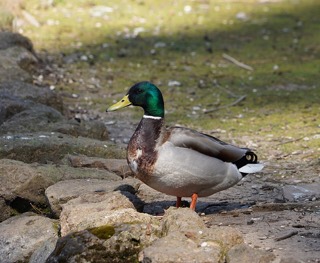 Mallard (reference photo)
_on_the_ground.jpg)
Species Data
- Classification
- Anseriformes / Anatidae Source
- Size
- Total length 50–65 cm, wingspan 81–98 cm
- Weight
- Males 900–1500 g / females 700–1300 g
- Lifespan
- Average lifespan about 3 years; banding studies have recorded birds living about 27 years
- Diet
- Omnivore Omnivorous, feeding mainly on terrestrial plant matter; before laying in the breeding season, the share of animal food (insects, crustaceans, etc.) increases
- Distribution
- Found across temperate and subtropical regions of the Americas, Eurasia, and North Africa, with introduced populations in Australia, New Zealand, and South America. Source
- Sources
- ja.wikipedia.org en.wikipedia.org
Did You Know?
Where to See This Species
Operating facilities registered on this site: Japan 6
Kyoto City ZooKyotoOpened in 1903
Kiryuugaoka DoubutsuenGunmaIf driving, set your car navigation to "Kiryugaoka Amusement Park" (Kiryugaoka Yuenchi) rather than "Kiryugaoka Zoo" to reach the parking lot (searching by the zoo name may give an incorrect route).
Noichi Zoological Park of Kochi PrefectureKochiA 20-minute walk or 13-minute rental-bicycle ride from Noichi Station on the Tosa Kuroshio Railway Gomen-Nahari Line.
Tennoji ZooOsakaOpened in 1915
Hamamatsu Zoological GardensShizuokaOpened in 1950
Fukuoka Zoo & Botanical GardenFukuokaOpened in 1953
Former facilities
North Safari SapporoHokkaidoOpened in 2005
Closed: 2025-09-30 Official Site
Conservation Story
Conservation Status
Least Concern (LC)
Sources
Support Conservation
A visit is a small, positive way to support the daily lives of the animals you care about.
- Visit
- A visit itself helps support the facility.
- Animal Supporter Programs & Giving
- Find ways to support the facility through its official website.
- Furusato Nozei
- Municipally run facilities may share official guidance for this Japanese hometown-tax program.
FAQ
- Is the domestic duck related to the mallard?
- Yes, most domestic duck breeds are descended from the mallard. Source
- What do mallards eat?
- They are omnivorous, mainly foraging on land for plant matter, but they eat more insects, crustaceans, and other invertebrates around the breeding season. Source
- How long do mallards live?
- Average life expectancy is around three years, but banding studies have recorded individuals living as long as 27 years. Source
- How many operating facilities are registered here?
- Operating facilities registered on this site: Japan 6 Source
Books & gear
Source: ja.wikipedia.org en.wikipedia.org