Rainbow Troutニジマス
Oncorhynchus mykissLC— Least Concern
The rainbow trout (Oncorhynchus mykiss) is a salmonid native to cold-water tributaries of the Pacific from Kamchatka through Alaska, Canada, and the US West Coast to northern Mexico, recognized by the broad reddish stripe along its flank. Since 1875 it has been introduced to at least 45 countries and now ranks among the world's most invasive species, though in Japan it was first introduced from California in 1877. Unlike most Pacific salmon, it survives spawning and can breed repeatedly over several years.
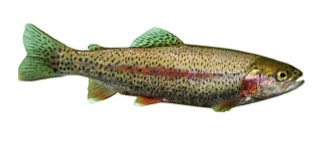 Rainbow Trout (reference photo)

Species Data
- Classification
- Salmoniformes / Salmonidae Source
- Size
- Adults are generally around 40 cm, but large individuals can reach 60–120 cm
- Lifespan
- Record about 11 years
- Diet
- Carnivore Carnivorous, preying on a variety of foods such as aquatic insects, crustaceans, small insects that fall onto the water surface, and small fish
- Distribution
- Native to cold-water tributaries of the Pacific from the Kamchatka Peninsula through the Aleutian Islands and along the North American Pacific coast to northern Mexico, representing the southernmost native range of any trout species. Source
- Sources
- ja.wikipedia.org en.wikipedia.org
Did You Know?
- Adults show distinct black spots across the body and a broad reddish stripe running from gills to tail, most vivid in breeding males. Source
- Unlike most Pacific salmon, rainbow trout do not die after spawning and can breed repeatedly over several years. Source
- Since 1875, it has been introduced to at least 45 countries on every continent except Antarctica, and it ranks among the world's 100 most invasive species. Source
Where to See This Species
Operating facilities registered on this site: Japan 2
Minatoyama SuizokukanHyogoOpened in 2022
Yamanashi Kenritsu Fujiyuusuinosato SuizokukanYamanashi5 minutes from the Yamanakako Interchange on the Higashi-Fuji-Goko Road, 20 minutes from the Kawaguchiko Interchange on the Chuo Expressway.
Source links to official sites, official YouTube channels, and news aggregators such as Zoo Ring. Visit the publisher for the full item.
Conservation Story
Conservation Status
Least Concern (LC)
Sources
Support Conservation
A visit is a small, positive way to support the daily lives of the animals you care about.
- Visit
- A visit itself helps support the facility.
- Animal Supporter Programs & Giving
- Find ways to support the facility through its official website.
- Furusato Nozei
- Municipally run facilities may share official guidance for this Japanese hometown-tax program.
FAQ
- When was the rainbow trout introduced to Japan?
- It was first brought to Japan in 1877 from California, in the United States. Source
- Does the rainbow trout die after spawning like Pacific salmon?
- No. Unlike most salmon, it survives spawning and can breed again in subsequent years. Source
- How widely has the rainbow trout spread outside its native range?
- Since 1875 it has been introduced to at least 45 countries across every continent except Antarctica, and is now considered one of the world's most invasive species. Source
- How many operating facilities are registered here?
- Operating facilities registered on this site: Japan 2 Source
Books & gear
Source: ja.wikipedia.org en.wikipedia.org