Risso's Dolphinハナゴンドウ
Grampus griseusLC— Least Concern
Risso's dolphin is a large, robust dolphin found in temperate and tropical waters worldwide, easily recognized by its blunt, bulbous head and body covered in white scars accumulated over a lifetime of social interactions and squid hunting. A specialized squid eater that dives up to 600 m and forages mainly at night, it is classified as Least Concern by the IUCN despite localized threats from fishing bycatch and pollution.
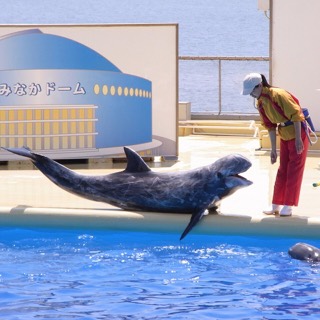 Risso's Dolphin (reference photo)

Species Data
- Classification
- Artiodactyla / Delphinidae Source
- Size
- Body length about 3–4 m
- Weight
- 300–600 kg
- Lifespan
- Captive: record of 42 years (an individual at Enoshima Aquarium) / wild: record of 39.6 years
- Diet
- Piscivore Carnivorous, preying mainly at night on oceanic and continental-shelf squid; the population off Scotland also eats common octopus. Its squid-specialized diet has much in common with that of the sperm whale
- Distribution
- Found nearly worldwide across the Indian, Pacific, and Atlantic Oceans, as well as the Mediterranean, North, Red, and Baltic Seas, but absent from the Black Sea. Source
- Sources
- ja.wikipedia.org en.wikipedia.org
Did You Know?
- Linear scars from social interactions and squid battles accumulate over a lifetime and turn white, eventually covering much of the body and making older individuals appear almost entirely white. Source
- Risso's dolphins have only two to seven pairs of teeth, all in the lower jaw, which are thought to function mainly as display weapons in social interactions rather than for feeding. Source
- They have been recorded diving to depths of 600 m in pursuit of squid, and their tall dorsal fin can lead to them being mistaken for young or female orcas. Source
Where to See This Species
Operating facilities registered on this site: Japan 7
Adventure WorldWakayamaOpened in 1978
MARINE WORLD uminonakamichiFukuokaFrom JR Hakata Station, take the Kagoshima Main Line 11 minutes to Kashii Station, transfer to the JR Kashii Line (bound for Saitozaki), and ride 20 minutes to Uminonakamichi Station.
Shimoda AquariumShizuokaOpened in 1967
ENOSHIMA AQUARIUMKanagawaOpened in 2004
Minamichitabichi LandAichiOpened in 1980
Hakone-en AquariumKanagawa
Kamogawa Sea WorldChibaAbout 2 hours from Tokyo Station on the Wakashio limited express to JR Awa-Kamogawa Station, then about 10 minutes by free shuttle bus (departing from the West Exit bus stop).
Former facilities
Enoshima SuizokukanKanagawaOpened in 1954
Closed: 2004-01 Official Site
Conservation Story
Conservation Status
Least Concern (LC)
Sources
Support Conservation
A visit is a small, positive way to support the daily lives of the animals you care about.
- Visit
- A visit itself helps support the facility.
- Animal Supporter Programs & Giving
- Find ways to support the facility through its official website.
- Furusato Nozei
- Municipally run facilities may share official guidance for this Japanese hometown-tax program.
FAQ
- Why are Risso's dolphins so scarred and pale?
- Linear scars from social interactions with other dolphins and from grappling with squid accumulate over a lifetime and turn white, so older individuals often appear almost entirely white. Source
- What do Risso's dolphins eat?
- They feed almost exclusively on squid, hunting mostly at night and diving as deep as 600 m in pursuit of prey, with some populations also taking octopus. Source
- How many teeth do Risso's dolphins have?
- Just two to seven pairs, and all of them are in the lower jaw only. These teeth appear to function mainly as display weapons for social interactions rather than for capturing food. Source
- How many operating facilities are registered here?
- Operating facilities registered on this site: Japan 7 Source
Books & gear
Source: ja.wikipedia.org