Sand Catスナネコ
Felis margaritaLC— Least Concern
The sand cat is a small wild cat superbly adapted to the deserts of North Africa, the Arabian Peninsula, and Central Asia, with thick fur pads that insulate its paws from scorching sand and enlarged ears that give it exceptional hearing for locating prey underground. It can survive without drinking free water, getting most of its moisture from rodents and other prey. Once thought highly vulnerable, it was downlisted to Least Concern by the IUCN in 2016, though it remains threatened by habitat loss and feral dogs and cats in parts of its range.
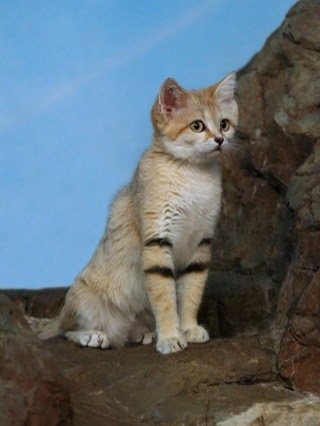 Sand Cat (reference photo)

Species Data
- Classification
- Carnivora / Felidae Source
- Size
- Head-body length: males 42–57 cm, females 39–52 cm; tail 23–35 cm
- Weight
- Males 2–3.4 kg, females 1.35–3.1 kg
- Lifespan
- Captive: can reach 13–14 years or more (no data recorded for the wild)
- Diet
- Carnivore Carnivorous, preying mainly on rodents such as spiny mice and gerbils, along with birds, reptiles (including venomous snakes), and insects; travels an average of 5.4 km a night in search of prey
- Activity
- Nocturnal and crepuscular; rests in underground burrows during the day (some populations are nocturnal only during the hot season)
- Distribution
- Found across the Sahara of North Africa, the Arabian Peninsula, the Karakum and Kyzylkum Deserts of Central Asia, and the deserts of the Middle East and Pakistan. Source
- Sources
- ja.wikipedia.org en.wikipedia.org
Did You Know?
- Long hair covering the soles of its paws insulates them against scorching desert sand and helps obscure its tracks, an adaptation unique among small wild cats. Source
- Its auditory bullae are greatly enlarged compared to other small wild cats, giving it hearing sensitivity roughly 8 decibels greater than that of the domestic cat. Source
- Sand cats obtain most of their moisture from prey, allowing them to survive without ever drinking free-standing water, though they will drink when it is available. Source
Where to See This Species
Operating facilities registered on this site: Japan 4
Saitamakenkodomodoubutsu Shizen KouenSaitamaOpened in 1980
NasudoubutsuoukokuTochigiAbout 50 minutes by car from Nasu-Shiobara Station on the Tohoku Shinkansen (a free shuttle bus is available; online reservation required by 17:00 the day before).
KOBE ANIMAL KINGDOMHyogoRight by Keisan Kagaku Center Station (Kobe Animal Kingdom / Fugaku-mae) on the Port Liner.
Nagasaki Bio ParkNagasakiOpened in 1980
Conservation Story
Conservation Status
Least Concern (LC)
Sources
Support Conservation
A visit is a small, positive way to support the daily lives of the animals you care about.
- Visit
- A visit itself helps support the facility.
- Animal Supporter Programs & Giving
- Find ways to support the facility through its official website.
- Furusato Nozei
- Municipally run facilities may share official guidance for this Japanese hometown-tax program.
FAQ
- Can sand cats survive without drinking water?
- Yes. Sand cats get most of the moisture they need from the rodents, birds, and reptiles they eat, allowing them to survive in deserts without free-standing water, though they will drink when water is available. Source
- Why do sand cats have furry paws?
- Long hair on the soles of their paws insulates them from the extreme heat of desert sand and helps cushion their footsteps, an adaptation not seen in most other small wild cats. Source
- Is the sand cat endangered?
- It is currently listed as Least Concern by the IUCN, having been downlisted from Near Threatened in 2016, though it faces local threats from habitat degradation, feral dogs, and disease from domestic cats, and has already disappeared from parts of its historical range such as Yemen and Israel. Source
- How many operating facilities are registered here?
- Operating facilities registered on this site: Japan 4 Source
Books & gear
Source: www.parks.or.jp nasu-oukoku.com www.kobe-oukoku.com www.iucnredlist.org