Sand Tiger Sharkシロワニ
Carcharias taurusCR— Critically Endangered
The sand tiger shark (Carcharias taurus), called shirowani in Japan, is a large, fierce-looking but docile shark found in temperate and tropical waters worldwide except the eastern Pacific, typically reaching 2.2-2.5 m and up to 3.2 m long. It swallows air at the surface to fine-tune its buoyancy, hunts bony fish, other sharks, rays, crustaceans, and squid, and is one of the few sharks known to practice intrauterine cannibalism, in which the most developed embryo consumes unfertilized eggs and siblings in the womb. Despite its intimidating look, it is classified Critically Endangered by the IUCN due to a sharp population decline since 1980.
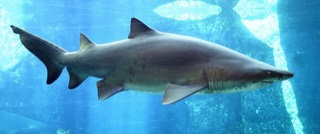 Sand Tiger Shark (reference photo)

Species Data
- Classification
- Lamniformes / Carchariidae Source
- Size
- Usually 2.2–2.5 m; reaches a maximum total length of about 3.2 m and weight of 158.8 kg
- Diet
- Carnivore Carnivorous, preying on fish including sharks and rays, crustaceans, and cephalopods (bony fish make up about 60% of the diet)
- Distribution
- Found in the Atlantic, Pacific, and Indian Oceans, from the Gulf of Maine to Florida, Brazil to Argentina, and waters around Japan and Australia; presumed extirpated from the Mediterranean since 2003. Source
- Sources
- ja.wikipedia.org en.wikipedia.org
Did You Know?
- Despite its fearsome appearance, it has a docile temperament and no confirmed human fatalities are attributed to it; some researchers have nicknamed it a "giant puppy dog." Source
- It practices intrauterine cannibalism, in which the most developed embryo in the womb feeds on unfertilized eggs and its own siblings. Source
- Lacking a swim bladder, it gulps air at the surface and stores it in its stomach to help maintain neutral buoyancy. Source
Where to See This Species
Operating facilities registered on this site: Japan 6
Sumida AquariumTokyoRight by Tokyo Skytree Station on the Tobu Skytree Line.
MARINE WORLD uminonakamichiFukuokaFrom JR Hakata Station, take the Kagoshima Main Line 11 minutes to Kashii Station, transfer to the JR Kashii Line (bound for Saitozaki), and ride 20 minutes to Uminonakamichi Station.
Toba AquariumMieOpened in 1955
SHINAGAWA AQUARIUMTokyoOpened in 1991
Kobe Suma Sea WorldHyogoOpened in 2024
Noboribetsu Marine Park NIXEHokkaidoAbout a 5-minute walk from JR Noboribetsu Station.
Former facilities
Keikyuuaburatsubomarin ParkKanagawaOpened in 1968
Closed: 2021-09-30 Official Site
Toukaidaigakukaiyoukagaku HakubutsukanShizuokaOpened in 1970
Closed: 2024-10-31 Official Site
Source links to official sites, official YouTube channels, and news aggregators such as Zoo Ring. Visit the publisher for the full item.
Conservation Story
Conservation Status
Critically Endangered (CR)
Sources
Support Conservation
A visit is a small, positive way to support the daily lives of the animals you care about.
- Visit
- A visit itself helps support the facility.
- Animal Supporter Programs & Giving
- Find ways to support the facility through its official website.
- Furusato Nozei
- Municipally run facilities may share official guidance for this Japanese hometown-tax program.
FAQ
- Is the sand tiger shark dangerous to humans?
- No confirmed human fatalities are attributed to it; despite its toothy look, it has a docile temperament, earning it the nickname "giant puppy dog" among some researchers. Source
- What is intrauterine cannibalism?
- It is the sand tiger shark's unusual reproductive strategy in which the most developed embryo in the womb eats unfertilized eggs and its own siblings before birth. Source
- How does the sand tiger shark control its buoyancy?
- Lacking a swim bladder, it gulps air at the water's surface and holds it in its stomach to help it hover motionlessly. Source
- How many operating facilities are registered here?
- Operating facilities registered on this site: Japan 6 Source
Books & gear
Source: ja.wikipedia.org en.wikipedia.org