Sea Penウミエラ
Cavernularia obesaNE— Not Evaluated
Cavernularia obesa, known in Japanese as umi-saboten ("sea cactus"), is a colonial sea pen that lives on sandy-muddy seabeds in the warm waters of the Indo-West Pacific, including areas south of Ishikari Bay in Japan. Its club-shaped colony retracts into the sand by day and extends at night to feed on plankton, and it is known for bioluminescing when touched. Its conservation status has not been formally evaluated by the IUCN.
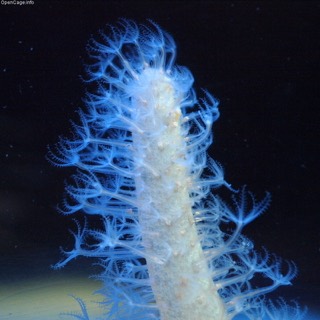 Sea Pen (reference photo)

Species Data
- Classification
- Pennatulacea / Veretillidae Source
- Size
- Forms a club-shaped colony up to about 50 cm long when extended, shrinking to under 10 cm when contracted
- Diet
- Filter feeder Captures plankton from the seawater with the many polyps arrayed on the colony's surface
- Distribution
- Found on sandy-muddy seabeds in the warm waters of the Indo-West Pacific, and in Japan south of Ishikari Bay at depths to about 20 m. Source
- Sources
- aquarium.co.jp
Did You Know?
Where to See This Species
Operating facilities registered on this site: Japan 1
Toba AquariumMieOpened in 1955
Conservation Story
Conservation Status
Not Evaluated (NE)
Sources
Support Conservation
A visit is a small, positive way to support the daily lives of the animals you care about.
- Visit
- A visit itself helps support the facility.
- Animal Supporter Programs & Giving
- Find ways to support the facility through its official website.
- Furusato Nozei
- Municipally run facilities may share official guidance for this Japanese hometown-tax program.
FAQ
- Why is it called a 'sea cactus' in Japanese?
- Its club-shaped colony resembles a cactus, and it retracts into the sand during the day and extends at night, similar to how a cactus stores water. Source
- Does it glow?
- Yes—when disturbed it bioluminesces, with the glow spreading across the colony like a wave from the point of contact. Source
- How many operating facilities are registered here?
- Operating facilities registered on this site: Japan 1 Source
Books & gear
Source: ja.wikipedia.org en.wikipedia.org