Siberian Chipmunkシマリス
Tamias sibiricusLC— Least Concern
The Siberian chipmunk is the only chipmunk species native outside North America, ranging across northern Eurasia from Russia and Siberia to China, Korea, and Hokkaido, Japan. An omnivorous forager with capacious cheek pouches, it caches several kilograms of food each autumn to survive underground hibernation through winter. Once exported in large numbers as pets, it has also established invasive, tick-carrying populations across several European countries.
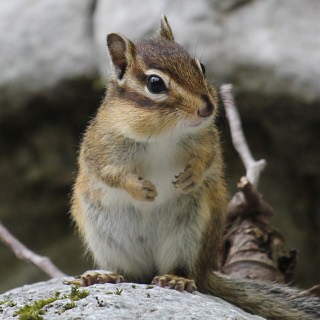 Siberian Chipmunk (reference photo)
.JPG)
Species Data
- Classification
- Rodentia / Sciuridae Source
- Size
- Head-body length 12–25 cm (tail 8–11.5 cm)
- Weight
- 50–150 g (varies seasonally)
- Lifespan
- Wild: about 2–5 years / captive: records of up to 9–10 years
- Diet
- Omnivore Omnivorous, eating seeds, nuts, fruit, buds, grasses, roots, mushrooms, and insects, as well as bird eggs and frogs; stores as much as 3–4 kg of food in its burrow for winter
- Activity
- Diurnal and solitary; hibernates in an underground burrow in winter (the Hokkaido subspecies spends nearly half the year in hibernation)
- Distribution
- The only chipmunk species found outside North America, ranging across northern European Russia, Siberia to Sakhalin and Kunashir, eastern Kazakhstan, northern Mongolia, northern and central China, Korea, and Hokkaido, Japan. Source
- Sources
- ja.wikipedia.org en.wikipedia.org
Did You Know?
- Siberian chipmunks have large internal cheek pouches that let them carry large quantities of nuts and seeds back to their burrows in a single trip. Source
- Before winter, they cache 3–4 kg of food in their burrows to survive underground until April or May, with separate chambers for nesting, food storage, and waste. Source
- Following exports of over 200,000 individuals from South Korea's pet trade beginning in the 1960s, escaped and released Siberian chipmunks have established invasive populations across Belgium, France, Germany, and several other European countries. Source
Where to See This Species
Operating facilities registered on this site: Japan 2
Kiryuugaoka DoubutsuenGunmaIf driving, set your car navigation to "Kiryugaoka Amusement Park" (Kiryugaoka Yuenchi) rather than "Kiryugaoka Zoo" to reach the parking lot (searching by the zoo name may give an incorrect route).
Fuji Safari ParkShizuokaOpened in 1980
Conservation Story
Conservation Status
Least Concern (LC)
Sources
Support Conservation
A visit is a small, positive way to support the daily lives of the animals you care about.
- Visit
- A visit itself helps support the facility.
- Animal Supporter Programs & Giving
- Find ways to support the facility through its official website.
- Furusato Nozei
- Municipally run facilities may share official guidance for this Japanese hometown-tax program.
FAQ
- Is the Siberian chipmunk the only Asian chipmunk species?
- Yes. It is the only chipmunk species found outside North America, native to a wide range across Russia, Siberia, China, Korea, and Hokkaido in Japan. Source
- How much food does a Siberian chipmunk store for winter?
- It caches around 3–4 kg of food in its burrow before winter, allowing it to survive underground in hibernation until around April or May. Source
- Why is the Siberian chipmunk considered invasive in Europe?
- Large-scale pet trade exports from South Korea beginning in the 1960s—over 200,000 individuals by 1980—led to escaped and released animals establishing wild populations in Belgium, France, Germany, and other European countries, where they can also contribute to Lyme disease transmission via ticks. Source
- How many operating facilities are registered here?
- Operating facilities registered on this site: Japan 2 Source
Books & gear
Source: ja.wikipedia.org en.wikipedia.org