Asian Swallowtailナミアゲハ
Papilio xuthusNE— Not Evaluated
The Asian swallowtail is a common butterfly found throughout Japan, Taiwan, mainland China, Korea, and the Russian Far East, with naturalized populations in Hawaii. Its caterpillars feed on citrus-family plants and shift their camouflage as they grow, resembling bird droppings when young and turning bright green in later instars. Its conservation status has not been formally evaluated by the IUCN, and it remains one of the most familiar butterflies in Japanese gardens.
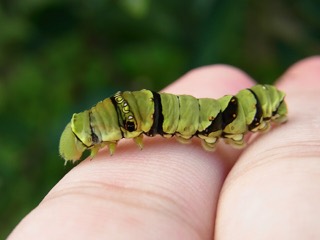 Asian Swallowtail (reference photo)

Species Data
- Classification
- Lepidoptera / Papilionidae Source
- Size
- Adult forewing length 4–6 cm; the spring form is smaller than the summer form
- Diet
- Herbivore Larvae feed on the leaves of citrus-family plants (Zanthoxylum ailanthoides, citrus, etc.); adults drink flower nectar
- Distribution
- Found throughout Japan from Hokkaido to the Ryukyu Islands, as well as Taiwan, mainland China, the Korean Peninsula, and the Russian Far East, with naturalized populations in Hawaii. Source
- Sources
- ja.wikipedia.org
Did You Know?
- Its caterpillar changes disguise as it grows: young larvae mimic bird droppings with black-and-white coloring, while mature larvae turn bright green. Source
- When threatened, the caterpillar everts a bright yellow forked organ called an osmeterium behind its head, releasing a pungent terpene-based odor to deter predators. Source
Where to See This Species
Operating facilities registered on this site: Japan 0
Verified individual animals and facilities will be added as official information becomes available.
Conservation Story
Conservation Status
Not Evaluated (NE)
Sources
Support Conservation
A visit is a small, positive way to support the daily lives of the animals you care about.
- Visit
- A visit itself helps support the facility.
- Animal Supporter Programs & Giving
- Find ways to support the facility through its official website.
FAQ
- What do Asian swallowtail caterpillars eat?
- They feed on the leaves of citrus-family (Rutaceae) plants such as citrus trees and Zanthoxylum ailanthoides. Source
- How does it defend itself as a caterpillar?
- When disturbed it extends a forked, foul-smelling orange organ called an osmeterium from behind its head to deter predators. Source
- How many operating facilities are registered here?
- Operating facilities registered on this site: Japan 0 Source
Books & gear
Source: ja.wikipedia.org en.wikipedia.org