Tiger Keelbackヤマカガシ
Rhabdophis tigrinusLC— Least Concern
The tiger keelback is a colubrid snake widespread across Japan and much of East Asia, known for a remarkable defense strategy: it sequesters toxic cardiotonic steroids from the toads it eats and stores them in a pair of nuchal glands on the back of its neck. Despite short rear fangs, its venom is potent enough that its lethal dose for a mouse is far smaller than many other colubrids, and Japan has recorded rare but serious envenomation cases. Females even pass sequestered toad toxins to their eggs, so hatchlings are chemically defended from birth.
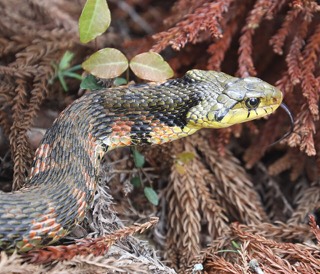 Tiger Keelback (reference photo)

Species Data
- Classification
- Squamata / Colubridae Source
- Size
- Total length 60–120 cm
- Diet
- Carnivore Carnivorous, feeding mainly on frogs and also preying on salamanders and other urodeles, Japanese grass lizards, and loaches
- Distribution
- Distributed across most of Japan (Honshu, Shikoku, Kyushu, and many outlying islands) as well as the Korean Peninsula, much of China, the Russian Far East, Taiwan, and Vietnam. Source
- Sources
- ja.wikipedia.org en.wikipedia.org
Did You Know?
- Its rear fangs are less than 2 mm long, yet the venom's lethal dose for a 20 g mouse is only 5.3 micrograms via intravenous injection, making it potent for a colubrid snake. Source
- A pair of nuchal glands on the back of the neck sequesters cardiotonic steroid toxins obtained from eaten toads, a phenomenon proposed in 2007 in which the snake essentially repurposes its prey's poison for its own defense. Source
- Females can transfer sequestered toad toxins to their eggs via the yolk, so hatchlings emerge already equipped with defensive toxins in their nuchal glands. Source
Where to See This Species
Operating facilities registered on this site: Japan 0
Verified individual animals and facilities will be added as official information becomes available.
Conservation Story
Conservation Status
Least Concern (LC)
Sources
Support Conservation
A visit is a small, positive way to support the daily lives of the animals you care about.
- Visit
- A visit itself helps support the facility.
- Animal Supporter Programs & Giving
- Find ways to support the facility through its official website.
FAQ
- Is the tiger keelback dangerous to humans?
- Yes, though bites are uncommon because its fangs are set far back in the mouth. Its venom is potent enough that Japan has recorded rare serious and even fatal envenomation cases, so it should never be handled carelessly. Source
- Why does this snake have glands on its neck?
- It sequesters toxic cardiotonic steroids from the toads it eats and stores them in a pair of nuchal glands, using its prey's own poison as a defensive weapon against predators. Source
- Do baby tiger keelbacks already have toxic glands?
- Yes. Females can transfer toad-derived toxins to their eggs through the yolk, so hatchlings emerge with chemically defended nuchal glands from the moment they are born. Source
- How many operating facilities are registered here?
- Operating facilities registered on this site: Japan 0 Source
Books & gear
Source: ja.wikipedia.org en.wikipedia.org