West Indian Manateeアメリカマナティー
Trichechus manatusVU— Vulnerable
The West Indian manatee is a large, gentle marine mammal found in coastal waters and rivers from the southeastern United States through the Caribbean to northern South America. A herbivore, it grazes on seagrass and other aquatic plants for several hours a day and gathers in warm-water refuges during colder months. The IUCN lists the species as Vulnerable, with boat strikes and habitat loss among the main threats to its survival.
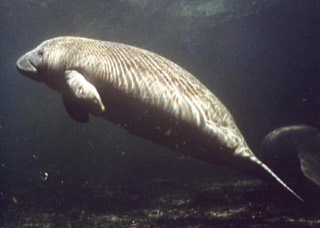 West Indian Manatee (reference photo)

Species Data
- Classification
- Sirenia / Trichechidae Source
- Size
- Body length about 2.4–3.5 m (maximum about 4.6 m)
- Weight
- About 200–600 kg (record about 1,655 kg)
- Lifespan
- Wild: over 50 years (captive records of 69–71 years)
- Diet
- Herbivore Herbivorous, feeding mainly on seagrasses such as eelgrass and aquatic plants such as water hyacinth, as well as mangrove leaves and algae; spends more than 5 hours a day feeding and consumes 4–10% of its body weight
- Activity
- Feeds mainly during the day; generally solitary but gathers in warm waters in winter and during the breeding season
- Distribution
- The West Indian manatee is found in coastal and river waters from the southeastern United States through the Caribbean to northern South America, divided into the Florida manatee and Antillean manatee subspecies. Source
- Sources
- ja.wikipedia.org en.wikipedia.org
Did You Know?
- Its molars are continuously replaced throughout life in a process called "marching molars," migrating forward at 1 to 2 millimeters per month to replace worn teeth. Source
- Its entire body is covered in sensitive tactile hairs that are thought to function like a fish's lateral line, detecting water movement. Source
- In winter, manatees leave cooling coastal waters and gather in warm-water refuges, including areas near power plant discharge outlets. Source
Where to See This Species
Operating facilities registered on this site: Japan 0
Verified individual animals and facilities will be added as official information becomes available.
Temporarily closed facilities
Shinyashima SuizokukanKagawaOpened in 1969
Temporarily closed Official Site
Source links to official sites, official YouTube channels, and news aggregators such as Zoo Ring. Visit the publisher for the full item.
Conservation Story
Conservation Status
Vulnerable (VU)
Sources
Support Conservation
A visit is a small, positive way to support the daily lives of the animals you care about.
- Visit
- A visit itself helps support the facility.
- Animal Supporter Programs & Giving
- Find ways to support the facility through its official website.
FAQ
- What do West Indian manatees eat?
- They are herbivores that graze on seagrass and other aquatic and coastal plants, spending five or more hours a day feeding and consuming 4 to 10 percent of their body weight. Source
- How long do West Indian manatees live?
- In the wild they can live 50 years or more, and captive individuals have lived into their late 60s and beyond. Source
- Why do manatees gather in warm water in winter?
- Manatees are sensitive to cold, so during winter they move away from cooling coastal waters and congregate in warm-water refuges, including natural springs and areas near power plant discharge. Source
- How many operating facilities are registered here?
- Operating facilities registered on this site: Japan 0 Source
Books & gear
Source: ja.wikipedia.org