White-faced Sakiシロガオサキ
Pithecia pitheciaLC— Least Concern
The white-faced saki is a small primate of northern South America, ranging across Guyana, Suriname, Venezuela, and northern Brazil. Males and females look strikingly different, with black-furred males sporting a pale face and browner females showing subtler striping. A largely seed-eating species and remarkably agile leaper, it is classified as Least Concern by the IUCN.
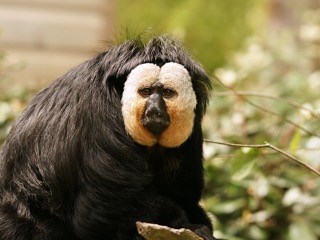 White-faced Saki (reference photo)

Species Data
- Classification
- Primates / Pitheciidae Source
- Size
- Males 73–97 cm / females 71–82 cm
- Weight
- Males about 1.65–2.5 kg / females about 1.55–1.75 kg
- Lifespan
- Wild: about 14 years / captive: up to about 36 years
- Diet
- Omnivore Eats fruit, nuts, seeds, and insects, with a strong preference for seeds, which are said to make up more than 60% of the diet; also eats young leaves, honey, and small animals
- Activity
- Diurnal, most active in early morning and afternoon
- Distribution
- The white-faced saki is found in northern South America, including Guyana, Suriname, French Guiana, Venezuela, and northern Brazil. Source
- Sources
- ja.wikipedia.org en.wikipedia.org
Did You Know?
- Males are almost entirely black with a striking white face, while females and juveniles have dark brown fur with grayish-brown striping, giving the species pronounced sexual dimorphism in coloration. Source
- Its exceptional leaping ability, accounting for more than 70 percent of its locomotion, has earned it the nickname "flying monkey" (mono volador) in parts of its range. Source
- It sleeps high in leafy trees, typically 15 to 20 meters above the ground, to avoid predators. Source
Where to See This Species
Operating facilities registered on this site: Japan 1
Former facilities
North Safari SapporoHokkaidoOpened in 2005
Closed: 2025-09-30 Official Site
- シロガオサキ×昼寝 #Pitheciapithecia#whitefacedsaki#シロガオサキ #モップくん#日本モンキーセンター#japanmonkeycentre
- 【日本平動物園】シロガオサキ「ミツオ」が食べるだけの動画#日本平動物園 #nihondairazoo #動物 #癒し #zoo #shorts ##シロガオサキ
Source links to official sites, official YouTube channels, and news aggregators such as Zoo Ring. Visit the publisher for the full item.
Conservation Story
Conservation Status
Least Concern (LC)
Sources
Support Conservation
A visit is a small, positive way to support the daily lives of the animals you care about.
- Visit
- A visit itself helps support the facility.
- Animal Supporter Programs & Giving
- Find ways to support the facility through its official website.
- Furusato Nozei
- Municipally run facilities may share official guidance for this Japanese hometown-tax program.
FAQ
- Why do male and female white-faced sakis look so different?
- Males are mostly black with a distinctive white or reddish-white face, while females and juveniles have dark brown fur with faint grayish striping, making the species highly sexually dimorphic. Source
- What do white-faced sakis eat?
- They are primarily seed predators, with seeds making up 60 percent or more of their diet, supplemented by fruit, young leaves, and occasionally insects or small animals. Source
- Are white-faced sakis good jumpers?
- Yes, leaping makes up more than 70 percent of their movement through the forest canopy, which has earned them the nickname "flying monkey." Source
- How many operating facilities are registered here?
- Operating facilities registered on this site: Japan 1 Source
Books & gear
Source: ja.wikipedia.org en.wikipedia.org