Baikal Sealバイカルアザラシ
Pusa sibiricaLC— Least Concern
The Baikal seal is the world's only pinniped that lives exclusively in fresh water, found nowhere but Lake Baikal in Siberia. It feeds mainly on golomyanka, an oilfish unique to the lake, diving as deep as 400 meters in search of prey. With a stable population of roughly 80,000 to 100,000 and no major current threats, it is classified as Least Concern by the IUCN.
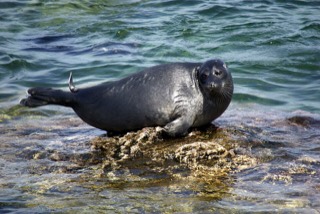 Baikal Seal (reference photo)
_(3635255975).jpg)
Species Data
- Classification
- Carnivora / Phocidae Source
- Size
- Body length about 1.1–1.4 m (record 1.65 m)
- Weight
- About 63–70 kg (record 130 kg)
- Lifespan
- In the wild, males reach about 52 years and females about 56, though females lose reproductive capacity around age 30
- Diet
- Piscivore Piscivorous; golomyanka (Comephorus), a genus of sculpins, makes up more than 90% of food intake from winter to spring. It also preys on 29 other fish species and on amphipods
- Activity
- Forages mainly at night and at dawn and dusk, moving to depths of 10–25 m from sunset until before dawn; can dive to 400 m and stay under for more than 40 minutes
- Distribution
- The Baikal seal is endemic to Lake Baikal in Siberia, Russia, making it the only major pinniped species that lives exclusively in fresh water. It occasionally ranges into rivers flowing into the lake. Source
- Sources
- ja.wikipedia.org en.wikipedia.org
Did You Know?
- Adapted to Lake Baikal's exceptional water clarity, the Baikal seal has unusually large eyes, and the frontal bone between them narrows to just 3 mm wide. Source
- The species is thought to have inhabited Lake Baikal for around 2 million years, and remains one of the very few seal species found exclusively in fresh water. Source
- Unusually for a true seal, Baikal seal females sometimes give birth to twins. Source
Where to See This Species
Operating facilities registered on this site: Japan 5
How to tell Sea Lions, Seals, Fur Seals, and Walruses apart →Ishikawa DoubutsuenIshikawaAbout 60 minutes from the Kanazawa-Morimoto Interchange on the Hokuriku Expressway, about 40 minutes from the Kanazawa-Nishi Interchange, and about 20 minutes from the Komatsu Interchange.
Sunshine AquariumTokyoFrom Ikebukuro Station (Exit 35), walk along Sunshine 60 Street.
SENDAI UMINO-MORI AQUARIUMMiyagiOpened in 2015
Toba AquariumMieOpened in 1955
Hakone-en AquariumKanagawa
Former facilities
Marinpiamatsushima SuizokukanMiyagiOpened in 1927
Closed: 2015-05-10 Official Site
Temporarily closed facilities
Shinyashima SuizokukanKagawaOpened in 1969
Temporarily closed Official Site
Source links to official sites, official YouTube channels, and news aggregators such as Zoo Ring. Visit the publisher for the full item.
Conservation Story
Conservation Status
Least Concern (LC)
Sources
Support Conservation
A visit is a small, positive way to support the daily lives of the animals you care about.
- Visit
- A visit itself helps support the facility.
- Animal Supporter Programs & Giving
- Find ways to support the facility through its official website.
- Furusato Nozei
- Municipally run facilities may share official guidance for this Japanese hometown-tax program.
FAQ
- Where do Baikal seals live?
- They are endemic to Lake Baikal in Siberia, Russia, making them the only major pinniped species that lives exclusively in fresh water. Source
- What do Baikal seals eat?
- Mostly golomyanka, a cottoid oilfish found only in Lake Baikal, which makes up over 90% of their winter and spring diet, along with other fish species and amphipods. Source
- How deep can Baikal seals dive?
- They typically dive for 2 to 4 minutes, but they are capable of diving as deep as 400 meters and staying underwater for more than 40 minutes. Source
- How many operating facilities are registered here?
- Operating facilities registered on this site: Japan 5 Source
Books & gear
Source: ja.wikipedia.org