Black Swanコクチョウ
Cygnus atratusLC— Least Concern
The black swan is a striking all-black waterbird native to Australia, easily recognized by its red bill and curled wing feathers. Its 1697 discovery overturned the long-held European assumption that all swans were white, later giving rise to the term "black swan event."
Operating facilities registered on this site: Japan 1 (Sendai Yagiyama Zoological Park). These facilities are confirmed by resident animal records or the facility’s official information.
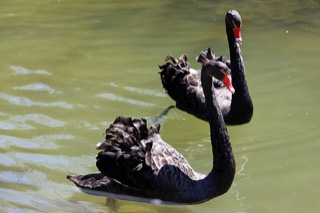 Black Swan (reference photo)

Species Data
- Classification
- Anseriformes / Anatidae Source
- Size
- 110–142 cm
- Weight
- 3.7–9 kg (a maximum of 9 kg has been recorded)
- Lifespan
- Long-lived in both the wild and captivity; records are unclear but it is said to live for decades
- Diet
- Herbivore Almost entirely herbivorous, eating aquatic and waterside plants and algae; sometimes feeds on land
- Distribution
- Native to southeastern and southwestern Australia, with introduced populations in New Zealand, Europe, Japan, and elsewhere. Source
- Sources
- ja.wikipedia.org en.wikipedia.org
Did You Know?
- Pairs form lifelong bonds and typically reuse the same nest each year, repairing or rebuilding it as needed. Source
- Before its discovery in Australia in 1697, it was assumed all swans were white; the revelation later inspired the term "black swan event" for a rare, high-impact occurrence once thought impossible. Source
Where to See This Species
Operating facilities registered on this site: Japan 1
Sendai Yagiyama Zoological ParkMiyagiTake the Sendai Subway Tozai Line to Yagiyama Zoological Park Station; the zoo is right by the elevator from Central Exit 1 (about 12 minutes from Sendai Station).
Possible records, not yet confirmed: 3
These facilities are not confirmed by an official animal list. They appear in secondary sources such as Wikipedia; check the facility’s official website for current exhibits.
Izu Shaboten ZooShizuokaOpened in 1959
(Not confirmed by official sources) Source
Zoo in Kiryū, GunmaGunmaOpened in 1953
(Not confirmed by official sources) Source
Hirakawa ZooKagoshimaAbout a 20-minute walk from Goino Station on the JR Ibusuki-Makurazaki Line, or take a bus bound for Taniyama / Dobutsuen from Fukuhira Nokyo-mae to the last stop.
(Not confirmed by official sources) Source
Conservation Story
Conservation Status
Least Concern (LC)
Sources
Support Conservation
A visit is a small, positive way to support the daily lives of the animals you care about.
- Visit
- A visit itself helps support the facility.
- Animal Supporter Programs & Giving
- Find ways to support the facility through its official website.
- Furusato Nozei
- Municipally run facilities may share official guidance for this Japanese hometown-tax program.
FAQ
- Where can I see Black Swan in Japan?
- Operating facilities registered on this site: Japan 1 (Sendai Yagiyama Zoological Park). These facilities are confirmed by resident animal records or the facility’s official information. Source
- Where do black swans come from originally?
- They are native to southeastern and southwestern Australia, though introduced populations now exist in New Zealand, parts of Europe, and Japan. Source
- What is unusual about black swan pair bonds?
- About one-quarter of pairings are same-sex, mostly between males, and pairs mate for life, often reusing and repairing the same nest year after year. Source
Books & gear
Source: ja.wikipedia.org en.wikipedia.org