Pacific Bluefin Tunaクロマグロ
Thunnus orientalisLC— Least Concern
The Pacific bluefin tuna is a massive, fast-swimming predator of the North Pacific, capable of reaching 3 meters and over 400 kilograms. Prized in Japan's sushi markets for its rich, fatty meat, it keeps its body warmer than the surrounding ocean using a specialized blood vessel network, and its population, once severely overfished, has been recovering under stricter international management.
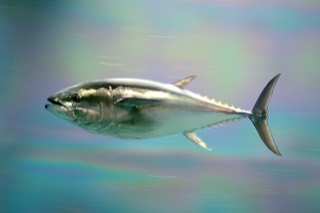 Pacific Bluefin Tuna (reference photo)

Species Data
- Classification
- Scombriformes / Scombridae Source
- Size
- Exceeds 3 m at maximum; generally around 2 m
- Weight
- Maximum over 400–450 kg, with some reports of 550 kg
- Lifespan
- Sources vary, giving about 15 years or about 26 years
- Diet
- Carnivore Carnivorous, preying on other fish, crustaceans, and cephalopods (squid) during the day; does not feed at night
- Distribution
- Found primarily in the North Pacific from East Asia to western North America, with spawning grounds in the northwestern Philippine Sea and the Sea of Japan; some individuals migrate as far as the Eastern Pacific. Source
- Sources
- ja.wikipedia.org en.wikipedia.org
Did You Know?
- It breathes by swimming continuously with its mouth open to force water over its gills, meaning it never truly sleeps, and large individuals can reach swimming speeds of 70 to 90 km/h. Source
- A network of blood vessels called the retia mirabilia lets it keep its body temperature up to about 20°C warmer than the surrounding seawater, allowing it to stay active in cold water. Source
- Overfishing drove the population down to about 2% of historic levels by 2010, but stricter management helped it recover to roughly 23% of historic levels by 2020, according to a 2024 stock assessment. Source
Where to See This Species
Operating facilities registered on this site: Japan 5
Kagoshima City AquariumKagoshimaFrom Kagoshima-Chuo Station, take the tram (Route 2) to the Suizokukan-guchi stop and walk 8 minutes.
NOTOJIMA AQUARIUMIshikawaThe nearest station is Wakura-Onsen Station.
Osaka Aquarium KaiyukanOsakaOpened in 1990
Takasakiyamashizen DoubutsuenOitaOpened in 1953
AQUARIUM ASAMUSHIAomoriOpened in 1983
Conservation Story
Conservation Status
Least Concern (LC)
Sources
Support Conservation
A visit is a small, positive way to support the daily lives of the animals you care about.
- Visit
- A visit itself helps support the facility.
- Animal Supporter Programs & Giving
- Find ways to support the facility through its official website.
- Furusato Nozei
- Municipally run facilities may share official guidance for this Japanese hometown-tax program.
FAQ
- How fast can a Pacific bluefin tuna swim?
- Large individuals can reach swimming speeds of roughly 70 to 90 km/h, among the fastest of any fish. Source
- Is the Pacific bluefin tuna endangered?
- Its population fell to about 2% of historic levels by 2010 due to overfishing, but a 2024 stock assessment found it had recovered to roughly 23% of historic levels by 2020 following stricter fishing controls. Source
- How many operating facilities are registered here?
- Operating facilities registered on this site: Japan 5 Source
Books & gear
Source: ja.wikipedia.org en.wikipedia.org