Chinstrap Penguinヒゲペンギン
Pygoscelis antarcticusLC— Least Concern
The chinstrap penguin is an Antarctic penguin named for the thin black band running under its chin like a helmet strap. Known as one of the most aggressive penguin species, it feeds mainly on krill and can swim up to 80 km offshore each day in search of food.
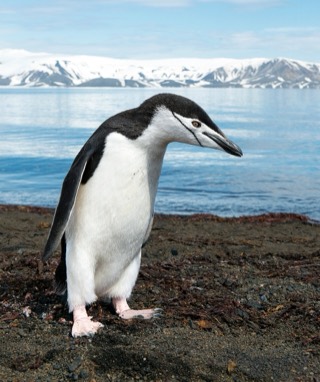 Chinstrap Penguin (reference photo)
_on_Deception_Island_in_Antarctica.jpg)
Species Data
- Classification
- Sphenisciformes / Spheniscidae Source
- Size
- 68–76 cm
- Weight
- 3.2–5.3 kg (varies seasonally)
- Lifespan
- Average under 12 years in the wild, record 20 years
- Diet
- Planktivore Preys mainly on krill, and also eats fish, shrimp, and squid; swims up to 80 km offshore each day to forage
- Distribution
- Has a circumpolar Antarctic distribution, breeding in Antarctica, Argentina, Chile, Bouvet Island, and South Georgia and the South Sandwich Islands. Source
- Sources
- ja.wikipedia.org en.wikipedia.org
Did You Know?
- The thin black band running under its chin resembles a helmet strap, giving the species its name; it is considered one of the most aggressive and ill-tempered penguin species. Source
- It sleeps in over 10,000 brief bursts of about four seconds each per day, allowing it to rest while staying alert to predators threatening its chicks. Source
Where to See This Species
Operating facilities registered on this site: Japan 5
How to tell Penguins apart →Nagasakipengin SuizokukanNagasakiOpened in 2001
Port of Nagoya Public AquariumAichi5 minutes on foot from Exit 3 of Nagoyako Station on the Subway Meiko Line (transfer to the Meiko Line at Sakae Station on the Higashiyama Line, or at Kanayama Station on the Meitetsu and JR lines).
Adventure WorldWakayamaOpened in 1978
Yokohama Hakkeijima Sea ParadiseKanagawaThe nearest station is Hakkeijima Station on the Seaside Line (connecting from Kanazawa-Hakkei Station on the Keikyu Line or Shin-Sugita Station on the JR Negishi Line).
Conservation Story
Conservation Status
Least Concern (LC)
Sources
Support Conservation
A visit is a small, positive way to support the daily lives of the animals you care about.
- Visit
- A visit itself helps support the facility.
- Animal Supporter Programs & Giving
- Find ways to support the facility through its official website.
- Furusato Nozei
- Municipally run facilities may share official guidance for this Japanese hometown-tax program.
FAQ
- Why is it called the chinstrap penguin?
- It gets its name from the narrow black band of feathers running under its chin, which looks like the strap of a helmet. Source
- Is the chinstrap penguin endangered?
- It is currently listed as Least Concern with a global population of about 8 million, but some colonies—such as on Elephant Island—have declined by roughly 50% in under 50 years due to climate-driven krill shortages. Source
- How many operating facilities are registered here?
- Operating facilities registered on this site: Japan 5 Source
Books & gear
Source: ja.wikipedia.org en.wikipedia.org