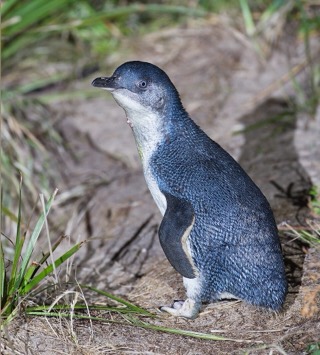
Identification guide 18 species

How to Tell Penguins Apart

There are 18 penguin species in the world, and more than 11 can be seen in Japan — one of the best countries for meeting penguins. This guide covers all 18, including the 7 not kept in Japan, and adds side-by-side tips for the trickiest look-alikes such as King vs Emperor and the four banded penguins.

Identification steps

4 steps

  1. 1

    Start by narrowing it down by size

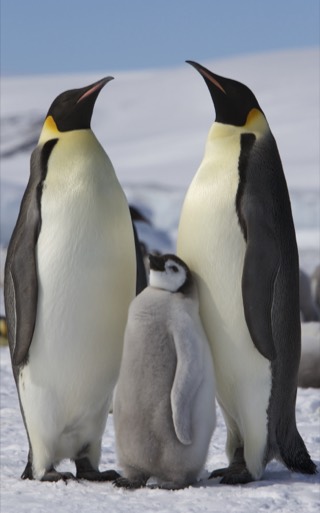
    Sizes range from the largest, the Emperor Penguin (about 120 cm), down to the smallest, the Little Penguin (about 40 cm). If it is large and has an orange patch at the neck, it is an Emperor or a King.

  2. 2

    Look at the plumes on the head

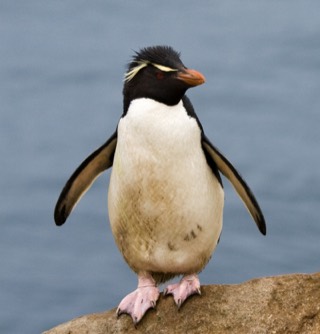
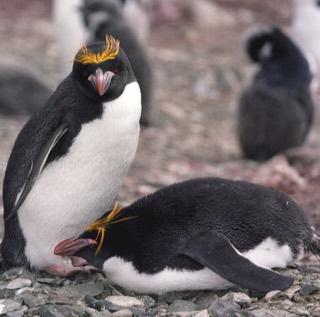
    Yellow plumes above the eyes mean it belongs to the crested group (rockhoppers and Macaroni). A dense tuft spreading out to both sides from the center of the forehead means Macaroni; plumes that extend like eyebrows mean a rockhopper.

  3. 3

    Count the black bands on the chest

    One black band across the chest means a Humboldt or African Penguin; two bands mean a Magellanic. If the bare pink patch at the base of the bill is wide, it is an African Penguin.

  4. 4

    Finish with the face pattern

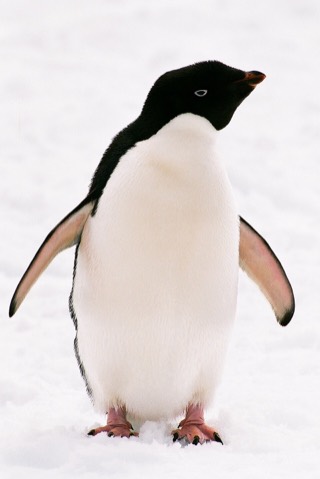
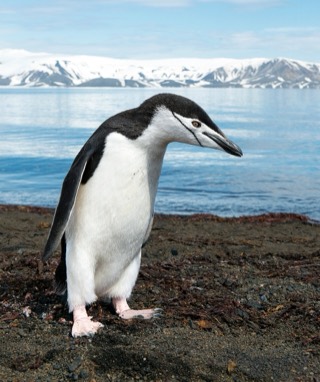
    The genus Pygoscelis is told apart by the face. A white band above the eye = Gentoo; an all-black head with only a white eye ring = Adelie; a thin black line under the chin = Chinstrap.

Large group (orange at the neck)

2 species

Emperor Penguin
Photo: Ian Duffy from UK / CC BY 2.0 / Source / cropped

Identification specimen emperor-penguin

Emperor Penguinエンペラーペンギン

Aptenodytes forsteriEN— Endangered

Size
About 100–130 cm
Key features
The largest living penguin. The pale orange patch at the neck merges into the back with a blurred edge. The only penguin that breeds in the Antarctic in the depth of winter.
Habitat
Antarctic continent
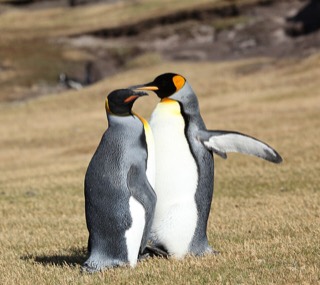
King Penguin
Photo: Liam Quinn from Canada / CC BY-SA 2.0 / Source / cropped

Identification specimen king-penguin

King Penguinキングペンギン

Aptenodytes patagonicusLC— Least Concern

Size
About 85–95 cm
Key features
Second in size only to the Emperor. The orange ear patch is vivid and teardrop-shaped, and the orange on the lower bill is deep with a sharp edge.
Habitat
Sub-Antarctic islands

Genus Pygoscelis (told apart by the face pattern)

3 species

Gentoo Penguin
Photo: W. Bulach / CC BY-SA 4.0 / Source / cropped

Identification specimen gentoo-penguin

Gentoo Penguinジェンツーペンギン

Pygoscelis papuaLC— Least Concern

Size
About 75–90 cm
Key features
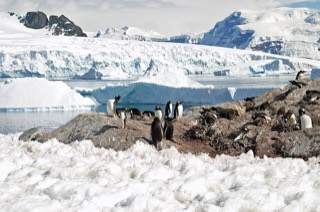
A white band running from above the eye to the back of the head, and a bright orange bill. One of the fastest-swimming birds.
Habitat
Antarctic Peninsula and sub-Antarctic
Adelie penguin
Photo: Nanosmile = Reinhard Jahn, Mannheim / CC BY-SA 2.0 de / Source / cropped

Identification specimen adelie-penguin

Adelie penguinアデリーペンギン

Pygoscelis adeliaeLC— Least Concern

Size
About 70 cm
Key features
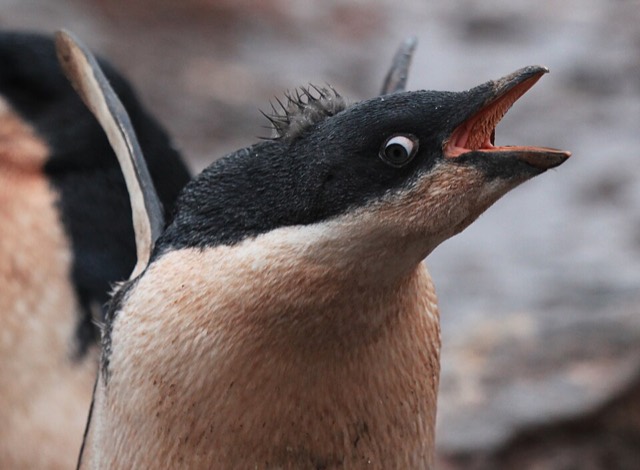
The whole head is black, with no markings other than a white eye ring — a simple face. The signature penguin of Antarctica.
Habitat
Coast of the Antarctic continent
Chinstrap Penguin
Photo: Christopher Michel / CC BY 2.0 / Source / cropped

Identification specimen chinstrap-penguin

Chinstrap Penguinヒゲペンギン

Pygoscelis antarcticusLC— Least Concern

Size
About 70 cm
Key features
A thin black line across the underside of the chin looks like a helmet strap. One of the easiest penguins to identify.
Habitat
Around the Antarctic Peninsula

Banded group (told apart by the black chest bands)

4 species

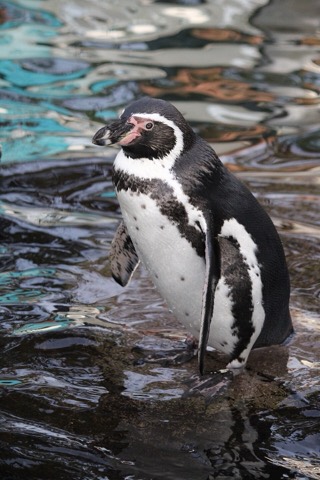
Humboldt Penguin
Photo: Christian Ursilva from København, Danmark / CC BY-SA 4.0 / Source / cropped

Identification specimen humboldt-penguin

Humboldt Penguinフンボルトペンギン

Spheniscus humboldtiVU— Vulnerable

Size
About 65 cm
Key features
A single black band across the chest. Bare pink skin at the base of the bill. The most commonly kept penguin in Japan.
Habitat
Coasts of Chile and Peru, South America
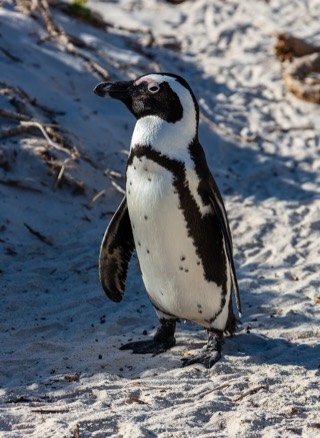
African Penguin
Photo: Diego Delso / CC BY-SA 4.0 / Source / cropped

Identification specimen african-penguin

African Penguinケープペンギン(アフリカペンギン)

Spheniscus demersusCR— Critically Endangered

Size
About 60–70 cm
Key features
One chest band, but the bare pink patch above the eye is wider than the Humboldt's. Its call sounds like a donkey.
Habitat
Coast of South Africa
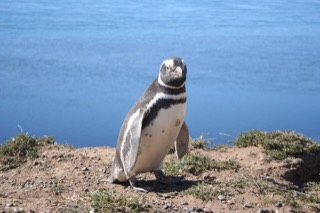
Magellanic Penguin
Photo: Mcatan (Wikimedia Commons) / CC BY-SA 3.0 / Source / cropped

Identification specimen magellanic-penguin

Magellanic Penguinマゼランペンギン

Spheniscus magellanicusLC— Least Concern

Size
About 70 cm
Key features
Two black bands across the chest are the giveaway, reliably separating it from the single-banded Humboldt and African Penguins.
Habitat
Coast of southern South America
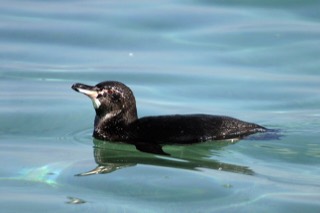
Galápagos Penguin
Photo: Charles J. Sharp / CC BY-SA 3.0 / Source / cropped

Identification specimen galapagos-penguin

Galápagos Penguinガラパゴスペンギン

Spheniscus mendiculusEN— Endangered

Size
About 50 cm
Key features
The smallest of the banded penguins. The chest band is thin, and a thin white line curves from the eye to the chin. The only penguin whose range crosses the equator.
Habitat
Galápagos Islands

Crested group (yellow plumes)

7 species

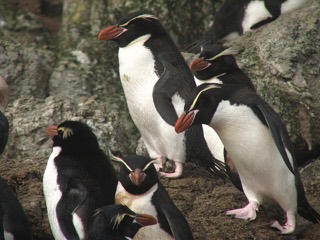
Southern Rockhopper Penguin
Photo: Samuel Blanc / CC BY-SA 3.0 / Source / cropped

Identification specimen southern-rockhopper-penguin

Southern Rockhopper Penguinミナミイワトビペンギン

Eudyptes chrysocomeVU— Vulnerable

Size
About 50 cm
Key features
Yellow eyebrow-like plumes above the eyes and red eyes. Moves by hopping over rocks.
Habitat
Sub-Antarctic rocky shores
Macaroni Penguin
Photo: Jerzy Strzelecki / CC BY 3.0 / Source / cropped

Identification specimen macaroni-penguin

Macaroni Penguinマカロニペンギン

Eudyptes chrysolophusVU— Vulnerable

Size
About 70 cm
Key features
Orange tufted plumes spreading out to both sides from the center of the forehead. The crest is denser and showier than a rockhopper's.
Habitat
Sub-Antarctic
Northern Rockhopper Penguin
Photo: Antoine Lamielle / CC BY-SA 4.0 / Source / cropped

Identification specimen northern-rockhopper-penguin

Northern Rockhopper Penguinキタイワトビペンギン

Eudyptes moseleyiEN— Endangered

Size
About 55 cm
Key features
The eyebrow plumes are longer and showier than the Southern Rockhopper's, hanging below the black-and-white boundary of the throat.
Habitat
Tristan da Cunha to Amsterdam Island
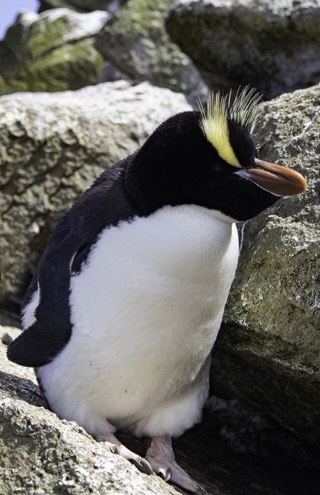
Fiordland Penguin
Photo: travelwayoflife / CC BY-SA 2.0 / Source / cropped

Identification specimen fiordland-penguin

Fiordland Penguinフィヨルドランドペンギン

Eudyptes pachyrhynchusNT— Near Threatened

Size
About 55 cm
Key features
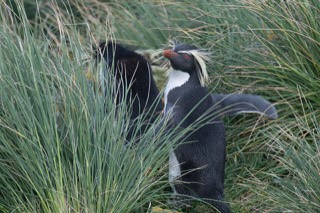
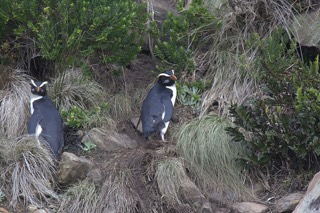
Yellow eyebrow plumes and white streaks on the cheeks. No bare skin at the base of the bill (the difference from the Snares).
Habitat
Forested coasts of southwestern New Zealand

Where to see this species

Not exhibited in Japan.

Fiordland Penguin species profile
Snares Penguin
Photo: Lin Padgham / CC BY 2.0 / Source / cropped

Identification specimen snares-penguin

Snares Penguinスネアーズペンギン

Eudyptes robustusVU— Vulnerable

Size
About 55 cm
Key features
Resembles the Fiordland, but has bare pink skin at the base of its thick bill and no white streaks on the cheeks.
Habitat
Snares Islands (sub-Antarctic New Zealand)

Where to see this species

Not exhibited in Japan.

Snares Penguin species profile
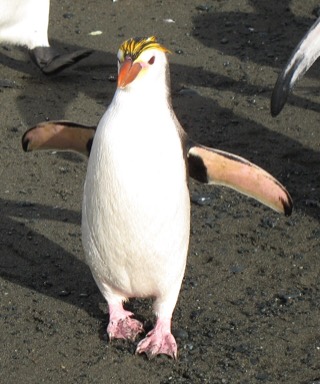
Royal Penguin
Photo: M. Murphy / Public domain / Source / cropped

Identification specimen royal-penguin

Royal Penguinロイヤルペンギン

Eudyptes schlegeliLC— Least Concern

Size
About 65–75 cm
Key features
Closely resembles the Macaroni, but the face and chin are white to pale gray (black in the Macaroni).
Habitat
Macquarie Island (endemic)

Where to see this species

Not exhibited in Japan.

Royal Penguin species profile

Yellow around the eyes, no crest

1 species

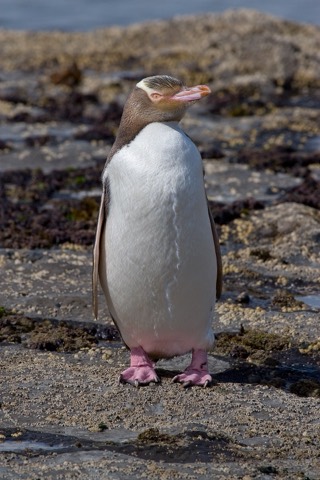
Yellow-eyed Penguin
Photo: Christian Mehlführer / CC BY 2.5 / Source / cropped

Identification specimen yellow-eyed-penguin

Yellow-eyed Penguinキガシラペンギン

Megadyptes antipodesEN— Endangered

Size
About 65–75 cm
Key features
A pale yellow band wraps from around the eyes to the back of the head, and the iris is yellow too. No crest.
Habitat
South Island of New Zealand and sub-Antarctic islands

Where to see this species

Not exhibited in Japan.

Yellow-eyed Penguin species profile

Smallest group

1 species

Compare similar species

5 pairs

King vs Emperor

The two giant penguins, told apart by the orange patch at the neck. Once you know them, size and the outline of the patch give it away at a glance.

FeatureKing PenguinEmperor Penguin
Size About 85–95 cm About 100–130 cm (largest living penguin)
Orange ear patch Vivid orange, teardrop (comma) shaped, with a crisp outline Pale orange with a blurred edge, joining the back at the nape
Orange beside the bill Deep, vivid orange Pale pink to lilac
Breeding grounds and chicks Sub-Antarctic islands. Chicks are covered in dark brown down (once mistaken for a separate species) Breeds on the ice of the Antarctic continent in the depth of winter. Chicks have white around the face
Humboldt, African, Magellanic, and Galápagos

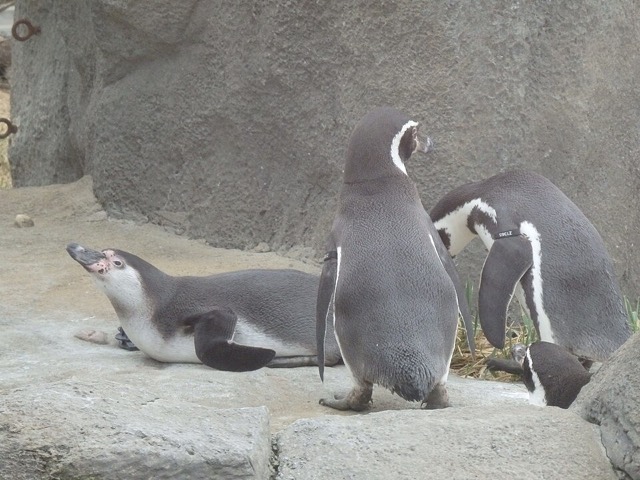
The four banded penguins, told apart by the black chest bands and the bare pink skin on the face.

FeatureHumboldt PenguinAfrican PenguinMagellanic PenguinGalápagos Penguin
Black chest bands One (thick) One (thin) Two (the giveaway) One (thin and indistinct)
Bare pink skin on the face Wide pink area at the base of the bill The pink gland above the eye is wide and conspicuous Bare skin is narrow A thin white line curves from the eye to the chin
Size About 65 cm About 60–70 cm About 70 cm About 50 cm (smallest; lives right on the equator)
Range Coasts of Chile and Peru Coast of South Africa Coast of southern South America Galápagos Islands (the only one to cross the equator)

Fiordland, Snares, and Erect-crested

Three very similar crested penguins. Told apart by the white cheek streaks, bare skin, and the direction of the plumes.

FeatureFiordland PenguinSnares PenguinErect-crested Penguin
White cheek streaks Has white streaks on the cheeks No white streaks on the cheeks No white streaks on the cheeks
Bare skin at the base of the bill Barely noticeable Bare pink skin at the base Pale bare skin at the base
Eyebrow plumes Droop backward from the brow Droop backward from the brow Plumes stand upright (the origin of the name)
Range Forested coasts of southwestern NZ Snares Islands (sub-Antarctic NZ) Bounty and Antipodes Islands

Macaroni vs Royal

The color of the face is the biggest difference.

FeatureMacaroni PenguinRoyal Penguin
Face and chin color Face and chin are black Face and chin are white to pale gray (the giveaway)
Forehead plumes Orange tufts spread out from the center of the forehead Nearly identical orange tufts
Range and status A wide range across the sub-Antarctic Endemic to Macquarie Island. Some regard it as a white-faced form of the Macaroni

Adults and Chicks

6 species

Emperor Penguin

Adult
Emperor Penguin(Adult)
Photo: Ian Duffy from UK / CC BY 2.0 / Source / cropped
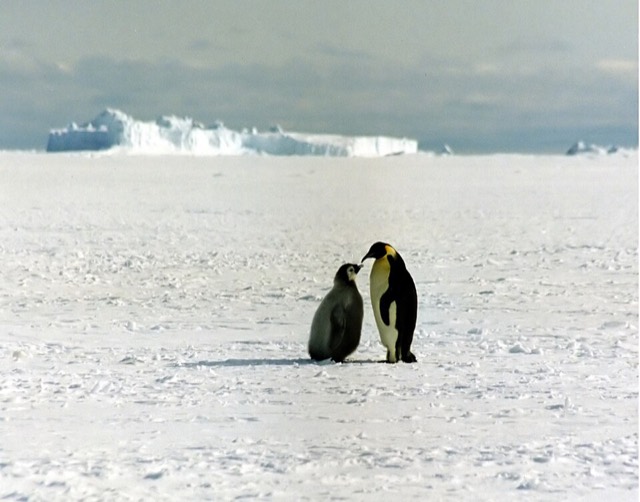
Chick
Emperor Penguin(Chick)
Photo: Brocken Inaglory / CC BY-SA 4.0 / Source / cropped

A chick in pale silver-gray down standing beside its parent. The head is black with white cheeks — a completely different look from the adult, with its black back and conspicuous yellow-orange at the neck.

King Penguin

Adult
King Penguin(Adult)
Photo: Liam Quinn from Canada / CC BY-SA 2.0 / Source / cropped
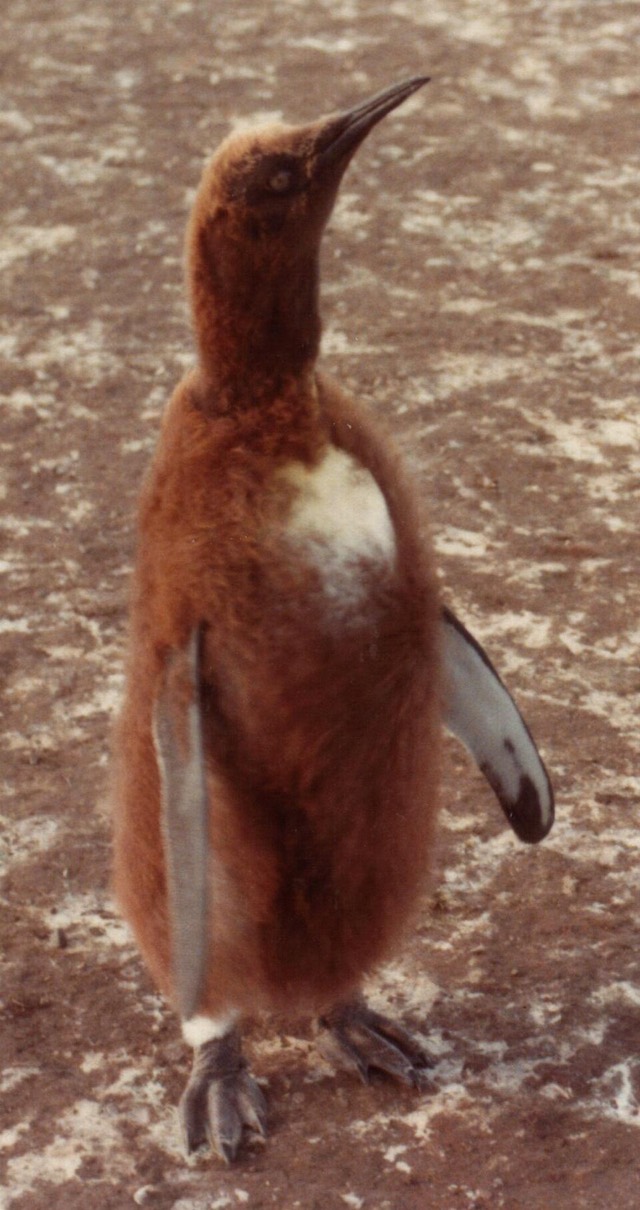
Chick
King Penguin(Chick)
Photo: B.navez / CC BY-SA 3.0 / Source / cropped

The "oakum boy," wrapped head to toe in fluffy dark brown down. So unlike the adult that it was once mistaken for a separate species (the photo shows one molting into adult plumage).

Gentoo Penguin

Adult
Gentoo Penguin(Adult)
Photo: W. Bulach / CC BY-SA 4.0 / Source / cropped
Chick
Gentoo Penguin(Chick)
Photo: dfaulder / CC BY 2.0 / Source / cropped

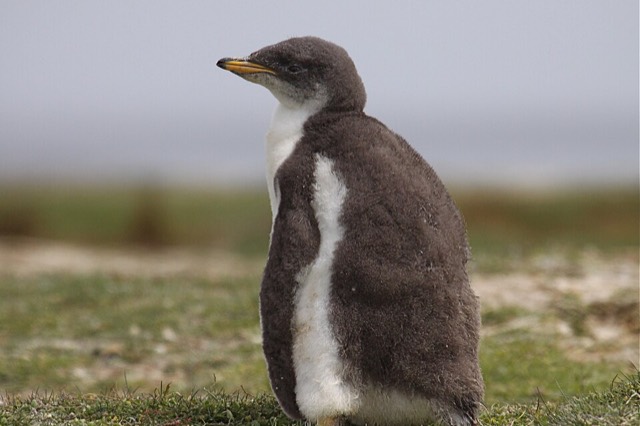
A chick covered in grayish-white down. The adult's hallmarks — the white band above the eye and the orange bill — have not yet appeared.

Adelie penguin

Adult
Adelie penguin(Adult)
Photo: Nanosmile = Reinhard Jahn, Mannheim / CC BY-SA 2.0 de / Source / cropped
Chick
Adelie penguin(Chick)
Photo: Liam Quinn / CC BY-SA 2.0 / Source / cropped

Gray to blackish-brown down, darker on the head. The adult's white eye ring and glossy black-and-white pattern are not yet present.

Humboldt Penguin

Adult
Humboldt Penguin(Adult)
Photo: Christian Ursilva from København, Danmark / CC BY-SA 4.0 / Source / cropped
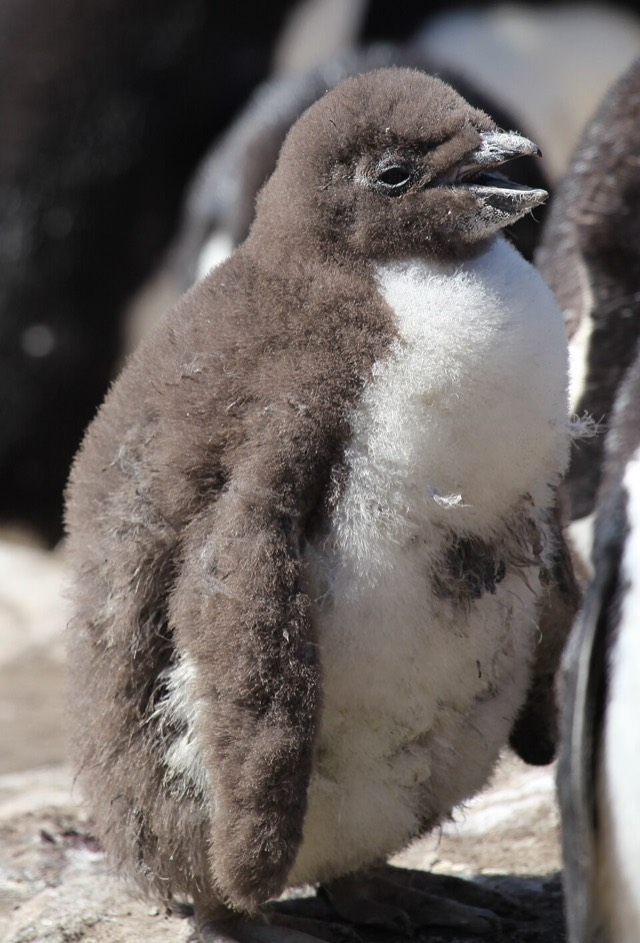
Chick
Humboldt Penguin(Chick)
Photo: eileenmak / CC BY 2.0 / Source / cropped

Covered in grayish-brown down, with neither the black chest band nor the pink on the face yet — a plain, featureless look.

Southern Rockhopper Penguin

Adult
Southern Rockhopper Penguin(Adult)
Photo: Samuel Blanc / CC BY-SA 3.0 / Source / cropped
Chick
Southern Rockhopper Penguin(Chick)
Photo: Liam Quinn / CC BY-SA 2.0 / Source / cropped

A chick in gray down. Its biggest hallmarks, the yellow plumes and red eyes, are still absent, and the head is plain gray.

Books & gear

Sources

Guide sources: ja.wikipedia.org en.wikipedia.org / Photos: see the Commons credit links beside each image.