Humboldt Penguinフンボルトペンギン
Spheniscus humboldtiVU— Vulnerable
The Humboldt penguin is a medium-sized penguin native to the Pacific coasts of Peru and Chile, where it breeds along the cold, nutrient-rich Humboldt Current. It feeds mainly on schooling fish such as anchovies and garfish, nesting in burrows or rocky crevices near the shore. Classified as Vulnerable due to overfishing, El Niño events, and habitat disturbance, it is nonetheless one of the most commonly kept penguins in zoos and aquariums worldwide.
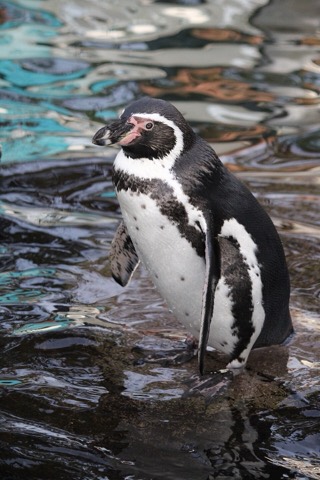 Humboldt Penguin (reference photo)
.jpg)
Species Data
- Classification
- Sphenisciformes / Spheniscidae Source
- Size
- Total length 64–69 cm
- Weight
- 2.9–6 kg (the heaviest of the banded penguins in the genus Spheniscus)
- Lifespan
- Wild: average about 25 years / captive: one individual reached 35 years
- Diet
- Piscivore Fish such as sauries, anchovies, and sardines, as well as squid
- Distribution
- Restricted to the Pacific coast of South America from Peru to Chile, following the cold, nutrient-rich Humboldt Current; about 80% of the world population lives within protected areas of northern Chile. Source
- Sources
- ja.wikipedia.org en.wikipedia.org
Did You Know?
- Named after the explorer Alexander von Humboldt, its toddler-like waddle led Peruvians to nickname it "pájaro niño" (baby bird). Source
- In Japan, the species breeds so readily in captivity that overpopulation has become a concern, and some facilities now limit breeding, even though the species is listed as threatened in the wild. Source
- In 2014, a same-sex male pair at a UK wildlife park successfully hatched and raised an abandoned egg, drawing international media attention. Source
Where to See This Species
Operating facilities registered on this site: Japan 39
Nagasakipengin SuizokukanNagasakiOpened in 2001
Awashima Marine ParkShizuokaOpened in 1963
NOTOJIMA AQUARIUMIshikawaThe nearest station is Wakura-Onsen Station.
Echizen Matsushima AquariumFukuiOpened in 1959
Yokohama Shiritsu Yokohama DoubutsuenKanagawaOpened in 1999
Yokohama Shiritsu Nogeyama DoubutsuenKanagawaOpened in 1951
Shimoda AquariumShizuokaOpened in 1967
Kamogawa Sea WorldChibaAbout 2 hours from Tokyo Station on the Wakashio limited express to JR Awa-Kamogawa Station, then about 10 minutes by free shuttle bus (departing from the West Exit bus stop).
Miyajima Public AquariumHiroshimaOpened in 2011
Kyoto City ZooKyotoOpened in 1903
Kiryuugaoka DoubutsuenGunmaIf driving, set your car navigation to "Kiryugaoka Amusement Park" (Kiryugaoka Yuenchi) rather than "Kiryugaoka Zoo" to reach the parking lot (searching by the zoo name may give an incorrect route).
Katsurahama AquariumKochiOpened in 1931
SHIZEN ZOOTokyoAbout a 15-minute walk from the north exit of Nishi-Kasai Station on the Tokyo Metro Tozai Line, or about a 20-minute walk from the south exit of Funabori Station on the Toei Shinjuku Line.
Noichi Zoological Park of Kochi PrefectureKochiA 20-minute walk or 13-minute rental-bicycle ride from Noichi Station on the Tosa Kuroshio Railway Gomen-Nahari Line.
Saitamakenkodomodoubutsu Shizen KouenSaitamaOpened in 1980
Sapporoshimaruyama DoubutsuenHokkaidoOpened in 1951
Shiritsu Shimonoseki Suizokukan KaikyoukanYamaguchiOpened in 2001
Hirakawa ZooKagoshimaAbout a 20-minute walk from Goino Station on the JR Ibusuki-Makurazaki Line, or take a bus bound for Taniyama / Dobutsuen from Fukuhira Nokyo-mae to the last stop.
Shuunanshitokuyama DoubutsuenYamaguchiOpened in 1960
KOMORO ZOONaganoAddress: 311 Cho, Komoro, Nagano Prefecture (inside Kaikoen).
Otaru AquariumHokkaidoOpened in 1958
Kinosaki Marine WorldHyogoAbout 10 minutes by Zentan Bus from JR Kinosaki-Onsen Station; get off at the Hiyoriyama (Marine World) bus stop.
ENOSHIMA AQUARIUMKanagawaOpened in 2004
Suzaka ZooNaganoFrom the Suzaka-Nagano-Higashi IC on the Joshin-etsu Expressway, take Route 403, turn right at the Kotaka-machi intersection, turn left at the Kami-Hatcho intersection, cross Garyu Bridge, and turn left for the south entrance.
SENDAI UMINO-MORI AQUARIUMMiyagiOpened in 2015
Chiba Zoological ParkChibaOpened in 1985
WAKKANAI NOSHAPPU AQUARIUMHokkaidoOpened in 1968
Nagasaki Bio ParkNagasakiOpened in 1980
Toba AquariumMieOpened in 1955
Tennoji ZooOsakaOpened in 1915
Shimane Aquarium AQUASShimaneAbout 12 minutes on foot from JR Hashi Station (2 hours 23 minutes from JR Matsue Station to JR Hashi Station; 1 hour 24 minutes from JR Masuda Station).
TOBU ZOOSaitamaFrom Tobu-Dobutsu-Koen Station (west exit), about 10 minutes on foot (600 m) or about 5 minutes by bus.
Iida Shiritsu DoubutsuenNaganoAddress: 33 Ogimachi, Iida, Nagano.
Hamamatsu Zoological GardensShizuokaOpened in 1950
Toyamashifamiri ParkToyamaOpened in 1984
Fukuoka Zoo & Botanical GardenFukuokaOpened in 1953
Higashiyama Zoo and Botanical GardensAichiOpened in 1937
Tateshina Amusement AquariumNaganoOpened in 1993
Former facilities
Closed: 2018-01-31 Official Site
Shima MarinelandMieOpened in 1970
Closed: 2021-03-31 Official Site
Temporarily closed facilities
Shinyashima SuizokukanKagawaOpened in 1969
Temporarily closed Official Site
- ペンギンたちは鳥の仲間 #shorts #浅虫水族館 #水族館 #aquarium #フンボルトペンギン
- 開園前の #フンボルトペンギン。
- 【順番】新江ノ島水族館で「後ろに並ばれたくないのに先頭にいるフンボルトペンギンのコメ」他 本日の注目情報セレクション
- 🐧全力羽繕い!!!#鳥羽水族館 #フンボルトペンギン
- Hello!フンボルトペンギンの赤ちゃん
- シンクロターン #shorts #浅虫水族館 #水族館 #aquarium #フンボルトペンギン #ペンギン #黒オレンジ #緑黄黄
Source links to official sites, official YouTube channels, and news aggregators such as Zoo Ring. Visit the publisher for the full item.
Conservation Story
Conservation Status
Vulnerable (VU)
Support Conservation
A visit is a small, positive way to support the daily lives of the animals you care about.
- Visit
- A visit itself helps support the facility.
- Animal Supporter Programs & Giving
- Find ways to support the facility through its official website.
- Furusato Nozei
- Municipally run facilities may share official guidance for this Japanese hometown-tax program.
- Support Nagasakipengin Suizokukan
- Support OJI ZOO
- Support Awashima Marine Park
- Support NOTOJIMA AQUARIUM
- Support Echizen Matsushima Aquarium
- Support Yokohama Shiritsu Yokohama Doubutsuen
- Support Yokohama Shiritsu Nogeyama Doubutsuen
- Support Shimoda Aquarium
- Support Kamogawa Sea World
- Support Miyajima Public Aquarium
- Support Kyoto City Zoo
- Support Kiryuugaoka Doubutsuen
- Support Katsurahama Aquarium
- Support SHIZEN ZOO
- Support Noichi Zoological Park of Kochi Prefecture
- Support Saitamakenkodomodoubutsu Shizen Kouen
- Support Sapporoshimaruyama Doubutsuen
- Support Shiritsu Shimonoseki Suizokukan Kaikyoukan
- Support Hirakawa Zoo
- Support Shuunanshitokuyama Doubutsuen
- Support KOMORO ZOO
- Support Otaru Aquarium
- Support Kinosaki Marine World
- Support ENOSHIMA AQUARIUM
- Support Suzaka Zoo
- Support SENDAI UMINO-MORI AQUARIUM
- Support Chiba Zoological Park
- Support WAKKANAI NOSHAPPU AQUARIUM
- Support Nagasaki Bio Park
- Support Toba Aquarium
- Support Tennoji Zoo
- Support Shimane Aquarium AQUAS
- Support TOBU ZOO
- Support Iida Shiritsu Doubutsuen
- Support Hamamatsu Zoological Gardens
- Support Toyamashifamiri Park
- Support Fukuoka Zoo & Botanical Garden
- Support Higashiyama Zoo and Botanical Gardens
- Support Tateshina Amusement Aquarium
FAQ
- Why is the Humboldt penguin named after Alexander von Humboldt?
- It lives along the cold Humboldt Current that flows up the Pacific coast of South America, which was named after the explorer Alexander von Humboldt. Source
- What does the Humboldt penguin eat?
- It preys mainly on schooling fish such as anchovies, herring, and garfish, along with squid. Source
- Is the Humboldt penguin endangered?
- It is classified as Vulnerable by the IUCN, threatened mainly by overfishing of its prey, El Niño events, and human disturbance near breeding colonies. Source
- How many operating facilities are registered here?
- Operating facilities registered on this site: Japan 39 Source
Books & gear
Source: penguin-aqua.jp www.kobe-ojizoo.jp www.iucnredlist.org