Clouded Leopardウンピョウ
Neofelis nebulosaVU— Vulnerable
The clouded leopard is a medium-sized, forest-dwelling wild cat found from the Himalayan foothills through mainland Southeast Asia to South China, known for its cloud-shaped coat markings and exceptionally long canine teeth. Highly arboreal, it hunts primates, deer, and other forest prey both in the trees and on the ground. With a fragmented population estimated at fewer than 10,000 adults, the IUCN classifies it as Vulnerable.
Operating facilities registered on this site: Japan 1 (Zoorasia). These facilities are confirmed by resident animal records or the facility’s official information.
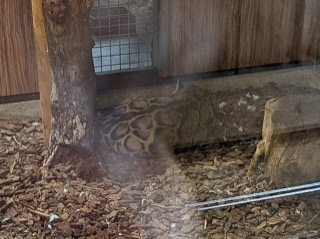 Clouded Leopard (reference photo)

Species Data
- Classification
- Carnivora / Felidae Source
- Size
- Body length about 63–108 cm, tail about 55–91 cm, shoulder height about 50–55 cm
- Weight
- About 11.5–23 kg
- Lifespan
- Captive: average about 11 years (some have lived nearly 17 years); no reliable estimates are available for the wild
- Diet
- Carnivore Carnivorous, eating primates such as slow lorises and proboscis monkeys, porcupines, pangolins, deer, pheasants, and binturongs; larger prey includes wild boar and deer
- Activity
- Mainly nocturnal, with activity peaks at dawn and dusk
- Distribution
- The clouded leopard ranges from the Himalayan foothills through Nepal, Bhutan, India, Myanmar, Thailand, Peninsular Malaysia, and South China, and is locally extinct in Singapore and Taiwan. Source
- Sources
- ja.wikipedia.org en.wikipedia.org
Did You Know?
- Its upper canine teeth measure 4 cm or longer — exceptionally large relative to its body size — earning the clouded leopard the nickname 'modern-day sabre-tooth.' Source
- Highly adapted to arboreal life, clouded leopards inhabit forests up to elevations of 2,000–3,000 m and can ambush prey either from trees or on the ground. Source
- The wild population is estimated at fewer than 10,000 adults, with no subpopulation exceeding 1,000 individuals; the species has been listed as Vulnerable on the IUCN Red List since 2008. Source
Where to See This Species
Operating facilities registered on this site: Japan 1
Possible records, not yet confirmed: 3
These facilities are not confirmed by an official animal list. They appear in secondary sources such as Wikipedia; check the facility’s official website for current exhibits.
Nogeyama ZooKanagawaOpened in 1951
(Not confirmed by official sources) Source
Kumamoto City Zoological and Botanical GardensKumamotoTake the tram bound for Kengun and get off at the Doshokubutsuen-Iriguchi stop, then walk 10 minutes.
(Not confirmed by official sources) Source
Noichi Zoological Park of Kochi PrefectureKochiA 20-minute walk or 13-minute rental-bicycle ride from Noichi Station on the Tosa Kuroshio Railway Gomen-Nahari Line.
(Not confirmed by official sources) Source
Conservation Story
Conservation Status
Vulnerable (VU)
Sources
Support Conservation
A visit is a small, positive way to support the daily lives of the animals you care about.
- Visit
- A visit itself helps support the facility.
- Animal Supporter Programs & Giving
- Find ways to support the facility through its official website.
- Furusato Nozei
- Municipally run facilities may share official guidance for this Japanese hometown-tax program.
FAQ
- Where can I see Clouded Leopard in Japan?
- Operating facilities registered on this site: Japan 1 (Zoorasia). These facilities are confirmed by resident animal records or the facility’s official information. Source
- Why is the clouded leopard called a 'modern-day sabre-tooth'?
- Its upper canine teeth measure 4 cm or longer, exceptionally large relative to its body size, which has earned it this nickname among big cat researchers. Source
- Is the clouded leopard endangered?
- It is classified as Vulnerable by the IUCN, with a fragmented wild population estimated at fewer than 10,000 adults and no subpopulation larger than 1,000 individuals. Source
- How good are clouded leopards at climbing trees?
- They are among the most arboreal of all cats, inhabiting forests up to 2,000–3,000 m elevation and able to hunt prey both from trees and on the ground. Source
Books & gear
Source: ja.wikipedia.org en.wikipedia.org