Common Marmosetコモンマーモセット
Callithrix jacchusLC— Least Concern
The common marmoset is a small New World monkey native to the forests of northeastern Brazil, easily recognized by its white ear tufts and banded tail. It specializes in feeding on tree gum and sap, supplemented with insects and fruit, and typically gives birth to twins twice a year, relying on cooperative care from the whole group. Widespread and adaptable, it is classified as Least Concern by the IUCN.
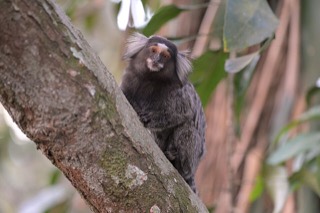 Common Marmoset (reference photo)

Species Data
- Classification
- Primates / Callitrichidae Source
- Size
- Head-body length: males average 188 mm, females 185 mm
- Weight
- Males average 256 g, females 236 g
- Lifespan
- Wild: about 12 years; captive: average about 10–16 years (record 22.8 years)
- Diet
- Omnivore Omnivorous, centered on gum-feeding, in which it gnaws bark to release sap (20–70% of feeding time), and insect-eating (24–30%); also eats fruit, seeds, flowers, fungi, nectar, snails, lizards, tree frogs, and bird eggs
- Activity
- Diurnal and arboreal; moves along branches on all fours like a squirrel and climbs vertical trunks
- Distribution
- The common marmoset is native to northeastern Brazil, and has spread into southeastern Brazil since the 1920s through releases of captive animals. Source
Did You Know?
- In 2014, a female common marmoset became the first New World monkey to have its genome fully sequenced, revealing 21,168 genes. Source
- Common marmosets typically give birth to fraternal twins twice a year, a reproductive burden that has driven the evolution of cooperative infant care within the group. Source
- Most of their fingers bear claw-like nails called tegulae, an adaptation that helps them cling to vertical tree trunks. Source
Where to See This Species
Operating facilities registered on this site: Japan 4
Adventure WorldWakayamaOpened in 1978
Noichi Zoological Park of Kochi PrefectureKochiA 20-minute walk or 13-minute rental-bicycle ride from Noichi Station on the Tosa Kuroshio Railway Gomen-Nahari Line.
Iida Shiritsu DoubutsuenNaganoAddress: 33 Ogimachi, Iida, Nagano.
Hamamatsu Zoological GardensShizuokaOpened in 1950
Former facilities
North Safari SapporoHokkaidoOpened in 2005
Closed: 2025-09-30 Official Site
Source links to official sites, official YouTube channels, and news aggregators such as Zoo Ring. Visit the publisher for the full item.
Conservation Story
Conservation Status
Least Concern (LC)
Sources
Support Conservation
A visit is a small, positive way to support the daily lives of the animals you care about.
- Visit
- A visit itself helps support the facility.
- Animal Supporter Programs & Giving
- Find ways to support the facility through its official website.
- Furusato Nozei
- Municipally run facilities may share official guidance for this Japanese hometown-tax program.
FAQ
- What do common marmosets eat?
- They specialize in gouging tree bark to feed on the exuding gum and sap, which can make up 20 to 70% of their feeding time, supplemented by insects (24 to 30%) and fruit, flowers, and small prey. Source
- How many babies do common marmosets have?
- They typically give birth to fraternal twins twice a year, and because this is demanding for the mother, other group members help carry and care for the infants. Source
- Why was the common marmoset genome significant?
- In 2014, it became the first New World monkey species to have its genome fully sequenced, an important reference for biomedical research. Source
- How many operating facilities are registered here?
- Operating facilities registered on this site: Japan 4 Source
Books & gear
Source: ja.wikipedia.org en.wikipedia.org