Common Wombatウォンバット
Vombatus ursinusLC— Least Concern
The common wombat is a stocky, burrowing marsupial native to the cooler forests and grasslands of southeastern Australia, including Tasmania. A powerful digger, it excavates extensive burrow systems that aerate the soil and shelter other species, earning it a reputation as an ecosystem engineer. It is best known for its unusual cube-shaped droppings and for defending its burrow by crushing threats against the tunnel ceiling with its tough rump. The IUCN classifies the species as Least Concern, with roughly 1.3 million wombats remaining in the wild.
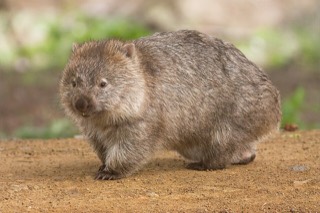 Common Wombat (reference photo)

Species Data
- Classification
- Diprotodontia / Vombatidae Source
- Size
- Body length about 90–115 cm
- Weight
- About 22–39 kg
- Lifespan
- Wild: about 15 years (some sources report about 5–6 years for local populations); captive: around 20 years, with a record of 34 years
- Diet
- Herbivore Herbivorous, eating grasses, bark, shrub roots, and mushrooms
- Activity
- Nocturnal in summer, resting in its burrow by day, but sometimes active during the day in winter
- Distribution
- The common wombat is found across the cooler regions of southern and eastern Australia, including Tasmania, Victoria, and mountainous parts of Queensland. Source
- Sources
- ja.wikipedia.org en.wikipedia.org
Did You Know?
- Common wombats produce distinctively cube-shaped droppings, an unusual trait not seen in most other mammals. Source
- When cornered in its burrow, a wombat can thrust its tough, cartilage-reinforced rump upward and slam it down to crush a predator's head against the tunnel ceiling. Source
- Wombats are powerful diggers capable of excavating roughly a meter of burrow per day; their extensive tunnel systems aerate the soil and provide shelter for other species, earning them the label 'ecosystem engineers.' Source
Where to See This Species
Operating facilities registered on this site: Japan 4
Sapporoshimaruyama DoubutsuenHokkaidoOpened in 1951
Naganoshichausuyama DoubutsuenNaganoThe nearest station is JR Shinonoi Station.
Himeji Shiritsu DoubutsuenHyogoOpened in 1951
Temporarily closed facilities
Satsukiyama DAYZOOOsakaOpened in 1957
Temporarily closed Official Site
- Satsukiyama DAYZOO ウォンバットライブカメラ ~世界で唯一のウォンバットのライブ映像をお届け~
- ウォンバット「ワイン」世界最高齢 記録更新 記念式典 2023
- 五月山動物園&茶臼山動物園 〜ウォンバット比べてみました〜
Source links to official sites, official YouTube channels, and news aggregators such as Zoo Ring. Visit the publisher for the full item.
Conservation Story
Conservation Status
Least Concern (LC)
Sources
Support Conservation
A visit is a small, positive way to support the daily lives of the animals you care about.
- Visit
- A visit itself helps support the facility.
- Animal Supporter Programs & Giving
- Find ways to support the facility through its official website.
- Furusato Nozei
- Municipally run facilities may share official guidance for this Japanese hometown-tax program.
FAQ
- Why do wombats produce cube-shaped poop?
- Common wombats are known for producing distinctly cube-shaped droppings, a trait believed to help the pellets stay stacked as scent markers without rolling away. Source
- How do wombats defend themselves from predators?
- If cornered in its burrow, a wombat can thrust its tough, cartilage-backed rump upward and slam it down to crush an attacker's head against the tunnel ceiling. Source
- How long do common wombats live?
- They typically live around 15 years in the wild, while in captivity they often reach 20 years or more, with the longest recorded captive wombat living to 34. Source
- How many operating facilities are registered here?
- Operating facilities registered on this site: Japan 4 Source
Books & gear
Source: ja.wikipedia.org en.wikipedia.org