Electric Eelデンキウナギ
Electrophorus electricusLC— Least Concern
The electric eel is a large, elongated fish of the Amazon and Orinoco basins capable of generating powerful electric shocks—at least 600 volts from its main electric organ—to stun prey and deter predators. Despite its name and eel-like shape it is not a true eel but a relative of knifefishes, and it must surface periodically to gulp air through the lining of its mouth.
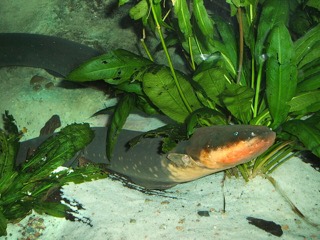 Electric Eel (reference photo)

Species Data
- Classification
- Gymnotiformes / Gymnotidae Source
- Size
- Maximum total length about 2 m
- Weight
- Up to about 20 kg
- Lifespan
- Wild-caught individuals over 20 years old have been recorded, and captive individuals exceeding 20 years have also been reported
- Diet
- Carnivore Carnivorous, feeding mainly on other fish as well as frogs, small mammals, and insects
- Distribution
- Native to northern South America, inhabiting the Amazon and Orinoco river basins, with the three recognized species occupying largely non-overlapping ranges. Source
- Sources
- ja.wikipedia.org en.wikipedia.org
Did You Know?
- Its main electric organ can discharge at least 600 volts, and a related species can generate up to 860 volts, making electric eels the most powerful bioelectricity generators known in nature. Source
- It can breathe air using the lining of its mouth, an adaptation that lets it survive in oxygen-poor water. Source
- It has been observed leaping out of the water to deliver electric shocks directly to threatening animals, a defense powerful enough to drive away even horses. Source
Where to See This Species
Operating facilities registered on this site: Japan 5
Kagoshima City AquariumKagoshimaFrom Kagoshima-Chuo Station, take the tram (Route 2) to the Suizokukan-guchi stop and walk 8 minutes.
Sunshine AquariumTokyoFrom Ikebukuro Station (Exit 35), walk along Sunshine 60 Street.
Shinsapporosanpiaza SuizokukanHokkaidoAbout a 5-minute walk from Shin-Sapporo Station on the Sapporo Municipal Subway Tozai Line, or about a 3-minute walk from Shin-Sapporo Station on the JR Chitose Line.
WAKKANAI NOSHAPPU AQUARIUMHokkaidoOpened in 1968
Toba AquariumMieOpened in 1955
Conservation Story
Conservation Status
Least Concern (LC)
Sources
Support Conservation
A visit is a small, positive way to support the daily lives of the animals you care about.
- Visit
- A visit itself helps support the facility.
- Animal Supporter Programs & Giving
- Find ways to support the facility through its official website.
- Furusato Nozei
- Municipally run facilities may share official guidance for this Japanese hometown-tax program.
FAQ
- How powerful is an electric eel's shock?
- Its main electric organ can discharge at least 600 volts, and a closely related species can generate up to 860 volts, making electric eels the strongest bioelectricity generators known in the animal kingdom. Source
- Is the electric eel a true eel?
- No. Despite its name and body shape, it belongs to the order Gymnotiformes, more closely related to knifefishes than to true eels. Source
- How many operating facilities are registered here?
- Operating facilities registered on this site: Japan 5 Source
Books & gear
Source: ja.wikipedia.org en.wikipedia.org