Eurasian Otterユーラシアカワウソ
Lutra lutraNT— Near Threatened
The Eurasian otter is the most widely distributed otter species in the world, found across Europe, North Africa, and much of Asia in freshwater rivers, lakes, and coastal habitats. A skilled, mostly nocturnal hunter, it feeds primarily on fish, supplemented by amphibians, crustaceans, and small mammals. Once devastated by pollution and habitat loss across much of its European range, the species has rebounded strongly in places like the United Kingdom thanks to conservation efforts, and the IUCN classifies it as Near Threatened.
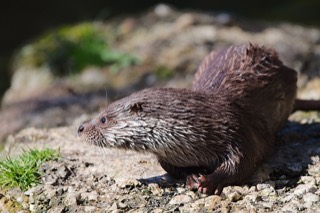 Eurasian Otter (reference photo)

Species Data
- Classification
- Carnivora / Mustelidae Source
- Size
- Head-body length about 57–95 cm, tail about 35–45 cm
- Weight
- About 4.1–17 kg (large males may reach 17 kg)
- Lifespan
- Wild: average about 8–12 years; the longest confirmed record in captivity is 18.2 years
- Diet
- Piscivore Carnivorous, with fish making up 70–90% of the diet; also preys on amphibians such as frogs, birds, small mammals such as rabbits, and crayfish
- Activity
- Nocturnal but also active at dawn and dusk; solitary and strongly territorial
- Distribution
- The Eurasian otter is found across Europe, North Africa, and parts of Asia, making it the most widely distributed member of the otter subfamily. Source
- Sources
- ja.wikipedia.org en.wikipedia.org
Did You Know?
- The upper edge of its nose pad forms a distinctive 'W' shape, a helpful field feature for identification. Source
- Japan's native subspecies is believed extinct, with the last confirmed sighting in Kochi Prefecture in 1979, but in 2017 Eurasian otters were confirmed on Tsushima Island, Nagasaki Prefecture, with DNA analysis tracing them to a Korean population. Source
- In the United Kingdom, conservation efforts led to a 55% increase in the number of sites showing otter presence between 1994 and 2002. Source
Where to See This Species
Operating facilities registered on this site: Japan 6
How to tell Sea Otters vs. River Otters apart →Aquamarine Inawashiro Kingfishers AquariumFukushimaAbout 10 minutes from the Inawashiro-Bandai Kogen IC on the Ban-etsu Expressway.
Aquamarine FukushimaFukushimaOpened in 2000
Yokohama Shiritsu Yokohama DoubutsuenKanagawaOpened in 1999
Noichi Zoological Park of Kochi PrefectureKochiA 20-minute walk or 13-minute rental-bicycle ride from Noichi Station on the Tosa Kuroshio Railway Gomen-Nahari Line.
Toyamashifamiri ParkToyamaOpened in 1984
- 敬老イベント「おじいちゃん、おばあちゃん動物に絵のプレゼント 作品展示」
- おじいちゃん、おばあちゃん動物に絵のプレゼント
- 雨の日のユーラシアカワウソ「ヘレス」♪ #zoo #動物 #アミメキリン #のいち動物公園
- 【ユーラシアカワウソ】エサの時間に密着! #アクアマリンふくしま #水族館 #福島 #いわき
Source links to official sites, official YouTube channels, and news aggregators such as Zoo Ring. Visit the publisher for the full item.
Conservation Story
Conservation Status
Near Threatened (NT)
Sources
Support Conservation
A visit is a small, positive way to support the daily lives of the animals you care about.
- Visit
- A visit itself helps support the facility.
- Animal Supporter Programs & Giving
- Find ways to support the facility through its official website.
- Furusato Nozei
- Municipally run facilities may share official guidance for this Japanese hometown-tax program.
FAQ
- How can you identify a Eurasian otter?
- One distinguishing feature is its nose pad, whose upper edge forms a distinctive 'W' shape, useful for field identification alongside its dense brown fur and long, muscular tail. Source
- What happened to otters in Japan?
- Japan's native otter subspecies was declared extinct after the last confirmed sighting in Kochi Prefecture in 1979. However, in 2017 Eurasian otters were confirmed living on Tsushima Island, with DNA showing they had crossed over from a Korean population. Source
- Are Eurasian otter populations recovering?
- In some regions, yes. In the United Kingdom, for example, the number of sites showing otter presence rose by 55% between 1994 and 2002 following pollution controls and habitat restoration. Source
- How many operating facilities are registered here?
- Operating facilities registered on this site: Japan 6 Source
Books & gear
Source: ja.wikipedia.org en.wikipedia.org