Jaguarジャガー
Panthera oncaNT— Near Threatened
The jaguar (Panthera onca) is the largest cat native to the Americas and the third-largest cat species in the world after tigers and lions. Ranging from the southwestern United States to northern Argentina, it is a solitary, powerful predator known for crushing prey skulls with an exceptionally strong bite. Classified as Near Threatened, it once held deep cultural significance for civilizations such as the Aztecs.
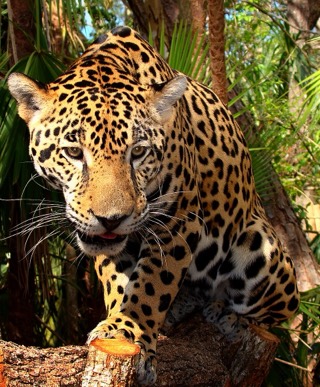 Jaguar (reference photo)

Species Data
- Classification
- Carnivora / Felidae Source
- Size
- Males 110.5–184 cm, females 116–180 cm (tail 44–80 cm)
- Weight
- Varies greatly by region; in the Brazilian population, males average about 94.8 kg and females about 77.7 kg, while males in the Pantanal can exceed 136 kg
- Lifespan
- Wild: rarely exceeds 11 years / captive: up to 22 years
- Diet
- Carnivore Carnivorous, taking a wide range of prey including peccaries, deer, tapirs, rodents, caimans, turtles, and fish
- Activity
- Mainly nocturnal and crepuscular, though some populations in dense forest are diurnal
- Distribution
- Ranges from the southwestern United States through Central America to southern Argentina, though it is now extinct in Uruguay and El Salvador, and breeding populations no longer exist within the United States. Source
- Sources
- ja.wikipedia.org en.wikipedia.org
Did You Know?
- Unusually among cats, it typically delivers a fatal bite through the skull between the ears rather than to the throat. Source
- It is an excellent swimmer, with documented crossings of at least 1.3 km between islands. Source
- In Aztec culture, the jaguar symbolized power and was depicted as the animal form of Tezcatlipoca, god of night and conflict. Source
Where to See This Species
Operating facilities registered on this site: Japan 9
Wan Park Kouchianimaru LandKochiAddress: 6-9-1 Sanbashi-dori, Kochi (inside Wanpark Kochi).
Kyoto City ZooKyotoOpened in 1903
Kumamotoshi DoushokubutsuenKumamotoTake the tram bound for Kengun and get off at the Doshokubutsuen-Iriguchi stop, then walk 10 minutes.
Tennoji ZooOsakaOpened in 1915
TOBU ZOOSaitamaFrom Tobu-Dobutsu-Koen Station (west exit), about 10 minutes on foot (600 m) or about 5 minutes by bus.
Fukuoka Zoo & Botanical GardenFukuokaOpened in 1953
Higashiyama Zoo and Botanical GardensAichiOpened in 1937
- 【表情】とべ動物園で「やらかしてしまった赤ちゃんジャガー」他 本日の注目情報セレクション
- とある日のネリアちゃんと…?#東武動物公園 #ジャガー #ネリア #動物 #zoo #動物園
- 【東山動植物園公式】閉園間近のジャガーのマヤ《 ジャガー 》
- ジャガー・ネリアちゃんのアイスタイム!#東武動物公園 #ジャガー #ネリア #アイスタイム #夏の思い出
Source links to official sites, official YouTube channels, and news aggregators such as Zoo Ring. Visit the publisher for the full item.
Conservation Story
Conservation Status
Near Threatened (NT)
Sources
Support Conservation
A visit is a small, positive way to support the daily lives of the animals you care about.
- Visit
- A visit itself helps support the facility.
- Animal Supporter Programs & Giving
- Find ways to support the facility through its official website.
- Furusato Nozei
- Municipally run facilities may share official guidance for this Japanese hometown-tax program.
FAQ
- How does the jaguar kill its prey?
- Unusually for a big cat, it often delivers a fatal bite directly through the skull between the ears rather than suffocating prey by the throat. Source
- Where do jaguars live today?
- Their range extends from the southwestern United States through Central America to northern Argentina, though they are extinct in Uruguay, El Salvador, and no longer breed in the U.S. Source
- How many operating facilities are registered here?
- Operating facilities registered on this site: Japan 9 Source
Books & gear
Source: ja.wikipedia.org en.wikipedia.org