Japanese Rhinoceros Beetleカブトムシ
Trypoxylus dichotomusNE— Not Evaluated
The Japanese rhinoceros beetle is a large scarab beetle native to Japan and much of East and Southeast Asia, instantly recognizable by the male's large forked head horn used in battles over territory and mates. Larvae spend roughly five to six months feeding on leaf humus in the soil before pupating, while adults live only one to three months feeding on oak tree sap. It has long been one of the most iconic insects in Japanese culture, central to the country's summer tradition of catching and keeping beetles as pets.
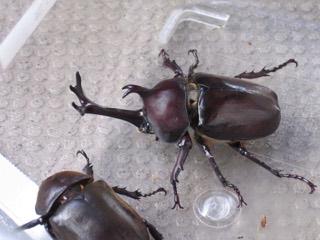 Japanese Rhinoceros Beetle (reference photo)

Species Data
- Classification
- Coleoptera / Scarabaeidae Source
- Size
- Total length 23–88 mm including the horn (males 19–57 mm excluding the horn; females are somewhat smaller)
- Weight
- Body weight varies greatly and is poorly documented, but the beetle can pull more than 20 times its own weight
- Lifespan
- After hatching, the larval stage lasts about 150–200 days before pupation; adults live about 1–3 months depending on food and temperature
- Diet
- Herbivore Larvae feed on humus such as leaf mold; adults feed mainly on the sap of sawtooth oak and konara oak, and also eat ripe fruit
- Activity
- Nocturnal
- Distribution
- Native to Japan's Honshu, Shikoku, and Kyushu, and established as an introduced species in Hokkaido since the 1970s; internationally, it is widely distributed across Taiwan, the Korean Peninsula, China, and Indochina. Source
- Sources
- ja.wikipedia.org en.wikipedia.org
Did You Know?
- Japanese rhinoceros beetles are strong enough to pull objects more than 20 times their own body weight, and males use their prominent horns to battle rivals over prime feeding spots on sap-oozing oak trees. Source
- Smaller males often avoid direct combat altogether, instead using a "sneaking" strategy to approach females while larger rivals are busy fighting. Source
- During the Edo period the species went by many regional names such as "Heike-mushi" and "Oni-mushi," reflecting its long-standing place at the center of Japan's summer insect-collecting and beetle-keeping culture. Source
Where to See This Species
Operating facilities registered on this site: Japan 3
Adachi Park of Living ThingsTokyoAbout 20 minutes on foot from the east exit of Takenotsuka Station on the Tobu Skytree Line.
Toba AquariumMieOpened in 1955
Source links to official sites, official YouTube channels, and news aggregators such as Zoo Ring. Visit the publisher for the full item.
FAQ
- Why is the rhinoceros beetle so culturally important in Japan?
- It has been a central figure in Japanese summer culture for centuries, historically known by many regional names, and remains one of the most popular insects for children to catch, keep, and even purchase as pets in Japan. Source
- What do the horns actually do?
- Males use their large forked horn to wedge under and flip rival males off prime sap-feeding sites on trees such as sawtooth oak, essentially wrestling for access to food and mates; some smaller males instead sneak past fighting rivals to reach females. Source
- How long do rhinoceros beetles live?
- Most of their roughly one-year life cycle is spent as a larva underground, feeding on decayed leaf litter for about five to six months before pupating; the adult stage that people commonly see lasts only about one to three months. Source
- How many operating facilities are registered here?
- Operating facilities registered on this site: Japan 3 Source
Books & gear
Source: ja.wikipedia.org en.wikipedia.org