King Cobraキングコブラ
Ophiophagus hannahVU— Vulnerable
The king cobra is the world's longest venomous snake, native to forested hills across South and Southeast Asia. True to its scientific name Ophiophagus, meaning "snake-eater," it feeds almost exclusively on other snakes, including smaller members of its own species. It is the only snake known to build a nest for its eggs, with females fiercely guarding the clutch, and is classified as Vulnerable by the IUCN due to habitat loss and persecution.
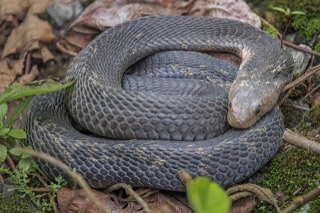 King Cobra (reference photo)
_Bach_Ma.jpg)
Species Data
- Classification
- Squamata / Elapidae Source
- Size
- Adults average 3–4 m in total length; the record is 5.85 m
- Weight
- Males up to about 10 kg, females up to about 5 kg
- Lifespan
- Wild: average about 20 years
- Diet
- Carnivore Feeds mainly on other snakes (including cannibalism of its own species), and also preys on reptiles such as lizards and on small mammals
- Activity
- Mainly diurnal, though nighttime activity is occasionally observed
- Distribution
- Ranges across the Indian subcontinent, Southeast Asia, and southern China, including Myanmar, Thailand, Malaysia, Indonesia, and the Philippines, mainly in forested hills. Source
- Sources
- ja.wikipedia.org en.wikipedia.org
Did You Know?
- The genus name Ophiophagus means "snake-eater," and its royal common name likewise reflects a diet that consists chiefly of other snakes, including smaller king cobras. Source
- A single bite can inject over 200 mg of venom, an amount reportedly large enough to be lethal even to an elephant. Source
- It is the only snake species known to build an above-ground nest of leaves and other debris, with the female actively guarding the eggs throughout incubation. Source
Where to See This Species
Operating facilities registered on this site: Japan 3
Kumamotoshi DoushokubutsuenKumamotoTake the tram bound for Kengun and get off at the Doshokubutsuen-Iriguchi stop, then walk 10 minutes.
Former facilities
North Safari SapporoHokkaidoOpened in 2005
Closed: 2025-09-30 Official Site
Conservation Story
Conservation Status
Vulnerable (VU)
Sources
Support Conservation
A visit is a small, positive way to support the daily lives of the animals you care about.
- Visit
- A visit itself helps support the facility.
- Animal Supporter Programs & Giving
- Find ways to support the facility through its official website.
- Furusato Nozei
- Municipally run facilities may share official guidance for this Japanese hometown-tax program.
FAQ
- What does a king cobra eat?
- Its diet is dominated by other snakes—including venomous species and even smaller king cobras—supplemented occasionally by lizards and small mammals. Source
- How dangerous is king cobra venom?
- A single bite can deliver more than 200 mg of neurotoxic venom, a quantity large enough that it is sometimes described as capable of killing an elephant, though human fatalities are less common than with some other cobra species due to lower encounter rates. Source
- Is the king cobra the only snake that builds a nest?
- Yes. It is the only known snake species that constructs an above-ground nest from leaf litter and vegetation, and the female stays to guard the eggs until they hatch. Source
- How many operating facilities are registered here?
- Operating facilities registered on this site: Japan 3 Source
Books & gear
Source: ja.wikipedia.org en.wikipedia.org