Komodo Dragonコモドオオトカゲ
Varanus komodoensisEN— Endangered
The Komodo dragon is the world's largest living lizard, a monitor species endemic to a small cluster of Indonesian islands including Komodo and Flores. Adults can reach around 3 meters and 70-90 kg, ambushing large prey such as deer and wild boar with a bite that delivers venom capable of inhibiting blood clotting. Classified as Endangered by the IUCN due to its extremely limited range and ongoing habitat pressure, it is also notable for occasional parthenogenetic reproduction, in which unmated females have produced viable, all-male offspring.
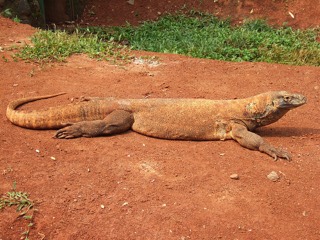 Komodo Dragon (reference photo)

Species Data
- Classification
- Squamata / Varanidae Source
- Size
- Total length 200–300 cm (head-body length 70–130 cm); males reach up to about 3 m
- Weight
- Typically about 70 kg, with large individuals exceeding 90 kg; the largest captive individual on record weighed 166 kg
- Lifespan
- Up to about 30 years in the wild. Many captive individuals also live around 30 years; "Fluffy" at the Los Angeles Zoo lived about 33 years
- Diet
- Carnivore Adults ambush large mammals such as wild boar, deer, feral water buffalo, and goats, and also eat carrion; juveniles eat insects, birds, bird eggs, and small reptiles
- Activity
- Diurnal
- Distribution
- Endemic to a handful of Indonesian islands—Komodo, Rinca, Flores, Gili Dasami, and Gili Motang—though fossil evidence shows the species once ranged across Australia until roughly 330,000 years ago. Source
Did You Know?
- For years it was believed that Komodo dragons killed prey using bacteria-laden saliva, but a 2009 University of Melbourne study identified venom glands in the lower jaw that secrete toxins inhibiting blood clotting. Source
- In 2006, females at English zoos that had never been in contact with a male produced viable eggs through parthenogenesis; the hatchlings were all male. Source
- To avoid being eaten by cannibalistic adults, young Komodo dragons spend much of their first few years living in trees and will roll in feces to mask their scent. Source
Where to See This Species
Operating facilities registered on this site: Japan 3
Sapporoshimaruyama DoubutsuenHokkaidoOpened in 1951
Higashiyama Zoo and Botanical GardensAichiOpened in 1937
- 【東山動植物園公式】コモド紀行(最終回)~コモドオオトカゲの未来~大迫力のコモドオオトカゲ《 コモドオオトカゲ コモドドラゴン トカゲ 爬虫類 》
- 【東山動植物園公式】コモド紀行(最終回)~コモドオオトカゲの未来~丘を登る2頭《 コモドオオトカゲ コモドドラゴン トカゲ 爬虫類 》
Source links to official sites, official YouTube channels, and news aggregators such as Zoo Ring. Visit the publisher for the full item.
Conservation Story
Conservation Status
Endangered (EN)
Sources
Support Conservation
A visit is a small, positive way to support the daily lives of the animals you care about.
- Visit
- A visit itself helps support the facility.
- Animal Supporter Programs & Giving
- Find ways to support the facility through its official website.
- Furusato Nozei
- Municipally run facilities may share official guidance for this Japanese hometown-tax program.
FAQ
- Is a Komodo dragon bite actually venomous?
- Yes. A 2009 study identified venom glands in the lower jaw that secrete toxins which inhibit blood clotting, reduce blood pressure, and cause muscle paralysis, overturning the older belief that bacteria in the mouth were solely responsible for weakening prey. Source
- Can Komodo dragons reproduce without a male?
- Yes, in rare cases. Females that had never had contact with a male have laid fertile eggs through parthenogenesis, as documented at UK zoos in 2006; all resulting hatchlings were male. Source
- How long do Komodo dragons live?
- In the wild they can live up to about 30 years. In managed care, well-documented individuals have lived into their 30s—the Los Angeles Zoo's "Fluffy" reached roughly 33 years—though claims of individuals living past 50 are not considered reliably verified. Source
- How many operating facilities are registered here?
- Operating facilities registered on this site: Japan 3 Source
Books & gear
Source: ja.wikipedia.org en.wikipedia.org