Egyptian Fruit Batルーセットオオコウモリ
Rousettus aegyptiacusLC— Least Concern
The Egyptian fruit bat is a cave-roosting megabat found across Africa, the Middle East, and the Indian subcontinent, with an outlying population in the eastern Mediterranean. It feeds on soft tropical fruit and, unusually among fruit bats, uses tongue-clicking echolocation to navigate in complete darkness. Colonies of dozens to hundreds roost together, and the species is assessed as Least Concern by the IUCN.
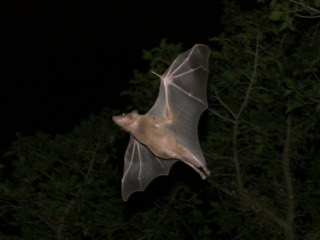 Egyptian Fruit Bat (reference photo)

Species Data
- Classification
- Chiroptera / Pteropodidae Source
- Size
- Body length about 15 cm
- Weight
- About 80–170 g
- Lifespan
- Wild: about 8–10 years / captive: up to about 22 years
- Diet
- Herbivore Frugivorous, feeding mainly on tropical fruit such as figs, dates, bananas, and mangoes
- Activity
- Crepuscular to nocturnal; takes flight in groups after sunset to forage
- Distribution
- Found throughout Africa, the Middle East, Pakistan, and the Indian subcontinent, with populations reaching Mediterranean Turkey and Cyprus — the only frugivorous bat species recorded in Europe. Source
- Sources
- en.wikipedia.org hirakawazoo.jp
Did You Know?
- Unlike most megabats, it uses tongue-clicking echolocation — sharp, bidirectional click pairs — to navigate in total darkness. Source
- Colonies of roughly 20 to 40 individuals roost together in caves and mangrove forests, becoming active from dusk through the night. Source
- Colonies develop distinct vocal dialects at different frequencies, with pups learning their group's specific calls from their mothers. Source
Where to See This Species
Operating facilities registered on this site: Japan 1
Higashiyama Zoo and Botanical GardensAichiOpened in 1937
Former facilities
North Safari SapporoHokkaidoOpened in 2005
Closed: 2025-09-30 Official Site
Source links to official sites, official YouTube channels, and news aggregators such as Zoo Ring. Visit the publisher for the full item.
Conservation Story
Conservation Status
Least Concern (LC)
Sources
Support Conservation
A visit is a small, positive way to support the daily lives of the animals you care about.
- Visit
- A visit itself helps support the facility.
- Animal Supporter Programs & Giving
- Find ways to support the facility through its official website.
- Furusato Nozei
- Municipally run facilities may share official guidance for this Japanese hometown-tax program.
FAQ
- What do Egyptian fruit bats eat?
- They feed on soft, pulpy fruit such as figs, dates, mangoes, and bananas, foraging at dusk and through the night. Source
- How do Egyptian fruit bats find their way in the dark?
- They produce sharp clicking sounds with their tongue and use the echoes to navigate — a rare ability among fruit bats known as tongue-clicking echolocation. Source
- Do Egyptian fruit bats live alone or in groups?
- They are highly social, roosting in colonies of roughly 20 to 40 individuals in caves or mangrove forests, sometimes forming much larger aggregations. Source
- How many operating facilities are registered here?
- Operating facilities registered on this site: Japan 1 Source
Books & gear
Source: en.wikipedia.org