Two-toed Slothフタユビナマケモノ
Choloepus didactylusLC— Least Concern
Linnaeus's two-toed sloth is the largest living sloth species, native to the rainforest canopy of northern South America. A solitary, nocturnal folivore, it moves slowly through the trees and descends to the ground only about once a week. Classified as Least Concern by the IUCN, it is known for its unusual reversed fur growth and its exceptionally slow, methane-heavy digestion.
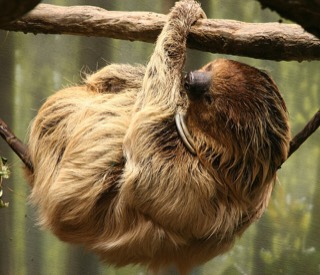 Two-toed Sloth (reference photo)

Species Data
- Classification
- Pilosa / Choloepodidae Source
- Size
- Body length 53–89 cm (excluding tail)
- Weight
- 4–11 kg
- Lifespan
- Wild: average about 20 years / captive: records of 40–50 years (captive average 27.8 years)
- Diet
- Herbivore Herbivorous, feeding mainly on leaves
- Activity
- Solitary, nocturnal, and arboreal
- Distribution
- Native to northern South America — Venezuela, the Guianas, Colombia, Ecuador, Peru, and Brazil north of the Amazon — inhabiting tropical rainforest canopy. Source
Did You Know?
- It is the largest living sloth species and spends nearly its entire life in the canopy, descending to the ground only about once a week to defecate. Source
- Its belly hair is parted along the midline and flows toward the spine — the opposite direction from most other mammals. Source
- Due to its slow digestion and infrequent defecation, it produces unusually high volumes of methane compared with similarly sized herbivores. Source
Where to See This Species
Operating facilities registered on this site: Japan 8
Adventure WorldWakayamaOpened in 1978
Ishikawa DoubutsuenIshikawaAbout 60 minutes from the Kanazawa-Morimoto Interchange on the Hokuriku Expressway, about 40 minutes from the Kanazawa-Nishi Interchange, and about 20 minutes from the Komatsu Interchange.
Kyoto City ZooKyotoOpened in 1903
Noichi Zoological Park of Kochi PrefectureKochiA 20-minute walk or 13-minute rental-bicycle ride from Noichi Station on the Tosa Kuroshio Railway Gomen-Nahari Line.
Saitamakenkodomodoubutsu Shizen KouenSaitamaOpened in 1980
Hirakawa ZooKagoshimaAbout a 20-minute walk from Goino Station on the JR Ibusuki-Makurazaki Line, or take a bus bound for Taniyama / Dobutsuen from Fukuhira Nokyo-mae to the last stop.
Chiba Zoological ParkChibaOpened in 1985
Higashiyama Zoo and Botanical GardensAichiOpened in 1937
Former facilities
North Safari SapporoHokkaidoOpened in 2005
Closed: 2025-09-30 Official Site
- 【東山動植物園公式】ハッピーの誕生日《 フタユビナマケモノ ナマケモノ 》 #animals #short
- 8月19日(水)フタユビナマケモノが亡くなりました
- 7月23日(木)フタユビナマケモノ「お母さん」を移動しました
Source links to official sites, official YouTube channels, and news aggregators such as Zoo Ring. Visit the publisher for the full item.
Conservation Story
Conservation Status
Least Concern (LC)
Sources
Support Conservation
A visit is a small, positive way to support the daily lives of the animals you care about.
- Visit
- A visit itself helps support the facility.
- Animal Supporter Programs & Giving
- Find ways to support the facility through its official website.
- Furusato Nozei
- Municipally run facilities may share official guidance for this Japanese hometown-tax program.
FAQ
- How often do two-toed sloths come down from the trees?
- Very rarely — they descend to the ground only about once a week, primarily to defecate, spending virtually all other time in the canopy. Source
- How long do two-toed sloths live?
- In the wild they average around 20 years, but in captivity individuals have been recorded living 40 to 50 years. Source
- Is the two-toed sloth endangered?
- No. The IUCN lists it as Least Concern, as it remains widespread across the rainforests of northern South America. Source
- How many operating facilities are registered here?
- Operating facilities registered on this site: Japan 8 Source
Books & gear
Source: ja.wikipedia.org en.wikipedia.org