Pallas's Catマヌルネコ
Otocolobus manulLC— Least Concern
Pallas's cat is a small, stocky wild cat of the rocky highlands of Central Asia, instantly recognizable for its flattened face, low-set ears, and round pupils. Its extraordinarily dense coat — among the thickest of any cat — lets it withstand extreme cold while hunting pikas and small rodents. Once heavily trapped for fur, it is now protected under CITES and, while classified as Least Concern, faces ongoing threats from habitat fragmentation and rodenticide poisoning of its prey.
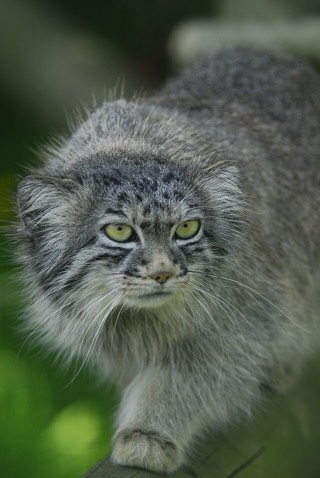 Pallas's Cat (reference photo)

Species Data
- Classification
- Carnivora / Felidae Source
- Size
- Head-body length 50–65 cm, tail 21–31 cm
- Weight
- Males 3.3–5.3 kg, females 2.5–5 kg
- Lifespan
- Wild: average 5 years, maximum 10 years
- Diet
- Carnivore Carnivorous, feeding mainly on pikas, rodents, and birds
- Activity
- Activity pattern shifts from crepuscular in May–August to diurnal in September–November
- Distribution
- Found across the rocky montane grasslands of Central Asia, from the Caucasus and Iran through Tibet, Mongolia, and southern Siberia. Source
- Sources
- ja.wikipedia.org en.wikipedia.org
Did You Know?
- Its round pupils are unusual among small cats, and combined with its low-set ears give it a distinctive, flattened facial appearance. Source
- Its extremely dense coat packs up to 9,000 hairs per square centimeter, allowing it to stay warm even lying directly on frozen ground. Source
- It became an internet sensation in 2008 via a viral "pet the cat" image and is now the official mascot of Moscow Zoo. Source
Where to See This Species
Operating facilities registered on this site: Japan 6
Asahiyama ZooHokkaidoOpened in 1967
Saitamakenkodomodoubutsu Shizen KouenSaitamaOpened in 1980
NasudoubutsuoukokuTochigiAbout 50 minutes by car from Nasu-Shiobara Station on the Tohoku Shinkansen (a free shuttle bus is available; online reservation required by 17:00 the day before).
Yokohama Shiritsu Nogeyama DoubutsuenKanagawaOpened in 1951
Higashiyama Zoo and Botanical GardensAichiOpened in 1937
- 新商品『マヌルネコカレンダー』販売のお知らせ
- マヌルネコ展示再開のお知らせ
- マヌルネコ展示中止のお知らせ
- 【ランク付け】野毛山動物園で「担当飼育員さん、その他の飼育員さん、来園者さんで態度を変えるマヌルネコのフィーガ」他 本日の注目情報セレクション
- 【丸見え?】野毛山動物園で「ついにマジックミラーが登場。マヌルネコのフィーガの暮らし」他 本日の注目情報セレクション
Source links to official sites, official YouTube channels, and news aggregators such as Zoo Ring. Visit the publisher for the full item.
Conservation Story
Conservation Status
Least Concern (LC)
Sources
Support Conservation
A visit is a small, positive way to support the daily lives of the animals you care about.
- Visit
- A visit itself helps support the facility.
- Animal Supporter Programs & Giving
- Find ways to support the facility through its official website.
- Furusato Nozei
- Municipally run facilities may share official guidance for this Japanese hometown-tax program.
FAQ
- Why does Pallas's cat look so flat-faced?
- Its low-set ears and unusually round pupils, combined with an exceptionally dense coat, give it a distinctively flattened facial appearance among cats. Source
- What does Pallas's cat eat?
- It preys mainly on pikas and small rodents, along with occasional birds, hunting by stalking or extracting prey from shallow burrows. Source
- Is Pallas's cat endangered?
- It is currently classified as Least Concern by the IUCN, though it remains threatened locally by habitat fragmentation, poaching, and rodenticides that reduce its prey base. Source
- How many operating facilities are registered here?
- Operating facilities registered on this site: Japan 6 Source
Books & gear
Source: www.city.asahikawa.hokkaido.jp www.parks.or.jp nasu-oukoku.com www.tokyo-zoo.net www.hama-midorinokyokai.or.jp www.iucnredlist.org