Sea Urchinバフンウニ
Hemicentrotus pulcherrimusNE— Not Evaluated
The purple sea urchin (Hemicentrotus pulcherrimus) is a small, flattened sea urchin found on rocky shores from Hokkaido's Sea of Japan coast to Kyushu, Korea, and China. It grazes on seaweed in shallow, intertidal waters and has been harvested as a delicacy in Japan since at least the 1600s. Its conservation status has not been formally evaluated by the IUCN.
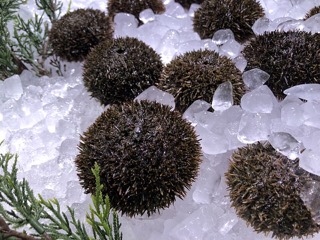 Sea Urchin (reference photo)

Species Data
- Classification
- Camarodonta / Strongylocentrotidae Source
- Size
- Test about 4 cm in diameter and about 2 cm high, with a flattened shape like a squashed bun
- Diet
- Herbivore Herbivorous, feeding mainly on seaweeds such as red algae and coralline algae, and sometimes on carrion
- Distribution
- Found from the Sea of Japan coast of Hokkaido south to Kyushu, and along the coasts of Korea and China, commonly on rocky shores from the intertidal zone to shallow subtidal water. Source
- Sources
- ja.wikipedia.org en.wikipedia.org
Did You Know?
- Despite its unflattering name ("horse-dung sea urchin"), it has long been prized as food—10th-century records list it as a tribute good from Wakasa Province. Source
- Because it tastes bitter raw, it is preserved in brine or alcohol before eating; commercial harvesting in Japan dates back to the 1600s. Source
Where to See This Species
Operating facilities registered on this site: Japan 1
Toba AquariumMieOpened in 1955
Conservation Story
Conservation Status
Not Evaluated (NE)
Sources
Support Conservation
A visit is a small, positive way to support the daily lives of the animals you care about.
- Visit
- A visit itself helps support the facility.
- Animal Supporter Programs & Giving
- Find ways to support the facility through its official website.
- Furusato Nozei
- Municipally run facilities may share official guidance for this Japanese hometown-tax program.
FAQ
- Where does the purple sea urchin live?
- It lives on rocky shores from the intertidal zone down to about 20 m, ranging from Hokkaido's Sea of Japan coast to Kyushu, Korea, and China. Source
- Is it eaten in Japan?
- Yes—despite being bitter when raw, it has been harvested as food since the Edo period and even appears in 10th-century tribute records from Wakasa Province. Source
- How many operating facilities are registered here?
- Operating facilities registered on this site: Japan 1 Source
Books & gear
Source: ja.wikipedia.org en.wikipedia.org