Ringed Sealワモンアザラシ
Pusa hispidaLC— Least Concern
The ringed seal is the smallest and one of the most abundant seals in the Arctic, ranging across circumpolar sea ice from the Bering Sea to the Baltic. It uses thick, sharp foreclaws to maintain breathing holes through ice up to 1.8 meters thick and builds snow lairs on the ice to shelter its pups. Two isolated freshwater subspecies, the Saimaa and Ladoga seals, survive in landlocked lakes in Finland and Russia. Listed as Least Concern overall, it nonetheless faces mounting pressure from sea-ice loss driven by climate change.
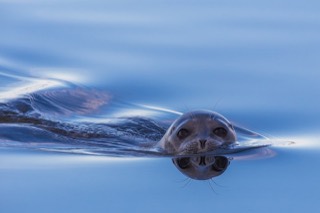 Ringed Seal (reference photo)

Species Data
- Classification
- Carnivora / Phocidae Source
- Size
- Body length 100–175 cm (average about 150 cm; the subspecies in Japanese waters is about 130 cm in males and 120 cm in females); about 65 cm at birth
- Weight
- 32–140 kg (average 50–70 kg); about 4.5 kg at birth
- Lifespan
- Wild: individuals living 25–30 years or more have been recorded
- Diet
- Carnivore Carnivorous, preying on some 72 species of fish and invertebrates including Arctic cod and other fish, octopus, crustaceans, and mollusks; dives to depths of 35–150 feet (about 11–46 m)
- Distribution
- A circumpolar Arctic species found from about 35°N to the North Pole, across all Arctic Ocean seas, the Bering Sea, the Baltic Sea, and Hudson Bay. Source
- Sources
- ja.wikipedia.org en.wikipedia.org
Did You Know?
- Despite being the smallest of all seal species, the ringed seal is thought to be the second most abundant seal in the world. Source
- Their foreclaws, more than 2.5 cm thick, are used to create and maintain breathing holes through ice sheets as thick as 6 feet (about 1.8 m). Source
- Two landlocked freshwater subspecies, the Saimaa seal and the Ladoga seal, survive in isolated lakes in Finland and Russia; the Saimaa seal numbered only about 500 individuals as of late 2024. Source
Where to See This Species
Operating facilities registered on this site: Japan 3
How to tell Sea Lions, Seals, Fur Seals, and Walruses apart →Osaka Aquarium KaiyukanOsakaOpened in 1990
Kamogawa Sea WorldChibaAbout 2 hours from Tokyo Station on the Wakashio limited express to JR Awa-Kamogawa Station, then about 10 minutes by free shuttle bus (departing from the West Exit bus stop).
Otaru AquariumHokkaidoOpened in 1958
Source links to official sites, official YouTube channels, and news aggregators such as Zoo Ring. Visit the publisher for the full item.
Conservation Story
Conservation Status
Least Concern (LC)
Sources
Support Conservation
A visit is a small, positive way to support the daily lives of the animals you care about.
- Visit
- A visit itself helps support the facility.
- Animal Supporter Programs & Giving
- Find ways to support the facility through its official website.
- Furusato Nozei
- Municipally run facilities may share official guidance for this Japanese hometown-tax program.
FAQ
- How do ringed seals breathe under sea ice?
- They use thick foreclaws, more than 2.5 cm long, to scratch and maintain breathing holes through ice sheets up to about 1.8 meters (6 feet) thick. Source
- What is the smallest seal species?
- The ringed seal is the smallest seal species, averaging around 1.5 meters in length and 50–70 kg in weight, yet it is also one of the most numerous seals in the world. Source
- Are there freshwater ringed seals?
- Yes. Two landlocked subspecies, the Saimaa seal in Finland and the Ladoga seal in Russia, became isolated in freshwater lakes after the last ice age. The Saimaa seal population numbered only about 500 individuals as of late 2024. Source
- How many operating facilities are registered here?
- Operating facilities registered on this site: Japan 3 Source
Books & gear
Source: ja.wikipedia.org