Toco Toucanオニオオハシ
Ramphastos tocoLC— Least Concern
The toco toucan is the largest member of the toucan family, instantly recognizable by its massive orange bill set against glossy black plumage. Native to central and southeastern South America, it lives in semi-open woodland and savanna, feeding mainly on fruit while also raiding the nests of other birds for eggs and nestlings.
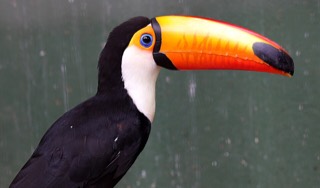 Toco Toucan (reference photo)
_close-up.jpg)
Species Data
- Classification
- Piciformes / Ramphastidae Source
- Size
- About 56 cm. The largest toucan; bill length averages about 200 mm in males and about 179 mm in females
- Weight
- About 540–760 g
- Lifespan
- The longest recorded lifespan in captivity is 16.2 years (according to the AnAge aging research database)
- Diet
- Omnivore Feeds mainly on fruit (figs, oranges, guavas, etc.), but also preys on insects and on the eggs and chicks of other birds
- Distribution
- Widely distributed across central and southeastern South America, from the southern Guianas south to northern Argentina and Uruguay. Source
Did You Know?
- Its oversized bill acts as a thermal radiator, dissipating 30 to 60% of the bird's resting heat production by adjusting blood flow, an efficiency compared to that of an elephant's ears. Source
- As a key seed disperser, it has been documented carrying medium-sized seeds 269 to 449 meters away from the parent plant before excreting them. Source
- Beyond fruit, it will raid the nests of other birds; one individual weighing about 540 g was observed using its bill to break the neck of an ibis nestling. Source
Where to See This Species
Operating facilities registered on this site: Japan 8
Adventure WorldWakayamaOpened in 1978
Ishikawa DoubutsuenIshikawaAbout 60 minutes from the Kanazawa-Morimoto Interchange on the Hokuriku Expressway, about 40 minutes from the Kanazawa-Nishi Interchange, and about 20 minutes from the Komatsu Interchange.
Kawasuikawasaki SuizokukanKanagawaRight by the East Exit of JR Kawasaki Station.
Kahokuchoujidou DoubutsuenYamagata81 Yachi-Bo, Kahoku-machi, Nishimurayama-gun, Yamagata.
Noichi Zoological Park of Kochi PrefectureKochiA 20-minute walk or 13-minute rental-bicycle ride from Noichi Station on the Tosa Kuroshio Railway Gomen-Nahari Line.
Sapporoshimaruyama DoubutsuenHokkaidoOpened in 1951
Chiba Zoological ParkChibaOpened in 1985
Former facilities
North Safari SapporoHokkaidoOpened in 2005
Closed: 2025-09-30 Official Site
Source links to official sites, official YouTube channels, and news aggregators such as Zoo Ring. Visit the publisher for the full item.
Conservation Story
Conservation Status
Least Concern (LC)
Sources
Support Conservation
A visit is a small, positive way to support the daily lives of the animals you care about.
- Visit
- A visit itself helps support the facility.
- Animal Supporter Programs & Giving
- Find ways to support the facility through its official website.
- Furusato Nozei
- Municipally run facilities may share official guidance for this Japanese hometown-tax program.
FAQ
- What is the toco toucan's huge bill used for?
- Beyond reaching fruit, the bill functions as a thermal radiator: by adjusting blood flow through it, the toucan can release 30 to 60% of its resting body heat, helping it stay cool. Source
- What does the toco toucan eat?
- It is primarily frugivorous, favoring fruits such as figs, oranges, and guavas, but it also supplements its diet with insects and the eggs or nestlings of other birds. Source
- How many operating facilities are registered here?
- Operating facilities registered on this site: Japan 8 Source
Books & gear
Source: ja.wikipedia.org en.wikipedia.org