Ayu (Sweetfish)アユ
Plecoglossus altivelisLC— Least Concern
The ayu, or sweetfish, is a small East Asian fish known for its short annual life cycle: hatching in rivers, drifting to sea as larvae, and returning upstream in spring to graze on algae before spawning and dying in autumn. Prized in Japanese cuisine for its delicate melon-like aroma, it is fiercely territorial over the algae-covered rocks it feeds on, a trait exploited in traditional decoy fishing.
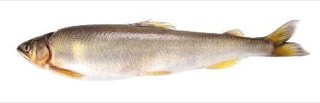 Ayu (Sweetfish) (reference photo)

Species Data
- Classification
- Osmeriformes / Plecoglossidae Source
- Size
- Total length about 15–30 cm; depending on the individual and environment, some mature at about 10 cm
- Lifespan
- Most are annual fish (lifespan about 1 year) that ascend rivers to spawn and then die, but some landlocked populations, such as in Lake Biwa, live 2–3 years
- Diet
- Omnivore Adults feed mainly on cyanobacteria and diatoms attached to stones; larvae and juveniles eat plankton (especially copepods), and growing fish also eat aquatic insects
- Distribution
- Native to the northwestern Pacific coast of East Asia, ranging from Hokkaidō, Japan, through the Korean Peninsula, China, and northern Vietnam, with landlocked populations established in Japanese lakes such as Lake Biwa. Source
- Sources
- ja.wikipedia.org en.wikipedia.org
Did You Know?
- Each fish defends a territory of roughly one square meter of algae-covered rock, fiercely attacking intruders—a behavior that forms the basis of Japan's traditional "tomo-zuri" decoy fishing method. Source
- The breakdown of unsaturated fatty acids in its flesh gives off a distinctive melon-and-cucumber aroma, a trait that inspired its English name, sweetfish. Source
Where to See This Species
Operating facilities registered on this site: Japan 2
Yamanashi Kenritsu Fujiyuusuinosato SuizokukanYamanashi5 minutes from the Yamanakako Interchange on the Higashi-Fuji-Goko Road, 20 minutes from the Kawaguchiko Interchange on the Chuo Expressway.
SHIKOKU AQUARIUMKagawa4 Hama-Ichibancho, Utazu, Ayauta District, Kagawa (inside Utazu Rinkai Park).
Source links to official sites, official YouTube channels, and news aggregators such as Zoo Ring. Visit the publisher for the full item.
Conservation Story
Conservation Status
Least Concern (LC)
Sources
Support Conservation
A visit is a small, positive way to support the daily lives of the animals you care about.
- Visit
- A visit itself helps support the facility.
- Animal Supporter Programs & Giving
- Find ways to support the facility through its official website.
- Furusato Nozei
- Municipally run facilities may share official guidance for this Japanese hometown-tax program.
FAQ
- Why is the ayu called a sweetfish?
- Its English name comes from its distinctive, delicately sweet flavor and melon-and-cucumber aroma, produced as unsaturated fatty acids in its flesh break down. Source
- How long does an ayu live?
- Most ayu are annual fish that hatch, grow, spawn, and die within about a year, though landlocked populations in lakes such as Lake Biwa can live two to three years. Source
- How many operating facilities are registered here?
- Operating facilities registered on this site: Japan 2 Source
Books & gear
Source: ja.wikipedia.org en.wikipedia.org