Barn Owlメンフクロウ
Tyto albaLC— Least Concern
The barn owl is a pale, heart-faced owl found on nearly every continent, renowned for hunting small mammals by sound alone in total darkness. Its silent flight and precise auditory prey-location make it one of the most effective nocturnal hunters among birds.
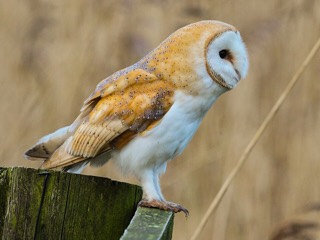 Barn Owl (reference photo)

Species Data
- Classification
- Strigiformes / Tytonidae Source
- Size
- 33–39 cm
- Weight
- 224–710 g (varies greatly by subspecies)
- Lifespan
- Average about 4 years in the wild (record 17 years 10 months); can reach over 20 years in captivity
- Diet
- Carnivore Feeds mainly on small mammals such as voles and shrews, which make up more than 90% of its prey
- Distribution
- Found on nearly every continent except Antarctica; the western barn owl's range spans all of Europe, most of Africa, and southwestern Asia to western Iran. Source
- Sources
- ja.wikipedia.org en.wikipedia.org
Did You Know?
- Its ears are positioned asymmetrically, letting it pinpoint the exact location and distance of prey by sound alone, so it can hunt successfully in total darkness. Source
- Tiny serrations on the leading edge of its flight feathers and a soft fringe on the trailing edge reduce turbulence and noise, giving it near-silent flight to approach prey undetected. Source
Where to See This Species
Operating facilities registered on this site: Japan 8
Adventure WorldWakayamaOpened in 1978
Utsunomiya DoubutsuenTochigiAbout 5 minutes from the Utsunomiya IC on the Tohoku Expressway; free parking for 1,000 cars.
Kiryuugaoka DoubutsuenGunmaIf driving, set your car navigation to "Kiryugaoka Amusement Park" (Kiryugaoka Yuenchi) rather than "Kiryugaoka Zoo" to reach the parking lot (searching by the zoo name may give an incorrect route).
Noichi Zoological Park of Kochi PrefectureKochiA 20-minute walk or 13-minute rental-bicycle ride from Noichi Station on the Tosa Kuroshio Railway Gomen-Nahari Line.
Saitamakenkodomodoubutsu Shizen KouenSaitamaOpened in 1980
Akitashioomoriyama DoubutsuenAkitaFrom bus stop 7 at the west exit of the JR Akita Station bus terminal, take the Akita Chuo Kotsu "Araya Line" bus for about 30 minutes.
Hamamatsu Zoological GardensShizuokaOpened in 1950
Higashiyama Zoo and Botanical GardensAichiOpened in 1937
Former facilities
North Safari SapporoHokkaidoOpened in 2005
Closed: 2025-09-30 Official Site
- のいち動物公園ボランティアーズによるアニマルペインティング~世界動物の日バージョン~
- メンフクロウが巣箱内で子育て中です(6月16日撮影)
- メンフクロウが巣箱内で子育て中です(6月12日撮影)
- メンフクロウが巣箱内で子育て中です(6月6日撮影)
- 新しい仲間
- ハロウィンイベント- 2024 –
Source links to official sites, official YouTube channels, and news aggregators such as Zoo Ring. Visit the publisher for the full item.
Conservation Story
Conservation Status
Least Concern (LC)
Sources
Support Conservation
A visit is a small, positive way to support the daily lives of the animals you care about.
- Visit
- A visit itself helps support the facility.
- Animal Supporter Programs & Giving
- Find ways to support the facility through its official website.
- Furusato Nozei
- Municipally run facilities may share official guidance for this Japanese hometown-tax program.
FAQ
- How does a barn owl hunt in complete darkness?
- Its ears are set at slightly different heights on its head, letting it triangulate the exact location and distance of a sound with extreme precision, so it can catch prey without needing to see it. Source
- Why does a barn owl fly silently?
- Comb-like serrations on the leading edge of its wing feathers and a velvety fringe on the trailing edge break up turbulence and muffle sound, allowing near-silent flight. Source
- How many operating facilities are registered here?
- Operating facilities registered on this site: Japan 8 Source
Books & gear
Source: ja.wikipedia.org en.wikipedia.org