Black Rhinocerosクロサイ
Diceros bicornisCR— Critically Endangered
The black rhinoceros is a browsing rhino of East and Southern Africa, distinguished from the white rhino by its pointed, prehensile upper lip used to strip leaves from shrubs and trees. Relentless poaching for its horn drove a catastrophic 96% population decline between 1970 and 1992, and one subspecies, the western black rhinoceros, was declared extinct in 2011. With roughly 3,142 mature individuals remaining, the species is classified as Critically Endangered by the IUCN.
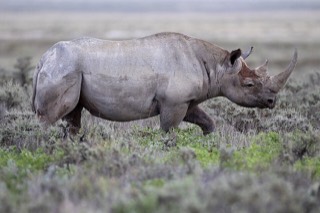 Black Rhinoceros (reference photo)

Species Data
- Classification
- Perissodactyla / Rhinocerotidae Source
- Size
- Body length about 280–375 cm, shoulder height about 132–180 cm
- Weight
- About 800–1,400 kg (large males may reach 2.9 tons)
- Lifespan
- Wild: about 35–50 years
- Diet
- Herbivore Herbivorous browser, selectively eating the leaves and twigs of shrubs, saplings, and legumes; also eats herbaceous plants in the dry season
- Activity
- Crepuscular; feeds in the morning and evening and escapes the heat of the day by wallowing and resting
- Distribution
- The black rhinoceros is found across East and Southern Africa, including Angola, Botswana, Kenya, Namibia, South Africa, Tanzania, Zambia, and Zimbabwe, with most surviving populations now confined to protected reserves. Source
- Sources
- ja.wikipedia.org en.wikipedia.org
Did You Know?
- The black rhino has a pointed, highly mobile upper lip that it uses to grip and pull leafy branches toward its mouth. Source
- Black rhinos have a mutualistic relationship with oxpecker birds, which remove external parasites from their skin and alert them to approaching danger with warning calls. Source
- Illegal poaching for the international rhino horn trade caused a 96% population decline between 1970 and 1992, and the western black rhinoceros subspecies was declared extinct in 2011. Source
Where to See This Species
Operating facilities registered on this site: Japan 7
Yokohama Shiritsu Yokohama DoubutsuenKanagawaOpened in 1999
Hiroshima City Asa Zoological ParkHiroshimaFrom JR Hiroshima Station, take the Sanyo Main Line or Kabe Line to Shin-Hakushima Station, transfer to the Astram Line to Kamiyasu Station, then take a bus to "Asa Dobutsu Koen" (about 45 minutes in total).
Hirakawa ZooKagoshimaAbout a 20-minute walk from Goino Station on the JR Ibusuki-Makurazaki Line, or take a bus bound for Taniyama / Dobutsuen from Fukuhira Nokyo-mae to the last stop.
Tennoji ZooOsakaOpened in 1915
Higashiyama Zoo and Botanical GardensAichiOpened in 1937
Kumamotoshi DoushokubutsuenKumamotoTake the tram bound for Kengun and get off at the Doshokubutsuen-Iriguchi stop, then walk 10 minutes.
Source links to official sites, official YouTube channels, and news aggregators such as Zoo Ring. Visit the publisher for the full item.
Conservation Story
Conservation Status
Critically Endangered (CR)
Sources
Support Conservation
A visit is a small, positive way to support the daily lives of the animals you care about.
- Visit
- A visit itself helps support the facility.
- Animal Supporter Programs & Giving
- Find ways to support the facility through its official website.
- Furusato Nozei
- Municipally run facilities may share official guidance for this Japanese hometown-tax program.
FAQ
- Why is the black rhinoceros critically endangered?
- Illegal poaching for the international rhino horn trade is the primary threat, driving a 96% population collapse between 1970 and 1992. Roughly 3,142 mature individuals remain today. Source
- How is the black rhino different from the white rhino?
- The black rhino has a pointed, mobile upper lip adapted for browsing leaves from bushes and trees, while the white rhino has a broad, square lip for grazing grass. Source
- Has any black rhino subspecies gone extinct?
- Yes. The western black rhinoceros subspecies was declared extinct in 2011 after being wiped out by poaching. Source
- How many operating facilities are registered here?
- Operating facilities registered on this site: Japan 7 Source
Books & gear
Source: ja.wikipedia.org en.wikipedia.org