Chinchillaチンチラ
Chinchilla lanigeraEN— Endangered
The long-tailed chinchilla is a small, densely furred rodent native to the high Andes of northern Chile, adapted to cold, arid mountain slopes between 3,000 and 5,000 meters elevation. It is a crepuscular herbivore that relies on regular dust baths to maintain its exceptionally thick coat, which historically made it a target of the fur trade. Wild populations have declined sharply due to hunting and habitat loss, and the IUCN classifies the species as Endangered.
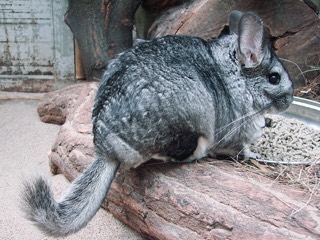 Chinchilla (reference photo)
-2.JPG)
Species Data
- Classification
- Rodentia / Chinchillidae Source
- Size
- Wild individuals: head-body length about 26 cm, tail about 13 cm (domesticated animals are larger than wild ones)
- Weight
- Wild individuals average 412 g for males and 422 g for females; domesticated animals reach up to 800 g in females and 600 g in males
- Lifespan
- Average about 10 years under natural conditions; up to about 20 years under human care, with one record in Japan of 29 years in captivity
- Diet
- Herbivore Herbivorous; fed high-quality hay (such as timothy), chinchilla pellets, and small amounts of vegetables and fruit, consuming about 5–6% of its body weight daily
- Activity
- Crepuscular (active at twilight), with strong nocturnal tendencies
- Distribution
- The long-tailed chinchilla is native to the Andes Mountains of northern Chile, at elevations between 3,000 and 5,000 meters. Source
- Sources
- ja.wikipedia.org en.wikipedia.org
Did You Know?
- As many as 75 hairs can grow from a single hair follicle, contributing to one of the densest fur coats of any mammal. Source
- Chinchillas need to take dust baths at least twice a week to keep their dense fur clean and healthy. Source
- The species is listed as Endangered on the IUCN Red List and in CITES Appendix I, and is considered to hold the second-highest conservation priority among Chilean mammals. Source
Where to See This Species
Operating facilities registered on this site: Japan 4
Saitamakenkodomodoubutsu Shizen KouenSaitamaOpened in 1980
Iida Shiritsu DoubutsuenNaganoAddress: 33 Ogimachi, Iida, Nagano.
Hamamatsu Zoological GardensShizuokaOpened in 1950
Source links to official sites, official YouTube channels, and news aggregators such as Zoo Ring. Visit the publisher for the full item.
Conservation Story
Conservation Status
Endangered (EN)
Sources
Support Conservation
A visit is a small, positive way to support the daily lives of the animals you care about.
- Visit
- A visit itself helps support the facility.
- Animal Supporter Programs & Giving
- Find ways to support the facility through its official website.
- Furusato Nozei
- Municipally run facilities may share official guidance for this Japanese hometown-tax program.
FAQ
- Why is chinchilla fur so dense?
- Up to 75 individual hairs grow from each hair follicle, giving chinchillas one of the densest fur coats of any mammal — a trait that made them heavily targeted by the historical fur trade. Source
- Are chinchillas endangered in the wild?
- Yes. The long-tailed chinchilla is listed as Endangered on the IUCN Red List and in CITES Appendix I, with wild populations reduced by historical fur hunting and ongoing habitat loss in the Chilean Andes. Source
- How do chinchillas stay clean?
- They take dust baths at least twice a week, rolling in fine volcanic ash or specialized dust to remove oil and moisture from their fur, since their coat is too dense to dry quickly if it gets wet. Source
- How many operating facilities are registered here?
- Operating facilities registered on this site: Japan 4 Source
Books & gear
Source: ja.wikipedia.org en.wikipedia.org