Hamadryas Baboonマントヒヒ
Papio hamadryasLC— Least Concern
The hamadryas baboon (Papio hamadryas) is a highly social Old World monkey of the Horn of Africa and southwestern Arabia, notable for the males' distinctive silver mane. It lives in a complex, multi-level society built around one-male harems nested within larger clans, bands, and troops. Revered as sacred by the ancient Egyptians, it remains classified as Least Concern despite local extinction in Egypt.
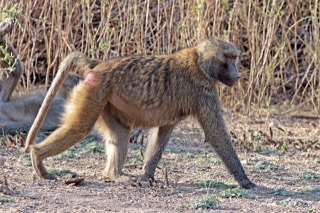 Hamadryas Baboon (reference photo)
_female.jpg)
Species Data
- Classification
- Primates / Cercopithecidae Source
- Size
- Males 70–80 cm, females 50–60 cm (tail 40–65 cm)
- Weight
- Males about 20 kg, females about 10 kg
- Diet
- Omnivore Omnivorous, eating insects, small reptiles, leaves, fruit, and seeds
- Activity
- Diurnal; at night, troops of over 100 gather to sleep on cliff faces
- Distribution
- Distributed across the Horn of Africa (Eritrea, Ethiopia, Djibouti, Somalia, western Sudan) and the southwestern Arabian Peninsula (Yemen, Saudi Arabia); it is now extinct in Egypt. Source
- Sources
- ja.wikipedia.org en.wikipedia.org
Did You Know?
- Adult males grow long hair over the shoulders and temples that resembles a cape, giving the species its name. Source
- Society is organized around one-male harems; if a female tries to leave, the male may bite her neck to keep her within the group, reflecting strict male control. Source
- Ancient Egyptians considered the hamadryas baboon sacred, associating it with the god Thoth. Source
Where to See This Species
Operating facilities registered on this site: Japan 5
Adventure WorldWakayamaOpened in 1978
Kiryuugaoka DoubutsuenGunmaIf driving, set your car navigation to "Kiryugaoka Amusement Park" (Kiryugaoka Yuenchi) rather than "Kiryugaoka Zoo" to reach the parking lot (searching by the zoo name may give an incorrect route).
Hirakawa ZooKagoshimaAbout a 20-minute walk from Goino Station on the JR Ibusuki-Makurazaki Line, or take a bus bound for Taniyama / Dobutsuen from Fukuhira Nokyo-mae to the last stop.
Chiba Zoological ParkChibaOpened in 1985
Conservation Story
Conservation Status
Least Concern (LC)
Sources
Support Conservation
A visit is a small, positive way to support the daily lives of the animals you care about.
- Visit
- A visit itself helps support the facility.
- Animal Supporter Programs & Giving
- Find ways to support the facility through its official website.
- Furusato Nozei
- Municipally run facilities may share official guidance for this Japanese hometown-tax program.
FAQ
- Why is it called the hamadryas or 'cloak' baboon?
- Adult males develop long silvery hair over their shoulders and temples that resembles a cape or mantle. Source
- How is hamadryas baboon society structured?
- It has a unique multi-level society: one-male harems combine into clans, clans into bands, and bands into troops of over a hundred individuals. Source
- How many operating facilities are registered here?
- Operating facilities registered on this site: Japan 5 Source
Books & gear
Source: ja.wikipedia.org en.wikipedia.org