Indian Rhinocerosインドサイ
Rhinoceros unicornisVU— Vulnerable
The Indian rhinoceros (Rhinoceros unicornis) is a massive, single-horned rhino native to the floodplains of northeastern India and Nepal, recognized by its thick, armor-like folded skin. Once reduced to about 200 individuals in the early 1900s, conservation efforts have grown the population to roughly 4,000, though poaching for its horn remains a persistent threat. It is classified as Vulnerable by the IUCN.
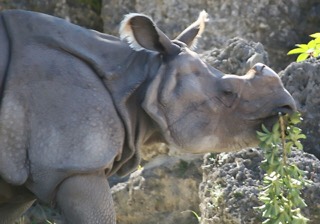 Indian Rhinoceros (reference photo)

Species Data
- Classification
- Perissodactyla / Rhinocerotidae Source
- Size
- 310–420 cm
- Weight
- 1,500–3,500 kg
- Lifespan
- Captive: up to 47 years
- Diet
- Herbivore Herbivorous, feeding mainly on grasses along with branches, fruit, aquatic plants, and bamboo shoots; grasses make up 70–89% of the diet
- Activity
- Nocturnal, active mainly at dawn and dusk
- Distribution
- Found in protected areas of northeastern India and southern Nepal; the species is extinct in Pakistan, Bangladesh, and Bhutan. Source
- Sources
- ja.wikipedia.org en.wikipedia.org
Did You Know?
- Reduced to an estimated 200 individuals in the early 1900s, the population has recovered to about 3,588 by 2018, though over 70% live concentrated in a single protected area. Source
- It is the second-largest living rhinoceros species and the largest land mammal in Asia after the elephant. Source
- Its thick, armor-like folded skin belies surprising agility—it can run up to 55 km/h in short bursts and is an excellent swimmer. Source
Where to See This Species
Operating facilities registered on this site: Japan 1
Higashiyama Zoo and Botanical GardensAichiOpened in 1937
- 【福祉】東山動植物園で「暑い日も動物たちを外の展示場に出す深い理由」他 本日の注目情報セレクション
- 【東山動植物園公式】ある日のブンタ《 インドサイ サイ 》
- 【東山動植物園公式】突然ですがクイズです!!《 インドサイ サイ 》 #short
Source links to official sites, official YouTube channels, and news aggregators such as Zoo Ring. Visit the publisher for the full item.
Conservation Story
Conservation Status
Vulnerable (VU)
Sources
Support Conservation
A visit is a small, positive way to support the daily lives of the animals you care about.
- Visit
- A visit itself helps support the facility.
- Animal Supporter Programs & Giving
- Find ways to support the facility through its official website.
- Furusato Nozei
- Municipally run facilities may share official guidance for this Japanese hometown-tax program.
FAQ
- How many horns does the Indian rhinoceros have?
- Just one, measuring roughly 22.5-24 inches (about 30-60 cm) — unlike African rhino species, which have two. Source
- Has the Indian rhinoceros population recovered?
- Yes, significantly. From about 200 individuals in the early 1900s, numbers have grown to roughly 4,000 today, though most live concentrated in just a few protected areas. Source
- How many operating facilities are registered here?
- Operating facilities registered on this site: Japan 1 Source
Books & gear
Source: ja.wikipedia.org en.wikipedia.org