Seahorseタツノオトシゴ
Hippocampus mohnikeiVU— Vulnerable
The Japanese seahorse (Hippocampus mohnikei) is a small seahorse, reaching about 8 cm long, found in shallow coastal waters historically centered on Japan and now confirmed across parts of East and Southeast Asia including India's Palk Bay and Cambodia. As in other seahorses, males carry the female's eggs in a brood pouch until they hatch. The species is listed as Vulnerable by the IUCN and included in CITES Appendix II.
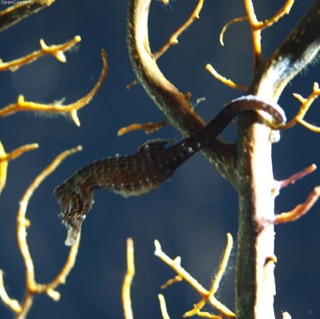 Seahorse (reference photo)

Species Data
- Classification
- Syngnathiformes / Syngnathidae Source
- Size
- Maximum body length about 8.0 cm
- Diet
- Carnivore Carnivorous, sucking in small zooplankton, crustaceans, fish eggs, and similar prey
- Distribution
- Ranges across East and Southeast Asia, historically centered on Japan, with confirmed occurrences extending to India's Palk Bay and Cambodia. Source
- Sources
- en.wikipedia.org ja.wikipedia.org
Did You Know?
- Males carry the female's eggs in an abdominal brood pouch until they hatch; Japanese individuals have been recorded laying 40-50 eggs over about two hours. Source
- Unlike many seahorse species, it is notably not among those commonly used in traditional Chinese medicine. Source
- In parts of Japan, dried seahorses are traditionally carried by pregnant women as charms for safe childbirth. Source
Where to See This Species
Operating facilities registered on this site: Japan 1
Nagasakipengin SuizokukanNagasakiOpened in 2001
Former facilities
Shima MarinelandMieOpened in 1970
Closed: 2021-03-31 Official Site
Source links to official sites, official YouTube channels, and news aggregators such as Zoo Ring. Visit the publisher for the full item.
Conservation Story
Conservation Status
Vulnerable (VU)
Sources
Support Conservation
A visit is a small, positive way to support the daily lives of the animals you care about.
- Visit
- A visit itself helps support the facility.
- Animal Supporter Programs & Giving
- Find ways to support the facility through its official website.
- Furusato Nozei
- Municipally run facilities may share official guidance for this Japanese hometown-tax program.
FAQ
- How big does the Japanese seahorse get?
- It is a small species, reaching a maximum length of about 8 cm. Source
- Do male seahorses really carry the eggs?
- Yes. Females deposit their eggs into a brood pouch on the male's abdomen, and he carries and protects them until they hatch. Source
- Is the Japanese seahorse endangered?
- It is listed as Vulnerable on the IUCN Red List and protected under CITES Appendix II, which regulates international trade. Source
- How many operating facilities are registered here?
- Operating facilities registered on this site: Japan 1 Source
Books & gear
Source: ja.wikipedia.org en.wikipedia.org