Kinkajouキンカジュー
Potos flavusLC— Least Concern
The kinkajou (Potos flavus) is a nocturnal, tree-dwelling mammal of Central and South American rainforests, related to raccoons despite its cat-like appearance. Nicknamed the 'honey bear,' it feeds mainly on fruit and uses a prehensile tail as a fifth limb for climbing. Once thought to be purely solitary, it is now known to form small social groups, and it is classified as Least Concern.
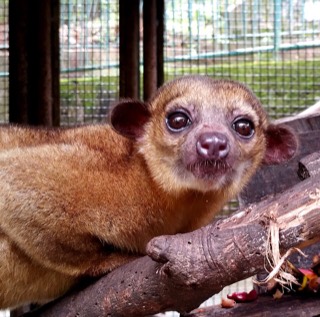 Kinkajou (reference photo)

Species Data
- Classification
- Carnivora / Procyonidae Source
- Size
- Head-body length 40.5–76 cm (tail 39.2–57 cm)
- Weight
- 1.4–4.6 kg
- Lifespan
- Captive: a record of 23 years 7 months at Amsterdam Zoo (another record reaches 42 years)
- Diet
- Omnivore Feeds mainly on fruit such as avocados, guavas, and mangoes, along with nectar, honey, insects, and birds and their eggs
- Activity
- Nocturnal; rests in tree hollows and similar spots during the day
- Distribution
- Widely distributed from Mexico to Bolivia across more than 17 countries in Central and South America. Source
- Sources
- ja.wikipedia.org en.wikipedia.org
Did You Know?
- Nicknamed the 'honey bear,' it actually eats little wild honey despite its name. Source
- It uses its prehensile tail as a 'fifth hand' for climbing and can rotate its ankles 180 degrees for exceptional arboreal agility. Source
- Once thought to be strictly solitary, research since 2000 has revealed it lives in complex small social groups. Source
Where to See This Species
Operating facilities registered on this site: Japan 5
Noichi Zoological Park of Kochi PrefectureKochiA 20-minute walk or 13-minute rental-bicycle ride from Noichi Station on the Tosa Kuroshio Railway Gomen-Nahari Line.
Hirakawa ZooKagoshimaAbout a 20-minute walk from Goino Station on the JR Ibusuki-Makurazaki Line, or take a bus bound for Taniyama / Dobutsuen from Fukuhira Nokyo-mae to the last stop.
Chiba Zoological ParkChibaOpened in 1985
Higashiyama Zoo and Botanical GardensAichiOpened in 1937
Former facilities
North Safari SapporoHokkaidoOpened in 2005
Closed: 2025-09-30 Official Site
Source links to official sites, official YouTube channels, and news aggregators such as Zoo Ring. Visit the publisher for the full item.
Conservation Story
Conservation Status
Least Concern (LC)
Sources
Support Conservation
A visit is a small, positive way to support the daily lives of the animals you care about.
- Visit
- A visit itself helps support the facility.
- Animal Supporter Programs & Giving
- Find ways to support the facility through its official website.
- Furusato Nozei
- Municipally run facilities may share official guidance for this Japanese hometown-tax program.
FAQ
- Is the kinkajou related to bears?
- No. Despite the nickname 'honey bear,' it belongs to the raccoon family (Procyonidae), not the bear family. Source
- What makes the kinkajou's tail special?
- It is prehensile, functioning like a fifth hand that lets the animal grip branches securely while climbing through the forest canopy. Source
- How many operating facilities are registered here?
- Operating facilities registered on this site: Japan 5 Source
Books & gear
Source: ja.wikipedia.org en.wikipedia.org