Shoebillハシビロコウ
Balaeniceps rexVU— Vulnerable
The shoebill is a giant, stork-like wading bird found in the freshwater swamps of central tropical Africa, most notably the Sudd wetlands of South Sudan. Named for its enormous, boot-shaped bill, it hunts primarily lungfish and other large fish, often standing motionless for hours while waiting for prey to surface. Classified as Vulnerable due to habitat loss and disturbance, it is thought to number only 5,000 to 8,000 individuals in the wild.
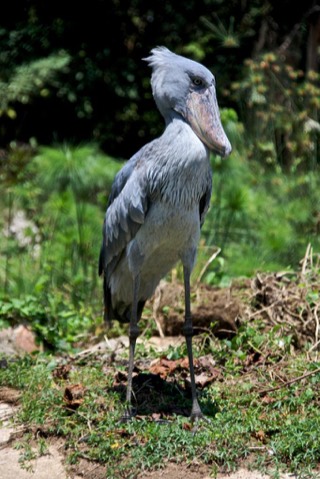 Shoebill (reference photo)

Species Data
- Classification
- Pelecaniformes / Balaenicipitidae Source
- Size
- Height 110–140 cm, wingspan 230–260 cm
- Weight
- 4–7 kg (males average 5.6 kg / females average 4.9 kg)
- Lifespan
- Few reliable records exist for wild or captive birds, but one captive individual reached over 50 years
- Diet
- Piscivore Mainly piscivorous; eats lungfish, tilapia, catfish, and other fish, as well as frogs and young crocodiles
- Distribution
- Found across central tropical Africa from South Sudan to Zambia, with its stronghold in the Sudd wetlands of South Sudan. Source
- Sources
- ja.wikipedia.org en.wikipedia.org
Did You Know?
- Shoebills can stand motionless for hours waiting for prey such as lungfish to surface, earning them a reputation as "the bird that doesn't move." Source
- On hot days, shoebills fill their huge bill with water and pour it over the nest to cool the eggs. Source
- Shoebills have become internet meme sensations since 2014 due to their intimidating appearance. Source
Where to See This Species
Operating facilities registered on this site: Japan 6
NasudoubutsuoukokuTochigiAbout 50 minutes by car from Nasu-Shiobara Station on the Tohoku Shinkansen (a free shuttle bus is available; online reservation required by 17:00 the day before).
KOBE ANIMAL KINGDOMHyogoRight by Keisan Kagaku Center Station (Kobe Animal Kingdom / Fugaku-mae) on the Port Liner.
Noichi Zoological Park of Kochi PrefectureKochiA 20-minute walk or 13-minute rental-bicycle ride from Noichi Station on the Tosa Kuroshio Railway Gomen-Nahari Line.
Izu Shaboten ZooShizuokaOpened in 1959
Chiba Zoological ParkChibaOpened in 1985
- 【掛川花鳥園公式】ハシビロコウ「ふたば」と砂浜の海辺体験・・・笑
- ヒョウモンガメの飼育と展示を始めました
- 【掛川花鳥園公式】ハシビロコウ「ふたば」とシダ束で遊ぶ。かわいい。
- 【侵犯】のいち動物公園で「繁殖のため同居するハシビロコウたちのパーソナルスペース」他 本日の注目情報セレクション
- 【掛川花鳥園公式】「バードスタッフガイド ハシビロコウ」ライブ配信アーカイブ
- 今日のおはようふたば&お知らせ(2026.7.2)【掛川花鳥園公式】#掛川花鳥園ハシビロコウふたば #ふたばありが10
Source links to official sites, official YouTube channels, and news aggregators such as Zoo Ring. Visit the publisher for the full item.
Conservation Story
Conservation Status
Vulnerable (VU)
Sources
Support Conservation
A visit is a small, positive way to support the daily lives of the animals you care about.
- Visit
- A visit itself helps support the facility.
- Animal Supporter Programs & Giving
- Find ways to support the facility through its official website.
- Furusato Nozei
- Municipally run facilities may share official guidance for this Japanese hometown-tax program.
FAQ
- Why is the shoebill called that?
- It is named for its huge, boot- or shoe-shaped bill, which can measure up to 24 cm long. Source
- How does the shoebill hunt?
- It stands motionless for hours in shallow water, waiting for lungfish and other large fish to surface before striking. Source
- Is the shoebill endangered?
- It is classified as Vulnerable, with an estimated 5,000-8,000 individuals remaining, threatened by habitat loss and disturbance. Source
- How many operating facilities are registered here?
- Operating facilities registered on this site: Japan 6 Source
Books & gear
Source: www.tokyo-zoo.net nasu-oukoku.com www.kobe-oukoku.com noichizoo.or.jp www.iucnredlist.org