American Flamingoベニイロフラミンゴ
Phoenicopterus ruberLC— Least Concern
The American flamingo is a large, vividly pink filter-feeding bird of the Caribbean and northern South America, the only flamingo species native to North America. It wades through saline lagoons and coastal shallows, sweeping its uniquely bent bill through the water to strain out crustaceans, molluscs, and algae.
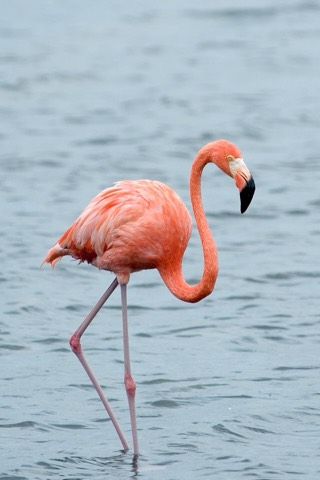 American Flamingo (reference photo)

Species Data
- Classification
- Phoenicopteriformes / Phoenicopteridae Source
- Size
- 120–145 cm
- Weight
- Males about 2.8 kg / females about 2.2 kg
- Lifespan
- Average lifespan about 40 years (known as a long-lived bird)
- Diet
- Filter feeder Filters crustaceans, mollusks, annelids, insects, small fish, aquatic plants, and algae through its bill
- Distribution
- Native to the West Indies, northern South America including the Galápagos Islands, and the Yucatán Peninsula; formerly common in southern Florida, where it is now rare. Source
- Sources
- ja.wikipedia.org en.wikipedia.org
Did You Know?
- It is the only flamingo species naturally found in North America, and parents of both sexes guard young birds for about six years until they reach sexual maturity. Source
- Its trachea is longer than its own body with about 330 cartilaginous rings, and salt glands at the base of the bill let it excrete excess salt, allowing it to live in highly saline water. Source
Where to See This Species
Operating facilities registered on this site: Japan 14
Adventure WorldWakayamaOpened in 1978
Kyoto City ZooKyotoOpened in 1903
Kiryuugaoka DoubutsuenGunmaIf driving, set your car navigation to "Kiryugaoka Amusement Park" (Kiryugaoka Yuenchi) rather than "Kiryugaoka Zoo" to reach the parking lot (searching by the zoo name may give an incorrect route).
Noichi Zoological Park of Kochi PrefectureKochiA 20-minute walk or 13-minute rental-bicycle ride from Noichi Station on the Tosa Kuroshio Railway Gomen-Nahari Line.
Saitamakenkodomodoubutsu Shizen KouenSaitamaOpened in 1980
Sapporoshimaruyama DoubutsuenHokkaidoOpened in 1951
Hirakawa ZooKagoshimaAbout a 20-minute walk from Goino Station on the JR Ibusuki-Makurazaki Line, or take a bus bound for Taniyama / Dobutsuen from Fukuhira Nokyo-mae to the last stop.
Chiba Zoological ParkChibaOpened in 1985
Tennoji ZooOsakaOpened in 1915
TOBU ZOOSaitamaFrom Tobu-Dobutsu-Koen Station (west exit), about 10 minutes on foot (600 m) or about 5 minutes by bus.
Hamamatsu Zoological GardensShizuokaOpened in 1950
Fukuoka Zoo & Botanical GardenFukuokaOpened in 1953
Higashiyama Zoo and Botanical GardensAichiOpened in 1937
Temporarily closed facilities
Temporarily closed Official Site
Source links to official sites, official YouTube channels, and news aggregators such as Zoo Ring. Visit the publisher for the full item.
Conservation Story
Conservation Status
Least Concern (LC)
Sources
Support Conservation
A visit is a small, positive way to support the daily lives of the animals you care about.
- Visit
- A visit itself helps support the facility.
- Animal Supporter Programs & Giving
- Find ways to support the facility through its official website.
- Furusato Nozei
- Municipally run facilities may share official guidance for this Japanese hometown-tax program.
- Support Adventure World
- Support Kyoto City Zoo
- Support Kiryuugaoka Doubutsuen
- Support Noichi Zoological Park of Kochi Prefecture
- Support Saitamakenkodomodoubutsu Shizen Kouen
- Support Sapporoshimaruyama Doubutsuen
- Support Hirakawa Zoo
- Support Chiba Zoological Park
- Support Tennoji Zoo
- Support Ueno Zoo
- Support TOBU ZOO
- Support Hamamatsu Zoological Gardens
- Support Fukuoka Zoo & Botanical Garden
- Support Higashiyama Zoo and Botanical Gardens
FAQ
- Why is the American flamingo pink?
- Its pink-to-scarlet plumage comes from carotenoid pigments in the crustaceans, algae, and other small organisms it filters from the water; the color intensity depends on diet. Source
- Where does the American flamingo live?
- It is found in the West Indies, coastal northern South America including the Galápagos Islands, and the Yucatán Peninsula, favoring salt lagoons, mudflats, and shallow saline lakes. Source
- How many operating facilities are registered here?
- Operating facilities registered on this site: Japan 14 Source
Books & gear
Source: ja.wikipedia.org en.wikipedia.org