Southern Cassowaryヒクイドリ
Casuarius casuariusLC— Least Concern
The southern cassowary is a massive, flightless ratite native to the tropical rainforests of New Guinea, nearby Indonesian islands, and northeastern Australia. Females are notably larger than males, and both sexes bear a tall, horn-like casque atop the head. Primarily frugivorous, it plays a crucial role as a seed disperser for many rainforest plants, and despite its reputation as a dangerous bird armed with dagger-like claws, confirmed human fatalities are extremely rare.
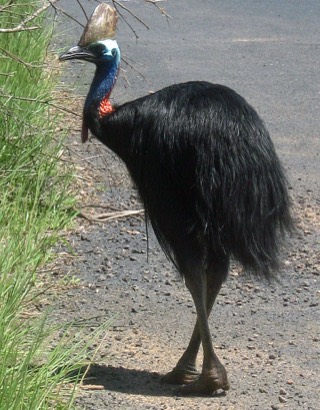 Southern Cassowary (reference photo)

Species Data
- Classification
- Casuariiformes / Casuariidae Source
- Size
- Total height 127–190 cm (record 190 cm)
- Weight
- Males about 29–34 kg / females about 46–76 kg (females are larger)
- Diet
- Omnivore Omnivore with a fruit-based diet, also eating seeds, fungi, and invertebrates; needs about 5 kg of food a day and may walk 20 km a day to find it
- Distribution
- Found in Indonesia, Papua New Guinea, and northeastern Australia, preferring tropical rainforests below 1,100 m elevation in Australia. Source
- Sources
- ja.wikipedia.org en.wikipedia.org
Did You Know?
- It can run at 50 km/h and possesses a dagger-like claw up to 12 cm long. Source
- The horn-like casque on its head measures 13 to 20 cm high and glows under ultraviolet light in species-specific patterns. Source
- Despite its dangerous reputation, only two human deaths have been documented since 1900. Source
Where to See This Species
Operating facilities registered on this site: Japan 8
Yokohama Shiritsu Kanazawa DoubutsuenKanagawaOpened in 1982
Kumamotoshi DoushokubutsuenKumamotoTake the tram bound for Kengun and get off at the Doshokubutsuen-Iriguchi stop, then walk 10 minutes.
TOBU ZOOSaitamaFrom Tobu-Dobutsu-Koen Station (west exit), about 10 minutes on foot (600 m) or about 5 minutes by bus.
Fukuoka Zoo & Botanical GardenFukuokaOpened in 1953
Tobe Zoological Park of Ehime PrefectureEhimeOpened in 1988
Kurumeshichourui CenterFukuokaLocated at 1667 Higashi-Kushihara-machi, Kurume, Fukuoka, inside Chuo Park.
Fukuyama Shiritsu DoubutsuenHiroshimaThere is no public transportation; access is by car.
Source links to official sites, official YouTube channels, and news aggregators such as Zoo Ring. Visit the publisher for the full item.
Conservation Story
Conservation Status
Least Concern (LC)
Sources
Support Conservation
A visit is a small, positive way to support the daily lives of the animals you care about.
- Visit
- A visit itself helps support the facility.
- Animal Supporter Programs & Giving
- Find ways to support the facility through its official website.
- Furusato Nozei
- Municipally run facilities may share official guidance for this Japanese hometown-tax program.
FAQ
- Is the southern cassowary dangerous?
- It has a dagger-like claw up to 12 cm long and can run at 50 km/h, but confirmed human deaths since 1900 number only two. Source
- What does the southern cassowary eat?
- It is largely frugivorous, feeding on fallen fruit, seeds, fungi, and invertebrates, and can safely digest fruits that are toxic to other animals. Source
- What is the casque on a cassowary's head for?
- The horn-like casque, which can reach 13–20 cm tall, glows under ultraviolet light in species-specific patterns, though its exact function is still debated by scientists. Source
- How many operating facilities are registered here?
- Operating facilities registered on this site: Japan 8 Source
Books & gear
Source: ja.wikipedia.org en.wikipedia.org