White Rhinocerosシロサイ
Ceratotherium simumNT— Near Threatened
The white rhinoceros is the largest living rhino species, native to the grasslands and savannas of southern Africa. A specialized grazer with a distinctive wide, square lip for cropping short grass, it is divided into southern and northern subspecies with vastly different fates: the southern subspecies numbers in the tens of thousands, while the northern subspecies is functionally extinct, surviving only as two females under protection. The IUCN lists the species overall as Near Threatened, with poaching for its horn the primary threat.
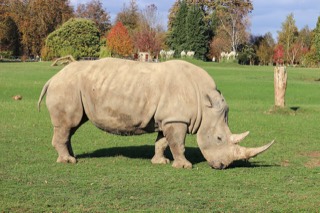 White Rhinoceros (reference photo)
_(CWPG).jpg)
Species Data
- Classification
- Perissodactyla / Rhinocerotidae Source
- Size
- Body length 335–420 cm, shoulder height 171–185 cm
- Weight
- Males about 2,000–3,600 kg / females about 1,400–1,700 kg (the largest rhinoceros species)
- Lifespan
- Wild: estimated 40–50 years
- Diet
- Herbivore Herbivorous grazer, feeding mainly on short grasses close to the ground, and occasionally on leaves
- Activity
- Rests during the day and feeds at dawn and in the evening
- Distribution
- The white rhinoceros is found mainly in southern Africa, including South Africa, Namibia, Botswana, and Zimbabwe, and is divided into southern and northern subspecies. Source
- Sources
- ja.wikipedia.org en.wikipedia.org
Did You Know?
- Its eyesight is poor, struggling to see objects even 30 meters away, but this is compensated by an excellent sense of hearing and smell. Source
- The horn is made entirely of keratin, the same protein found in fingernails and hair, with no bony core, yet mistaken beliefs about its medicinal value have made it a poaching target. Source
- The northern subspecies has had no confirmed wild sightings since 2006, and as of the present day only two females survive under protection in Kenya. Source
Where to See This Species
Operating facilities registered on this site: Japan 4 · Overseas 1
Adventure WorldWakayamaOpened in 1978
Nagasaki Bio ParkNagasakiOpened in 1980
Nasu SafariParkTochigiAbout 15 minutes from the Nasu IC or about 25 minutes from the Kuroiso-Itamuro IC on the Tohoku Expressway.
Fuji Safari ParkShizuokaOpened in 1980
San Diego ZooOpened in 1916
Conservation Story
Conservation Status
Near Threatened (NT)
Sources
Support Conservation
A visit is a small, positive way to support the daily lives of the animals you care about.
- Visit
- A visit itself helps support the facility.
- Animal Supporter Programs & Giving
- Find ways to support the facility through its official website.
- Furusato Nozei
- Municipally run facilities may share official guidance for this Japanese hometown-tax program.
FAQ
- What is the difference between the northern and southern white rhinoceros?
- The southern white rhinoceros has recovered to a wild population of roughly 17,000 to 18,000, while the northern subspecies is functionally extinct, with only two related females remaining under protection in Kenya since no wild individuals have been confirmed since 2006. Source
- What are white rhino horns made of?
- The horns are made of keratin, the same protein found in human hair and fingernails, with no bony core inside. Source
- What do white rhinos eat?
- They are specialized grazers that feed mainly on short grasses close to the ground, using their wide, square lips to crop vegetation efficiently. Source
- How many operating facilities are registered here?
- Operating facilities registered on this site: Japan 4 · Overseas 1 Source
Books & gear
Source: ja.wikipedia.org en.wikipedia.org