Cheetahチーター
Acinonyx jubatusVU— Vulnerable
The cheetah is the world's fastest land animal, capable of accelerating from a standstill to 97 km/h in under three seconds and reaching top speeds beyond 100 km/h. Once widespread across Africa and Asia, it now survives mainly in eastern and southern Africa, with only a handful of individuals left in Iran, the last wild population in Asia. Habitat loss, human conflict, and exceptionally low genetic diversity have driven steep declines, and the IUCN classifies the species as Vulnerable.
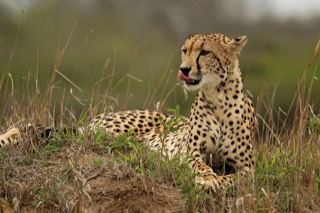 Cheetah (reference photo)
_female_2.jpg)
Species Data
- Classification
- Carnivora / Felidae Source
- Size
- Body length about 110–150 cm, shoulder height about 67–94 cm
- Weight
- About 35–72 kg (males average 45.6 kg, females 37.2 kg)
- Lifespan
- Wild: females average 6.9 years (in the Serengeti, males about 5 years and females about 6 years); in captivity, females have lived to around 13
- Diet
- Carnivore Carnivorous, preying mainly on small to medium ungulates and the young of large ungulates; depending on region, staples include impala, gazelles, and springbok, and it also takes hares and birds
- Activity
- Mainly diurnal, hunting by day when prey is easier to see and encounters with larger carnivores are easier to avoid, though it may be active at night in hot regions such as the Sahara
- Distribution
- Cheetahs are now found mainly in eastern and southern Africa, with a small, critically endangered population surviving in central Iran — the last wild cheetahs in Asia. Source
- Sources
- ja.wikipedia.org en.wikipedia.org
Did You Know?
- Unlike most cats, the cheetah cannot fully retract its claws, which act like spikes for extra traction during high-speed chases. Source
- A cheetah can accelerate from 0 to 97 km/h (60 mph) in under three seconds and reach top speeds of 93 to 104 km/h. Source
- The black 'tear stripes' running from the inner corners of the eyes to the mouth are thought to reduce glare from the sun during daytime hunting. Source
Where to See This Species
Operating facilities registered on this site: Japan 9
Adventure WorldWakayamaOpened in 1978
Yokohama Shiritsu Yokohama DoubutsuenKanagawaOpened in 1999
Iwate SafariParkIwateAbout 45 minutes from the Ichinoseki IC, about 30 minutes from the Wakayanagi-Kannari IC, or about 25 minutes via National Route 284.
African safariOitaBy car, the park is about 6 km (about 7 minutes) from the Beppu-wan Smart IC.
Chiba Zoological ParkChibaOpened in 1985
HIMEJI CENTRAL PARKHyogoFrom the north exit of JR Himeji Station, take the Shinki Bus bound for Himeji Central Park (fare: adults ¥590, children ¥300).
Fuji Safari ParkShizuokaOpened in 1980
- 9月20日(日) からチーター「アジャブ」の展示を再開します。
- 9月10日(木)チーター「フラッシュ」が亡くなりました
- 7月31日(金)からチーター「バステト」の展示を休止します
- 7月19日(日)からチーター「バステト」の展示を開始します!
- 7月19日(日)からチーター「アジャブ」の展示を休止します
- 【飼育の日⑦】チーターの体重測定【ズーラシア公式】#shorts
Source links to official sites, official YouTube channels, and news aggregators such as Zoo Ring. Visit the publisher for the full item.
Conservation Story
Conservation Status
Vulnerable (VU)
Sources
Support Conservation
A visit is a small, positive way to support the daily lives of the animals you care about.
- Visit
- A visit itself helps support the facility.
- Animal Supporter Programs & Giving
- Find ways to support the facility through its official website.
- Furusato Nozei
- Municipally run facilities may share official guidance for this Japanese hometown-tax program.
FAQ
- How fast can a cheetah run?
- A cheetah can reach speeds of 93 to 104 km/h and accelerate from 0 to 97 km/h in less than three seconds, making it the fastest land animal alive. Source
- Where do cheetahs live today?
- Most wild cheetahs live in eastern and southern Africa. A critically small population of around a dozen individuals also survives in central Iran, the species' last stronghold in Asia. Source
- Why do cheetahs have black stripes on their face?
- The dark 'tear stripes' running from the eyes to the mouth are thought to help reduce glare from sunlight, aiding vision during daytime hunts. Source
- How many operating facilities are registered here?
- Operating facilities registered on this site: Japan 9 Source
Books & gear
Source: ja.wikipedia.org en.wikipedia.org